DGX Spark loses half the memory and costs more than the original
DGX Spark got a version with 64 GB of unified memory, announced by Nvidia on October 5. The suggested price came in at $4,999.

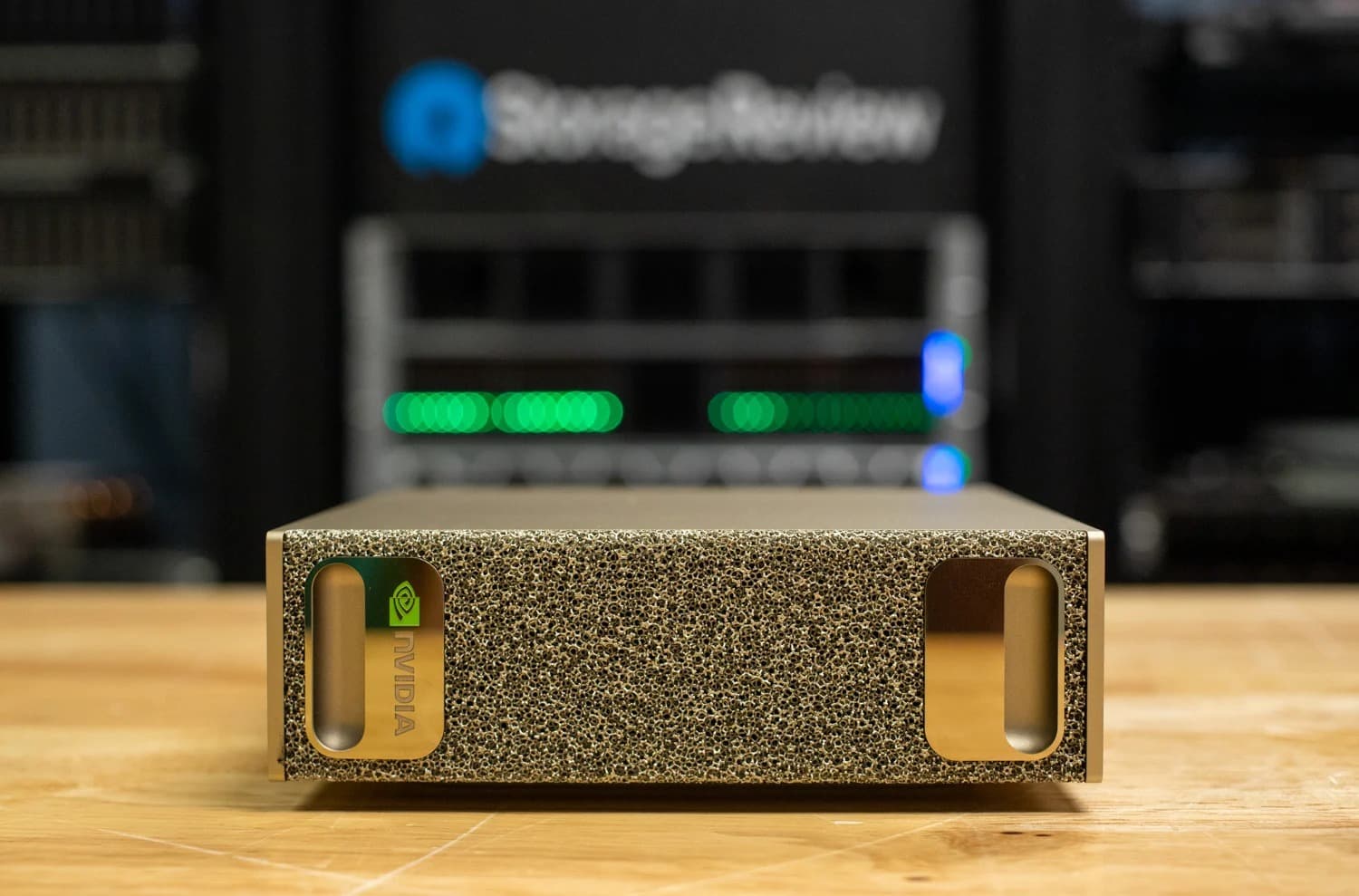
DGX Spark got a version with 64 GB of unified memory, announced by Nvidia on October 5. The suggested price came in at $4,999, something above R$25,000 at the current exchange rate. Manufacturing is handled by partners such as Acer, Asus, Dell, Gigabyte, HP, and MSI.
The comparison with the original launch explains the headline. However, the 128 GB model reached the market at $3,999.
Later, it was repriced to $4,999. Today, in fact, it shows up around $6,000, an increase of about 50%.
What the 64 GB version can run
The proposal targets specific workloads. With that memory, the system runs AI agents and language models of up to 100 billion parameters.
It's worth remembering why unified memory matters so much in this scenario. Also, the model needs to fit entirely to avoid constant swapping between layers.
Therefore, cutting the memory in half directly cuts the maximum supported size.
DGX Spark makes up for the loss with two linked units
Here's the technical solution offered by the company. Nvidia Sync Cluster technology allows connecting two units via a QSFP cable.
This way, the sum recovers the 128 GB through scalability. Also, the company claims this combination runs models of up to 200 billion parameters.
The reported gain reaches 1.7 times in performance. However, look at the math on your wallet: two units cost close to $10,000.
The hardware inside remains the same
The core specifications stay the same. The chip, however, is still the Grace Blackwell GB10.
It features a 20-core Arm platform and integrated graphics via NVLink C2C. The cited performance reaches 1 petaFLOP for AI.
Connectivity uses ConnectX 7 networking. The software ecosystem comes pre-configured, with PyTorch and CUDA ready to go.
This last point defines much of the value. Those who already work with CUDA find a familiar environment with no migration effort.
DGX Spark faces off against AMD in a memory battle
The competitive landscape helps explain the launch. The rival offers processors such as Ryzen AI Halo and Ryzen AI MAX.
These systems reach up to 192 GB of memory and cost just over $6,500. As a result, the per-gigabyte comparison turns unfavorable.
The competition, however, has two distinct axes. The rival stands out in unified memory capacity, while Nvidia holds the advantage in software optimization and flexibility.
The macro context also adds pressure. The components shortage has been driving up prices for products with lots of RAM and storage.
What to evaluate before considering the purchase
First, calculate the size of the model you actually use. A 4-bit quantized model fits much better than the full version.
Second, compare with cloud rental. $5,000 pays for a lot of GPU hours with a provider.
Third, think about the ecosystem. A ready-made CUDA setup reduces friction, and that has concrete value on the timeline.
Also, consider privacy and latency. Local inference handles sensitive data and removes the need for network calls.
Finally, check the math on the cluster. Two synced units deliver 1.7 times the performance for twice the price.
When it arrives on the market
The 64 GB version goes on sale in international markets on October 23. Availability for Brazil remains unannounced.
Meanwhile, it's worth following independent tokens-per-second benchmarks. That number determines whether the upgrade is worth it for your workflow.
Follow our profile on Instagram!
Translated from the Brazilian Portuguese original · Read the original

Atlassian swaps metrics engine across 100,000 hosts without touching the code
Atlassian migrated its internal metrics platform to OpenTelemetry while keeping the StatsD interface intact for application teams