US government approves sale of Nvidia H200 chips to shell company in China

- Reading
- 4 min
A New York Times report, cited by The Verge, shows the US government approved the sale of H200 chips to a Chinese company with no real headquarters, linked to a fund already sanctioned by Washington. The case exposes flaws in the export controls underpinning the US tech containment strategy.
An address without a company, a company without a history
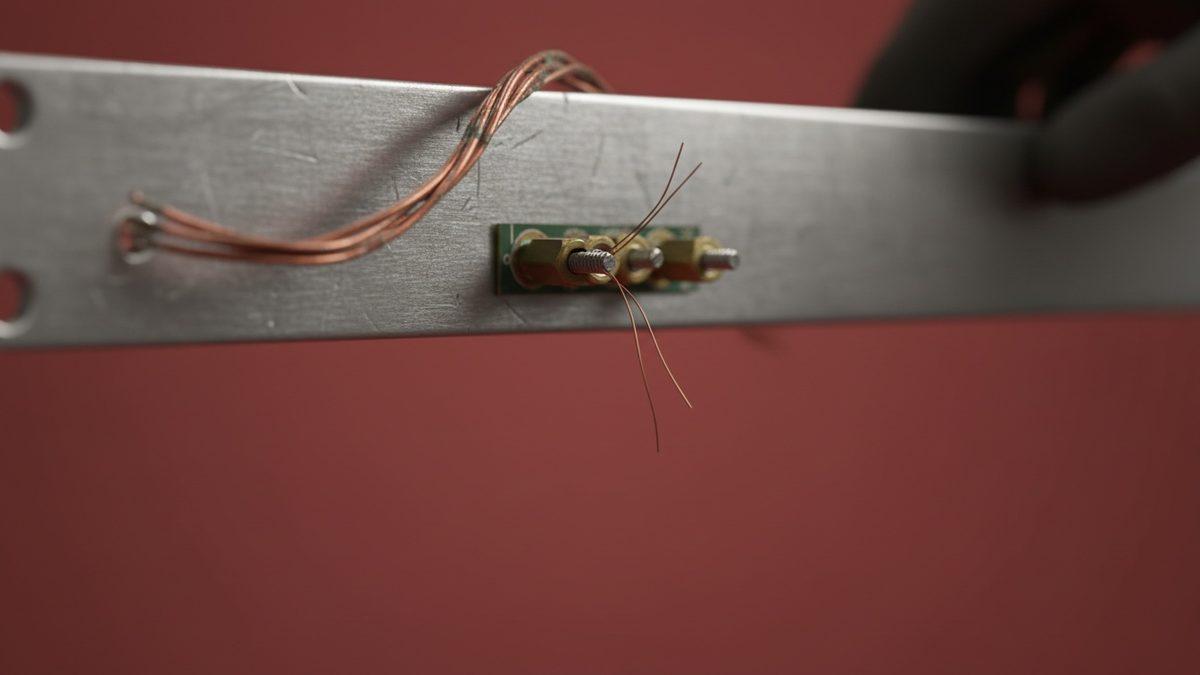
A report by the New York Times, cited by The Verge on November 7, 2026, found a Chinese firm approved to buy Nvidia H200 AI chips operating out of an empty address. The company, called New Matrix, is on the list of buyers cleared by the US Department of Commerce, but the office it declares as its headquarters is, according to the reporters, an empty gray shell with wires hanging from the ceiling where light fixtures should be.
The investigation also did not find New Matrix in the building directory at the address listed. At the management office of the neighboring industrial park, both the receptionist and the manager said they had no record of the company. The company was founded about 17 months ago, in mid-2025, and there is very little public information about it beyond that.
Who is behind the company that doesn't exist
The most sensitive finding in the investigation concerns New Matrix's ownership: its owners are linked to a Chinese private equity firm that has been on the US government's blacklist since 2024. In other words, the very screening process meant to block sales to sanctioned entities let through a shell company connected to a name already blocked.
According to the Times, this is not an isolated lapse. The report describes a pattern of companies linked to entities under trade restrictions for national security reasons being approved to buy Nvidia chips. For those who follow US export policy, this means the approved list is not filtering out those the government itself has already classified as a risk.
How China regained access to Nvidia's chips
To understand why this is possible, it helps to go back to the rule change. Under the Biden administration, Nvidia was barred from selling its most advanced AI chips to China. The Trump administration eased that limit after Nvidia agreed to hand over 15% of all revenue from chip sales to the country to the US government.
Nvidia's CEO, Jensen Huang, ran an intense lobbying campaign to reopen that market. Around the same time, according to The Verge, Huang was reportedly targeted by an espionage scheme allegedly orchestrated by China's Ministry of State Security. The full picture is one of a high-stakes deal: Washington opened China's door to Nvidia in exchange for a cut of the revenue, and now relies on a screening system that, at least in this case, failed to distinguish a real company from an empty office.
Why this matters for strategy decision-makers, not just compliance teams
For a founder or executive who depends on GPU capacity, whether to train models or to run inference at scale, this case changes the reading of what the chip embargo actually guarantees. US tech containment policy assumes that only approved buyers have access to the most advanced chips. If shell companies can get onto that list, control over who truly has access to cutting-edge computing capacity is more fragile than the policy's design suggests.
This has three practical effects for anyone who treats AI as a competitive advantage:
- A less predictable global supply. If chips theoretically meant for a controlled market end up circulating through parallel channels, the actual supply of cutting-edge GPUs on the international market becomes harder to estimate, which pressures price and availability everywhere, including outside the US and China.
- Reputational and regulatory risk for infrastructure providers. Nvidia is at the center of a case that mixes a federal screening failure with a link to a sanctioned entity. Companies that depend on AI hardware supply partners need to monitor this kind of exposure, because sanctions and investigations have a cascading effect on contracts and delivery timelines.
- The 15% deal becomes a business-model precedent. The arrangement in which a company pays the government a cut of export revenue to operate in a restricted market is a new model for the relationship between big tech and trade policy. Founders operating in regulated sectors (defense, healthcare, critical infrastructure) should watch whether this kind of deal becomes the norm for other sensitive products.
What remains unresolved
Neither the Department of Commerce nor Nvidia has publicly commented, according to the available material, on how New Matrix passed screening or on how many other companies in the same situation exist on the approved list. There is also, as of this report, no indication that the chips have already been delivered or what their final destination would be if the listed company does not actually operate.
The episode reinforces a question that predates this specific case: when the export policy for sensitive technology is outsourced to the selling company itself, complying with the financial agreement (the 15% payout) is not the same as ensuring the final buyer is who it claims to be. For those making business decisions based on regulatory predictability in the AI supply chain, this is the kind of gap that can turn into cost, delay, or legal risk down the road.
Translated from the Brazilian Portuguese original · Read the original
METR Report Shows Anthropic Using AI to Accelerate AI Development
An independent report by the safety organization METR shows that Anthropic's models are evolving about twice as fast as a year ago, and that AI itself is now the biggest driver of that acceleration. The company, however, censored most of the evidence before making the report public.