2 min read
Vertiv tests power and cooling for AI factories ahead of NVIDIA chip arrivals
 Redação iMastersNewsroom
- Reading
- 2 min
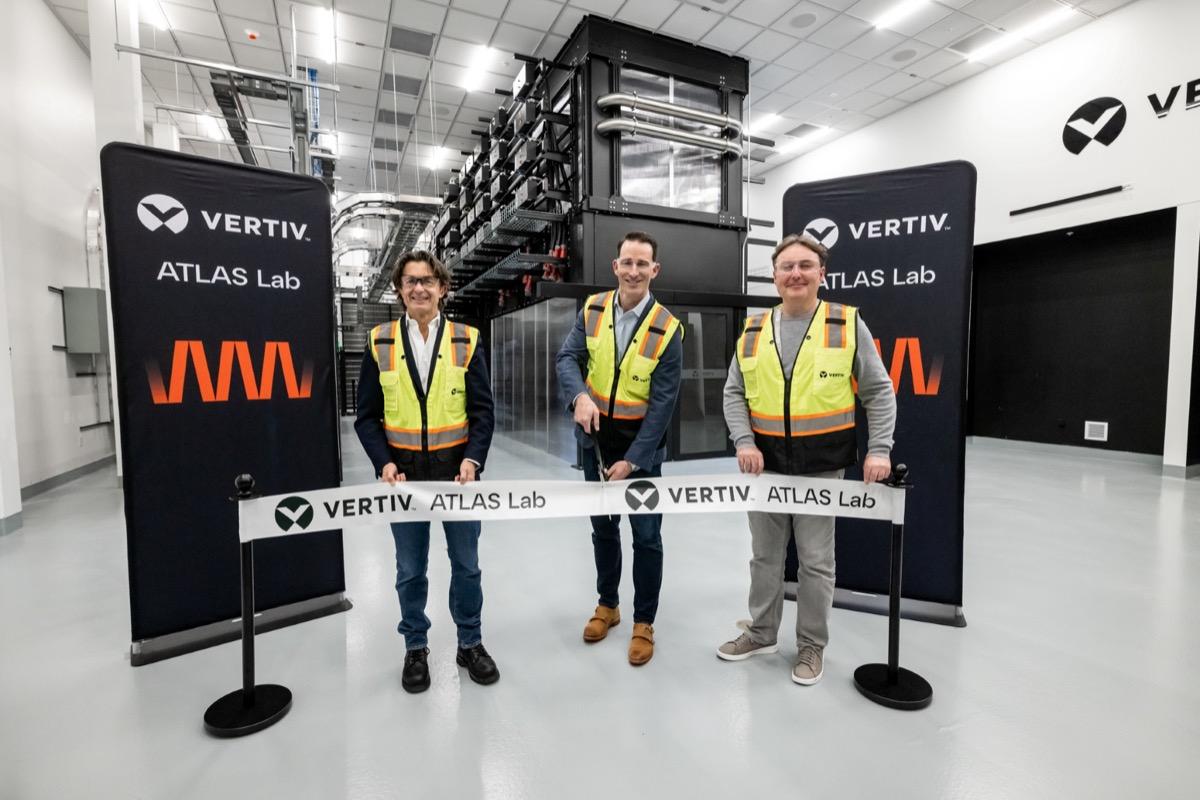
The ATLAS lab, built with NVIDIA engineering, uses load emulation, digital twin modeling, and physical testing to validate AI data center infrastructure as a system before deployment.
Vertiv, a provider of power and cooling infrastructure for data centers, has started validating AI factory infrastructure before the chips they will house reach the market. The work is carried out at the Vertiv ATLAS Lab (Advanced Test Lab for Architecture and Systems), together with NVIDIA engineering, with the goal of reducing integration problems during deployment and shortening the path to first token.
The idea stems from an observation: most infrastructure tends to be validated product by product, but an AI factory works or fails as a system. According to the company, five factors intensify at the same time and amplify one another: density, speed, scale, complexity, and dynamic load profiles. Solving one of them in isolation may simply shift the constraint to another point.
Load emulation and digital twin
ATLAS combines workload emulation, digital modeling, and physical testing to reproduce the power and thermal behavior of NVIDIA's current and future accelerated computing architectures before production systems become available. The modeling uses simulation and digital twin workflows from the NVIDIA DSX AI Factory platform, including Omniverse libraries, DSX Sim, and SimReady assets, with Vertiv's power and cooling equipment incorporated into the models.
The lab functions as a representative pod of an AI factory, bringing together power, thermal management, controls, and IT infrastructure in the same test environment. What is validated at pod scale becomes a reference design that can be replicated at campus scale, without redoing the engineering for each deployment.
"ATLAS lets us find and solve integration problems before they reach the customer's site. We design in simulation, prove it on the test floor, and test ahead of silicon, so infrastructure keeps pace with the platform," says Scott Armul, Chief Product Technology Officer at Vertiv.
From the power grid to the chip
The stress tests combine power and thermal systems under the fast, synchronized swings typical of AI workloads, with coordinated controls. The chain evaluated runs from the grid interconnection to the rack, through direct-to-chip liquid cooling, to heat rejection and heat reuse.
Building an AI factory involves chip makers, server and rack-scale system manufacturers, power and cooling suppliers, utilities, and operators. The lab brings these interfaces together in a common environment so that problems surface during the engineering phase.
"Accelerated computing is advancing at an extraordinary pace, creating new requirements in power, cooling, and controls. System-level validation helps the ecosystem move faster from reference architecture to deployment," says Vladimir Troy, Vice President of AI Infrastructure at NVIDIA.
ATLAS opened on November 6, with technical sessions between engineers from both companies. For Giordano Albertazzi, CEO of Vertiv, the lab makes it possible to "put the complete architecture to the test before the customer commits capital to build it" and helps turn more of the available power into productive computing.
Translated from the Brazilian Portuguese original · Read the original

Generative AI moves past proof of concept and is now expected to deliver ROI in Brazil, study finds
The ISG Provider Lens 2026 study, by TGT ISG, evaluated 47 providers and shows Brazilian companies moving from experimentation to demanding concrete results.