YC bets on hardware, defense, and government in new list of startup theses
The accelerator that helped shape the venture capital playbook swapped light software for hardware, defense, and government services in its list of theses. For founders raising in Brazil, the document works as a thermometer before it becomes a funding-round headline.

- Reading
- 15 min
The accelerator that helped shape the venture capital playbook swapped light software for hardware, defense, and government services in its list of theses. For founders raising in Brazil, the document works as a thermometer before it becomes a funding-round headline.
What this document is, and why it arrives before the money
Y Combinator publishes, every batch cycle, a list called Request for Startups (RFS): the topics in which the accelerator's partners want to see founders apply. YC's official website shows the full history, batch by batch, from Summer 2024 to Winter 2027, the most recent cohort.
The RFS is not a promise of a check. It's a signal of where partners are already seeing interesting deal flow and want more of it. Historically, these lists leaned toward light software: vertical SaaS, fintech, productivity tools. The Winter 2027 list is something else.
In short: YC is saying, in writing, that AI's bottleneck has stopped being the model and has become the physical economy that runs around it, from the factory to the data center, from government to space.
The shift: from the digital economy to the physical economy
The list brings together eleven theses. Five of them revolve around hardware, infrastructure, and capital-intensive sectors, an area YC historically avoided because it didn't fit the capital-light startup mold that made it famous.
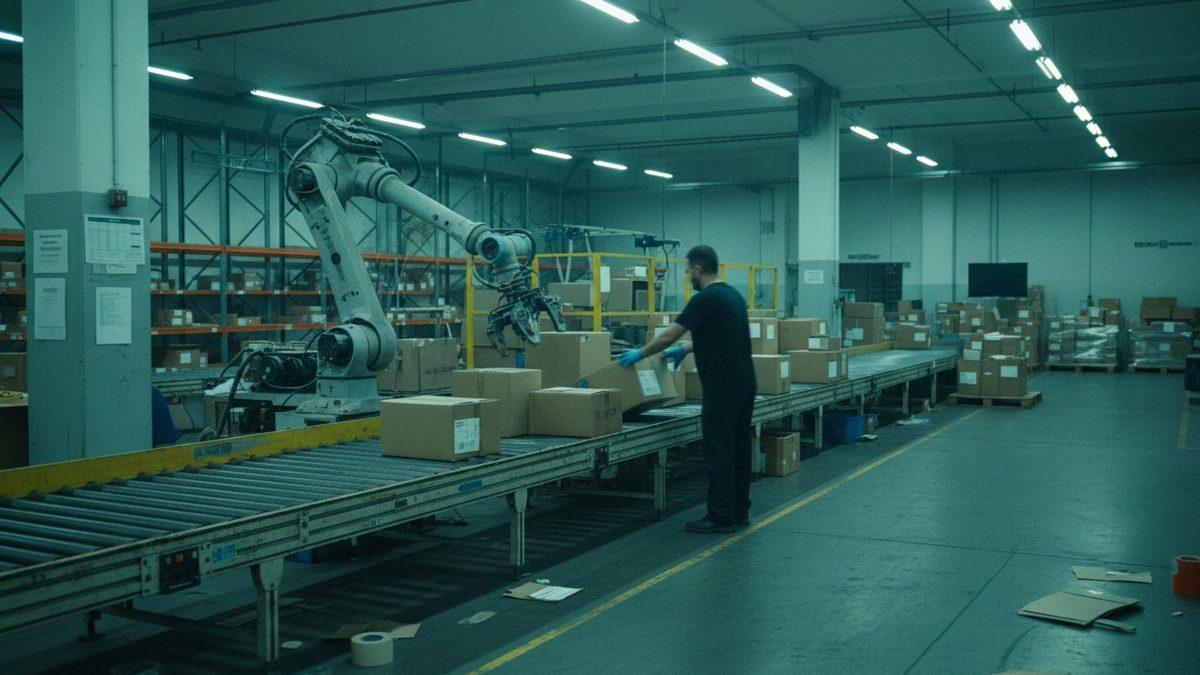
- Robots Made in America: founding domestic suppliers of rare-earth magnets, motors, encoders, and robotics chips, after the FCC stopped certifying connected mobile robots without a minimum domestic content (65% today, 75% starting in 2029) and China, responsible for 94% of the world's sintered rare-earth magnets in 2024, restricted exports in April 2025.
- Data Center Supply Chain: bottlenecks such as power transformers with a three-year lead time and grain-oriented electrical steel made at a single American plant.
- Wall Street for the Physical Buildout: new financial instruments (leasing, securitization, hedging) for those who pay for steel and silicon before they generate revenue.
- AI for the Air-Gapped Economy: frontier AI running inside the customer's building, without internet access, for defense, banks, hospitals, and nuclear plants.
- Startups in a World of Abundant Space Access: business models that only work once launch costs fall 100x with Starship.
YC itself acknowledges the tension with its historical playbook. Brad Flora, the partner behind three of the theses (The $15-an-Hour Expert, Wall Street for the Physical Buildout, and AI for the Air-Gapped Economy), sums up the problem:
Software is cheap to start. Robots, GPU clusters, and data centers aren't.
Brad Flora, partner at Y Combinator
Government stops being the difficult customer
Two theses directly target the American public sector. In Plaid for Government Benefits, YC wants a single verification layer for income, tax, and residency so agencies no longer depend on pay stubs that AI can now forge in seconds. The Government Accountability Office, cited in the document itself, estimates fraud costs the US federal government up to half a trillion dollars a year. Starting in 2027, American states will have to re-verify Medicaid beneficiaries every six months, which pushes demand for this kind of infrastructure.
In AI for City Hall, the target is the nearly 19,000 American city halls that still process permits and licenses by hand. YC ran the numbers: if every building permit in the United States were approved in 10% of the current time, cities would collect an additional $16 billion a year in property tax. Gustaf Alströmer, the partner behind both theses, dismisses the belief that software can't be sold to government:
The conventional wisdom says you can't sell software to government. That used to be true. It isn't anymore.
Gustaf Alströmer, partner at Y Combinator
Owned models: the end of token rental?
The Own Your Intelligence thesis, authored by Jon Xu, targets a recent habit: companies pay per token to a frontier lab and never build their own advantage over the data they generate. With open-weight models now competitive on relevant benchmarks, YC is betting that companies, especially regulated ones, will prefer to train and host their own model rather than keep renting generic intelligence.
The complementary thesis on vertical foundation models, by Diana Hu, cites a concrete example: Google's TimesFM-3, a 330-million-parameter model that forecasts related time series without task-specific fine-tuning, trained once and reused with each new user's history as context. The bar YC sets for this kind of vertical model is tough: match or beat general-purpose models while using orders of magnitude less inference compute, so it can run anywhere.
The counterpoint: a sourcing thesis isn't a market prophecy
It's worth being wary of reading the RFS as a macro oracle. First, because it's a sourcing document: it reflects what partners are already seeing knock on the door in the current batch, not necessarily what will dominate the market in two years. YC publishes a new list every cycle, and half of one year's theses quietly disappear from the next list.
Second, a good share of the most eye-catching theses are explicitly tied to American industrial policy: the FCC's domestic content rule, Medicaid re-verification, the 19,000 American city halls. These are structural problems of the United States, not of the world. Treating this as a global capital trend is confusing one country's regulation with market physics.
Third, the accelerator itself admits the contradiction: building robots and data centers requires capital that the YC model, historically small checks and fast acceleration, wasn't designed to finance on its own. Hence the parallel thesis of creating banks and insurers for the physical economy, a sign that the solution is still being invented, not tested.
What this changes for founders raising in Brazil
Of the eleven theses, three have a direct counterpart outside the United States. Financing for physical buildout (data centers, energy) echoes the data center boom already underway in Brazil, which also needs specific credit instruments for GPUs and energy. Air-gapped AI for banks, oil companies, and hospitals speaks to the financial sector and to state-owned companies that already operate under local data residency rules. Government digitization has an obvious parallel in Brazilian municipal bureaucracy, just without the $16 billion in fiscal upside YC cites to justify the political investment.
The three hardware and defense theses are the hardest to replicate: they depend on industrial policy, domestic content rules, and a supplier chain that Brazil hasn't built up. A Brazilian founder who uses the RFS as a keyword checklist for a pitch risks selling the shell without the regulatory engine that sustains the thesis in the United States.
The most useful way to read the document isn't to copy the list, it's to use the method: identify which real bottleneck, with a number and a source, underpins each thesis, and then ask whether that same bottleneck exists here, at the same magnitude. Whoever reaches an international investor with that math already done, not just the name of the thesis, is who turns a thermometer into a funding round.
Source 1: YC Request for Startups (official document) (https://www.ycombinator.com/rfs)
Requests for Startups | Y Combinator
Winter 2027 Fall 2026 Summer 2026 Spring 2026 Fall 2025 Summer 2025 Spring 2025 Winter 2025 Summer 2024 Winter 2027 AI's biggest bottlenecks are moving beyond the models. We're excited about a new wave of startups building the hardware, infrastructure, financial systems, and specialized software needed to bring intelligence into the real economy, from factories and data centers to government and space. Startups in a World of Abundant Space Access By Ankit Gupta SpaceX is projecting a near future in which there will be 10,000 Starship launches per year.
Already, an expendable Starship is almost as cheap as a reusable Falcon 9 and much lower cost per kilogram. As Starship scales and becomes reusable, we are going to see several orders of magnitude reduction in launch costs per kg.
This means it's now time to think about startups for a world of abundant space access. What business models maybe don't quite work today but could work when launch costs fall 100x or more, and the orbital economy takes off? We think those companies should be started now, and if you're a builder with an idea for one, we'd love to see you apply. The $15-an-Hour Expert By Brad Flora Most people talk about AI replacing workers.
We're excited about the opposite: AI that turns an ordinary worker into an expert. We're seeing companies hire smart people without credentials, back them with AI, and have them do work that used to need specialists. Imagine a really good customer service rep who's also really good at using AI suddenly able to consult on complicated mergers and acquisitions, supply chain optimization, or global trade.
There are millions of jobs like this in benefits, taxes, insurance claims, medical billing, and immigration paperwork. Anywhere a credential is the bottleneck, this model works.
The last industrial revolution built a middle class out of factory jobs. This one could build it out of expert jobs. We want to fund the companies that do it. Robots Made in America By Diana Hu The best robot foundation models are starting to transfer skills from one robot to another, and I think the bottleneck is moving to the hardware.
The U.S. installed 38,400 industrial robots in 2025, up 12 percent, but most robots here are still imported from Japan and Europe. Even the ones assembled here can depend on Chinese magnets. China made 94 percent of the world's sintered rare-earth magnets in 2024, and when it restricted exports in April 2025, some automakers had to cut production.
In July, the FCC stopped authorizing new models of connected mobile robots unless they're made here or get an exemption. To count, more than 65 percent of a robot's component cost has to be domestic, rising to 75 percent in 2029. Assembling imported parts won't get you there.
We want to fund founders building robots and their supply chain here: rare-earth magnets, motors, strain-wave gears, encoders, force sensors, grippers, chips, battery packs, and the machines that make them.
If you're building this, we'd love to talk. LLMs That Write Well By Jared Friedman As LLMs have gotten better at coding and math, they've actually gotten worse at writing. You're not just imagining it: the current models really do sound more robotic than the models from 2024 and 2025.
This appears to be not just a temporary glitch, but a structural issue. The same reward signals that make models good at code actively flatten voice and style.
If forced to choose, the major labs will always choose to focus on coding and agentic workflows over style. This has left an opportunity open for a startup that cares about producing a model that people like talking to. So if this is something you'd like to work on, we'd love to hear from you. Plaid for Government Benefits By Gustaf Alströmer If you've ever applied for government benefits, you know how it works. Prove your income. Prove who lives with you. Prove where you live. Then do it all again for the next program, and again at renewal.
Every agency has its own portal, and none of them share data. People get rejected over a missing document. Government workers check pay stubs by hand.
The same system that keeps honest people out also lets fraud in. The Government Accountability Office estimates fraud costs the federal government up to half a trillion dollars a year. Now AI can forge a pay stub in seconds.
Before Plaid, every fintech app built its own bank connections. After Plaid, all it took was one tap. The government needs the same layer.
With your consent, it pulls verified income, tax, and residency records straight from the source, into every program at once. Verify once, apply everywhere. The right people get approved faster, and fraudsters have nothing to fake.
Starting in 2027, states must re-check millions of Medicaid enrollees every six months. And soon AI agents will handle enrollment, but only if they can trust the data.
Whoever builds these pipes will own the infrastructure for our safety nets. If you're building this, we'd love to hear from you. Wall Street for the Physical Buildout By Brad Flora Software is cheap to start. Robots, GPU clusters, and data centers aren't. Somebody has to pay for all that steel and silicon up front, and the financing mostly doesn't exist yet.
Today, banks underwrite a robot like a forklift. Founders we work with are inventing the instruments themselves, like a lender for robots that each earn $500k/year and put options on GPU capacity.
Every great buildout, from railroads to electricity to telecom, created giant financial companies alongside it. We want founders building lenders, leasing companies, securitization, and hedges for the physical AI economy.
If you understand both the machines and the money, we'd love to talk. Vertical Foundation Models By Diana Hu I think Jev hit a nerve because it gives developers a typed decision and a probability instead of generated text, without training a classifier for every task.
I'd like to see more research labs build specialized foundation models for manufacturing, energy, and biology that work zero-shot or from a handful of examples. The bar is matching or beating general-purpose models at orders of magnitude less inference compute, so they're cheap enough to run on everything.
For example, Google's TimesFM-3 shows what this looks like for forecasting. It's a 330M-parameter model that forecasts related time series at once with no task-specific fine-tuning and outputs the whole forecast in one forward pass. Training happens once, and each new user brings their own history as context.
The hard part is getting high-quality, vertical-specific, verifiable rewards. You'll need rights to the data and a clear win in accuracy and compute over existing specialist models. If you know a field well enough to build its model, we'd like to hear from you. AI for City Hall By Gustaf Alströmer If you want to build a house or start a business in America, you first need permission from your city. Forms, plan reviews, inspections, and many months of waiting. In some cities, getting the permit takes longer than building the house.
City staff are buried in repetitive work: checking drawings against the code, matching applications to zoning rules, sending corrections back and forth. AI models can do all of this.
And the delay really matters. Every month of waiting makes projects more expensive, and some just never get built. Every new building pays property tax for decades. We did some math: if all building permits in America were approved in 10% of the current time, US cities would make $16 billion a year in additional tax revenue.
We want to fund companies that let AI help run City Hall. Start with permits, but also take on 311, public records, licensing, and inspections.
There are 19,000 cities in America, and almost all of them still do all this by hand. The conventional wisdom says you can't sell software to government. That used to be true. It isn't anymore. YC has funded several companies selling AI to government, and some of them are growing faster than almost anything else we've seen.
If you're building this, we'd love to hear from you. Data Center Supply Chain By Jared Friedman The AI data center buildout is the largest capital investment project in American history - bigger than the railroads, the highways, and the Manhattan Project - combined.
A buildout that large creates opportunities up and down the supply chain. Some of them are famous - everyone knows that there's unprecedented demand for GPUs, electrical power, and skilled electricians.
There are also many non-obvious bottlenecks. Large power transformers have a three-year lead time. Switchgear, circuit breakers, and liquid cooling equipment are all sold out. Even raw materials are under pressure: the grain-oriented electrical steel that's used in transformer cores is made in only a single plant in the US, and they're unable to keep up.
We're interested in funding companies that are enabling every aspect of the data center supply chain. If that's something you're working on, we'd love to hear from you. AI for the Air-Gapped Economy By Brad Flora The most valuable data in the world isn't in the cloud. Defense contractors, banks, hospitals, and nuclear plants keep it behind walls, and they can't send it to an AI API.
That's why so much of the economy is still waiting on AI. Founders we work with keep hitting the same wall: the customer loves the product and wants it running entirely inside their own building, with no internet connection.
We want to fund the companies that bring frontier AI inside those walls. That means on-prem models, deployment tooling, security accreditation, and hardware.
It's slower and harder to sell. It's also where the largest budgets and the most defensible companies are. If you're building this, we'd love to talk. Own Your Intelligence By Jon Xu Today, nearly every company building with AI rents its intelligence. You send tokens to a frontier lab, get answers back, and pay the bill. That was an easy trade when the best models were years ahead of everything else, and nothing you did with your own data could close the gap.
That has changed. Open-weight models are now competitive with the top frontier models on meaningful benchmarks. And as AI moves to the center of how businesses run, companies have become more aware of their dependency on model rental.
We think more companies will want to own the models they rely on: improve them on their own data, run them where they choose, and decide for themselves when they change. This matters most in regulated industries, where strict data governance and locked-down infrastructure make renting even more expensive for the performance they get.
But there's still a big gap between downloading an open model and owning intelligence that improves a business. Someone has to turn workflows into evals, expertise into training data, production failures into improvements, and carry all of it forward with each new base model.
Companies will keep renting frontier intelligence for their hardest problems, but we think many will also own specialized models that encode how their business works and that become more valuable as the business learns.
If you're helping companies own their intelligence, we want to hear from you.
Translated from the Brazilian Portuguese original · Read the original

Microsoft restores Outlook, Teams and Copilot after two-day outage
A network update failure took down essential Microsoft services in more than 70 countries and reignites the debate over reliance on a single cloud provider