Incubeta research shows gap between confidence in marketing measurement and AI's real results

- Reading
- 11 min
A survey by Incubeta published by Marketing Dive on November 16, 2026 shows that 92% of marketing leaders trust the accuracy of their measurement, but nearly half admit to wasting budget due to measurement failures. Generative AI only widens that gap.
The number that doesn't add up
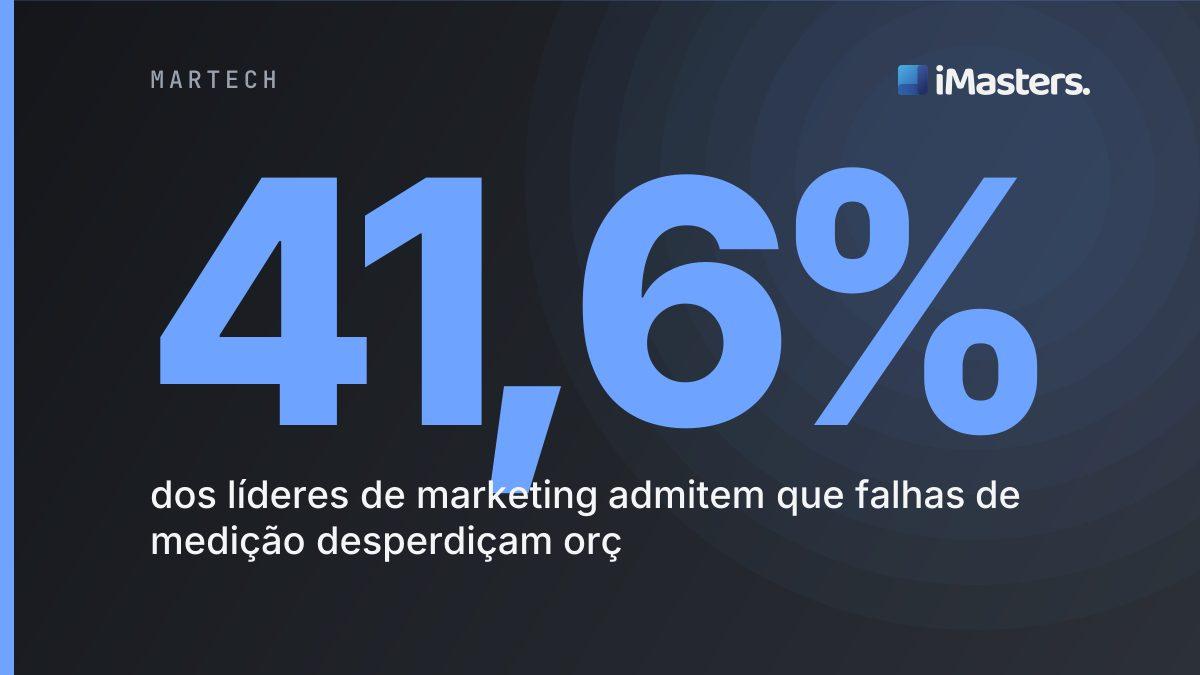
A sponsored article by Incubeta, published on Marketing Dive on November 16, 2026, brought up a figure that should worry any budget manager: in Incubeta's own 2027 Marketing Outlook survey, 92% of marketing leaders say they trust the accuracy of their measurement, but 41.6% acknowledge that the limitations of that same measurement waste budget. Even so, 70.4% believe they are allocating budget effectively.
Together, the three numbers describe a symptom familiar to anyone who lives by dashboards: high confidence, fragile evidence. The difference is that, according to the piece signed by Amy Crowther, artificial intelligence isn't closing that gap, it's widening it, because it changes the very behavior that marketing was trying to measure.
Conversational search breaks the funnel you know
Website traffic, search rankings, and conversion rates never told the whole story of the consumer journey, but they provided a reasonably consistent way to track performance. Conversational interfaces are changing that yardstick: consumers research products, compare alternatives, and reach a purchase decision inside a chat, without ever visiting the brand's website.
This creates a concrete attribution problem: a brand can influence a purchase through an AI-generated recommendation without producing any traditional engagement signal, no click, no session. The market's response has been AEO (answer engine optimization), which measures how often a brand appears in AI responses. In short: visibility in AI responses is measurable, but it doesn't say whether that exposure turns into a sale, and that's exactly where the math stops adding up.
For growth professionals in Brazil, this means that the funnel that justified SEO and paid media budgets needs a new layer of instrumentation, one that still has no mature, standardized tool in the local market. Monitoring brand presence on ChatGPT, Gemini, or Perplexity has become a task, but connecting that presence to revenue remains manual work, case by case.
Agentic commerce: the customer who never shows up
Incubeta's piece projects an even harder layer to track: AI agents that research products and can close the purchase on the consumer's behalf. In this scenario, the shopper describes what they need to an assistant, receives a recommendation based on preference, and only interacts with the brand at the moment of the transaction, if they interact at all.
The source is careful to say that widespread adoption of agentic commerce is not yet guaranteed, but the scenario already serves as a warning: if the algorithm decides which product appears to the consumer, brand consideration starts depending on the quality and relevance of the product information available for the machine to read, no longer just on campaigns or paid media. This pushes marketing investment back in the chain, toward the catalog, the product feed, and structured data, an area that has historically belonged to the e-commerce or data team, not the media team.
Creative automation moves faster than effectiveness testing
Generative tools make it possible to produce and adapt creative assets at unprecedented volume, with real efficiency gains for anyone managing campaigns across multiple markets. The risk lies elsewhere: Incubeta's white paper, cited in the article, shows that 77% of marketing leaders say they trust the quality of their own creative assets, even though they only assess their effectiveness after the media budget has already been spent.
In other words: automation accelerates production, but testing what works keeps running at the old pace, after the fact. The article's recommendation is not to slow down creative automation, but to pair it with testing at the same pace as production, so that every variation generated feeds the next round with real performance data, instead of just volume for volume's sake.
For growth professionals, this is an invitation to rethink the process, not the tool: A/B and multivariate creative testing can no longer be an isolated step at the end of the production funnel, it needs to enter the same pipeline that generates the asset.
Why platform metrics alone no longer cut it
The report makes a point that any paid media manager has already felt firsthand: each ad platform measures well what happens within its own environment, but stops seeing what happens outside it. With multiple channels claiming credit for the same conversion and investments that build demand over time receiving insufficient recognition, deciding budget based on isolated channel metrics becomes a biased decision.
The solution described in the article combines three pieces:
- Marketing Mix Modeling (MMM), which estimates the contribution of different marketing investments over time;
- Incrementality testing, which isolates whether a specific activity generated additional results or just captured demand that already existed;
- Business performance data, which anchors the two previous analyses in profitability and customer value, not just conversion volume.
None of the three is new technology. What changes is the urgency of combining all three at the same time, because channel-level measurement alone no longer captures the effect of generative AI on product discovery.
What this costs and who decides
Incubeta's piece ends by pointing to the CMO's desk: marketing leaders are expected to evaluate emerging technology while also having to prove financial return to CEOs and CFOs, which requires closer coordination with the finance team, especially when an investment's benefit only shows up months later.
This has a real cost, not just talk. Implementing MMM with quality requires an organized history of media and sales data, and the benefit, according to the source itself, usually only shows up after a while, not immediately. A well-designed incrementality test requires careful experimental design to isolate what actually generated additional results, which not every marketing structure has the resources to set up on its own. And none of these approaches replaces the other: they complement each other, and running all three at once demands a dedicated team, not just a tool.
The research doesn't recommend slowing down investment in AI, neither on the discovery side (AEO) nor on the production side (creative automation). The recommendation is to establish the business question and the success criteria before investing, rather than measuring after the budget has already been spent, which is exactly the pattern that the 77% confident in creative still follow today.
Source 1: Marketing Dive (https://www.marketingdive.com/spons/ai-is-transforming-marketing-can-marketers-prove-its-working/874404/)
AI Is transforming marketing. Can marketers prove it’s working? | Marketing Dive
Skip to main content
Informa TechTarget
|
CX Dive
Retail Dive
Social Media Today
Explore our brands
An Informa TechTarget Publication
People also ask
Loading questions...
An article from
Sponsored
AI Is transforming marketing. Can marketers prove it’s working?
Published Nov. 16, 2026
By Amy Crowther
Share
Copy link
X/Twitter
Sorapop Udomsri/Shutterstock.com
Sponsored content
By Incubeta
SPONSORED CONTENT BY
Marketing leaders have more tools, data and greater automation capabilities than ever before, but is their investment actually driving business growth?
Research cited in Incubeta's 2027 Marketing Outlook found that 92% of marketing leaders believe their measurement is precise, while 41.6% acknowledge that measurement limitations waste budget, and 70.4% believe they deploy their budgets effectively.
These findings suggest that confidence in marketing performance may be outpacing the ability to demonstrate its actual contribution to business outcomes.
The challenge becomes more urgent as artificial intelligence transforms how consumers discover products and how brands engage with them. Marketers are investing in AI-powered capabilities while the customer journey becomes increasingly difficult to track.
In 2027, marketers will face greater pressure to demonstrate return on investment.
AI is making an already fragmented customer journey harder to measure
Website traffic, search rankings and conversion data have long served as key indicators of how consumers interact with brands. While these metrics have never captured the full customer journey, they have provided marketers with a relatively consistent way to measure performance.
AI-powered discovery is changing that.
Consumers increasingly use conversational interfaces to research products and compare alternatives without visiting brand websites. This creates a significant measurement challenge. A brand may influence a purchasing decision through an AI-generated recommendation without receiving a website visit or another traditional engagement signal.
Answer engine optimization (AEO) encourages brands to evaluate how their products and information appear in AI-generated answers. However, visibility alone offers limited insight into business impact.
Marketers can track how frequently a brand appears in AI responses to help them better understand its presence in emerging discovery channels, but determining whether that exposure influences purchasing behavior is considerably more complicated. Marketers will need to reconsider how they evaluate the contribution of activities that generate influence without producing easily attributable clicks.
Agentic commerce introduces another layer of complexity
AI agents that can research products and potentially complete transactions on a consumer's behalf could further complicate attribution. Shoppers might describe their requirements to an AI assistant and receive a recommendation based on their preferences. Consumers may never interact directly with the brand until the transaction is completed.
Marketers will need to learn how brands earn consideration when algorithms increasingly influence which products are presented to customers. The consideration of a brand may depend increasingly on the quality of its product information and its relevance to specific consumer needs. Widespread adoption of agentic commerce is not guaranteed, but it illustrates why existing measurement approaches may become less effective as consumer journeys evolve.
Creative automation is accelerating faster than effectiveness testing
AI is also transforming how marketing campaigns are developed and executed. Generative tools allow brands to produce and adapt creative assets at unprecedented speed. Organizations that manage campaigns across multiple markets can see considerable efficiency gains. However, producing more content does not necessarily improve marketing performance.
Incubeta's recent white paper showed that 77% of marketing leaders express confidence in their creative assets, even though many still assess effectiveness after media budgets have already been spent.
This creates a risk that AI will accelerate spending on creative executions whose actual contribution remains uncertain. Marketers shouldn't slow down creative automation but should pair it with testing built for the same pace. This will help marketers better understand which creative elements influence purchasing behavior.
Marketers can turn automation from a volume engine into a growth engine by connecting creative production directly to testing and measurement. Using that data, marketers can adapt their strategies and then share those insights back into the next round of production.
Marketing measurement needs to move beyond platform performance
AI changes how brands have traditionally evaluated their marketing effectiveness. Advertising platforms provide detailed performance reporting but may stop measuring activities within their own environments. Now multiple platforms can claim credit for the same conversations, but investments that create demand over a longer period might receive insufficient recognition.
These limitations become especially consequential when marketing leaders use channel-level metrics to decide overall spending.
A more comprehensive approach combines marketing mix modeling (MMM) with incrementality testing and business performance data.
MMM can estimate the contribution of different marketing investments over time, while incrementality experiments help determine whether specific activities generated additional outcomes.
Combining these approaches allows marketers to evaluate spending decisions against broader commercial objectives, including profitability and customer value. The goal is to build a more reliable basis for deciding where to increase investment, where to decrease it and which activities contribute to sustainable growth.
The real AI challenge is proving business value
AI's growing influence is also changing expectations for marketing leadership.
CMOs are being asked to evaluate emerging technologies while demonstrating financial accountability to CEOs and CFOs. This requires closer coordination between marketing and finance, particularly when assessing investments whose benefits may develop over time.
It also demands greater discipline around experimentation.
New capabilities should be evaluated against clearly defined business questions, with appropriate measures of success established before significant investment.
The organizations best positioned for 2027 will be those that can connect technological adoption with evidence of improved performance.
AI will continue to create opportunities for marketers to operate more efficiently and engage consumers in new ways. But greater technological sophistication will mean little if organizations cannot establish whether those investments are contributing to growth.
The defining challenge for marketing leaders will be closing the gap between what their technology can do and what they can prove it delivers.
Filed Under:
Data/Analytics
Marketing Dive news delivered to your inbox
Get the free daily newsletter read by industry experts
Editors' picks
Getty Images
Deep Dive
What influencer fatigue says about creator-driven marketing’s next phase
Over 80% of marketers plan on increasing their influencer investments over the next year. But are consumers done with creator content?
By Sara Karlovitch •
Oct. 28, 2026
How brands can assert control as AI rewrites advertising’s playbook
As promises of one-stop, AI-powered solutions proliferate, marketers will need to navigate the changed ecosystem and separate reality from hype.
By Chris Kelly •
Jan. 20, 2026
Keep up with the story. Subscribe to the Marketing Dive free daily newsletter
Over 80% of marketers plan on increasing their influencer investments over the next year. But are consumers done with creator content?
As promises of one-stop, AI-powered solutions proliferate, marketers will need to navigate the changed ecosystem and separate reality from hype.
Latest in Data/Analytics
AI-derived audience insights hurt results: What the numbers say
By Sara Karlovitch
Synthetic audiences fall short: What marketers need to know
By Mark Himmelsbach
How marketers can better optimize for AI search visibility
By Francisco Vigo
As Publicis closes LiveRamp deal, some brands say they’re jumping ship
By Peter Adams
This website is owned and operated by Informa TechTarget , a global network that informs, influences and connects the world's technology buyers and sellers.
© 2026 TechTarget, Inc. or its subsidiaries. All rights reserved. An Informa PLC company.
| Terms of use | Take down policy | Cookie Preferences / Do Not Sell
Translated from the Brazilian Portuguese original · Read the original

GWI survey shows AI insights are wrong more often than marketers think
Survey of 1,883 marketing professionals shows that 80% encounter inaccurate AI insights, but only 36% check that data before using it. The price shows up in rework, delays, and financial loss.