Bending Spoons buys Intuit's Mailchimp for $3.68 billion
- Reading
- 4 min
Italy's Bending Spoons closed the deal for the email marketing platform for less than a third of what Intuit paid in 2021. For those who use the tool in Brazil, the buyer's track record with other brands offers clues to what comes next.
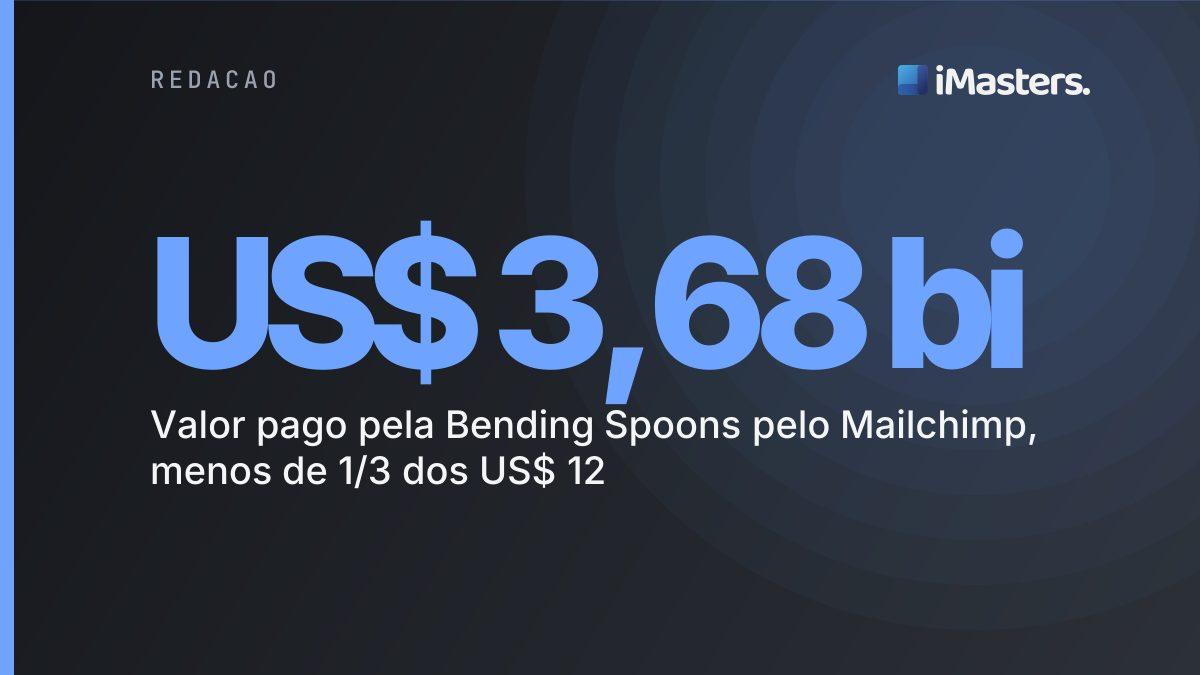
Intuit sold Mailchimp to Italy's Bending Spoons for $3.68 billion, according to TechCrunch. The deal was announced on November 20, 2026, and marks the email marketing platform's exit from the portfolio of the accounting and tax software giant, which had bought it in 2021 for about $12 billion.
The math is simple and painful for Intuit: it is selling Mailchimp for less than a third of what it paid five years ago. For those who follow the martech market, the number exposes how much the valuation of marketing automation tools has fallen since the peak of the post-pandemic era, when every CRM and email platform was worth aggressive revenue multiples.
Why Intuit sold now
According to Intuit, the sale serves to "sharpen its focus on AI tools for small businesses," in a statement given to Reuters and reproduced by TechCrunch. The proceeds from the sale will be used for the company's own share buybacks, not for new acquisitions.
The backdrop is the pressure that the so-called "Death Star of SaaS" (generative AI) has been putting on enterprise software companies. Intuit's shares are worth less than half of what they were worth a year ago, according to TechCrunch. For the growth and martech space, it's one more sign that money from major SaaS vendors is migrating from traditional automation tools to embedded AI products, the same trend that led Intuit itself to redesign its portfolio.
How the deal was structured
Bending Spoons calls the transaction an all-cash deal, but that's not exactly true. As part of the package, Intuit is buying $368 million in newly issued Bending Spoons shares, which makes the deal, in practice, a 90% cash and 10% equity stake split.
In other words, Intuit not only sold Mailchimp but also became a minority partner of the buyer. It's an unusual structure in SaaS M&A, worth noting: it shows that even the seller is betting that Bending Spoons' consolidation thesis will generate value.
The Bending Spoons pattern: who else is on the list
Bending Spoons is not a traditional private equity fund: it's an Italian software company that has become a kind of "clearing house" for mature, worn-out internet products, with a stated strategy of holding onto them for the long term rather than revamping them for quick resale. In the past year alone, the group has bought:
- AOL
- Eventbrite
- Airtable
- Miro
In earlier acquisitions, the company had already brought names like Evernote, Meetup and Vimeo into its portfolio. The pattern of action is always the same: integrate the acquired product into a central engineering and revenue infrastructure, which usually leads to significant cost cutting and, in some cases, improved support and features available to the end user.
We want to place ourselves as an operator that takes beloved brands and makes them much better.
Matteo Danieli, co-founder and chief product officer of Bending Spoons
What this changes for Mailchimp users in Brazil
For Brazilian growth and martech teams that automate email campaigns, nurture flows and base segmentation in Mailchimp, a change of ownership is rarely neutral. Bending Spoons' track record with Evernote and Meetup suggests a likely script: consolidation of support and engineering teams, a possible review of plans and pricing, and a roadmap redesign around the priorities of the new parent company, no longer Intuit's.
It's worth watching three fronts closely in the coming months: whether the integration with Intuit's accounting and invoicing ecosystem (which today connects with products like QuickBooks) will be kept, discontinued or opened up to third parties; whether there will be a price adjustment for the paid plans used by Brazilian agencies and e-commerce businesses; and whether Bending Spoons will invest in AI features for campaign automation, a move direct Mailchimp competitors are already making.
There's also a behind-the-scenes lesson already circulating among martech professionals: when Intuit bought Mailchimp in 2021, the company's employees didn't receive equity in the sale, because the founders had reportedly promised them they would never sell the business, according to reports cited by TechCrunch at the time. The story reinforces a practical point for anyone negotiating equity at martech startups: an informal promise from a founder is not a contractual clause.
What's still open
Neither TechCrunch nor the parties to the deal had detailed, as of publication, timelines for the product transition, pricing changes, or the fate of Mailchimp's current team. Bending Spoons also hasn't released a specific product plan for the tool, unlike what it has publicly done with other brands in its portfolio. For those who depend on Mailchimp for marketing operations in Brazil, the recommendation now is to follow the company's official announcements and avoid rushed migration decisions until the new owner signals a direction for roadmap and support.
Translated from the Brazilian Portuguese original · Read the original


Anthropic's IPO tests the circular financing that powers the AI race
Anthropic's stock market debut, on November 19, returns billions to Amazon, Google, Nvidia, and other suppliers that are also investors in the company. The case exposes a model that AI startups in Brazil replicate on a smaller scale, trading equity for cloud credits.