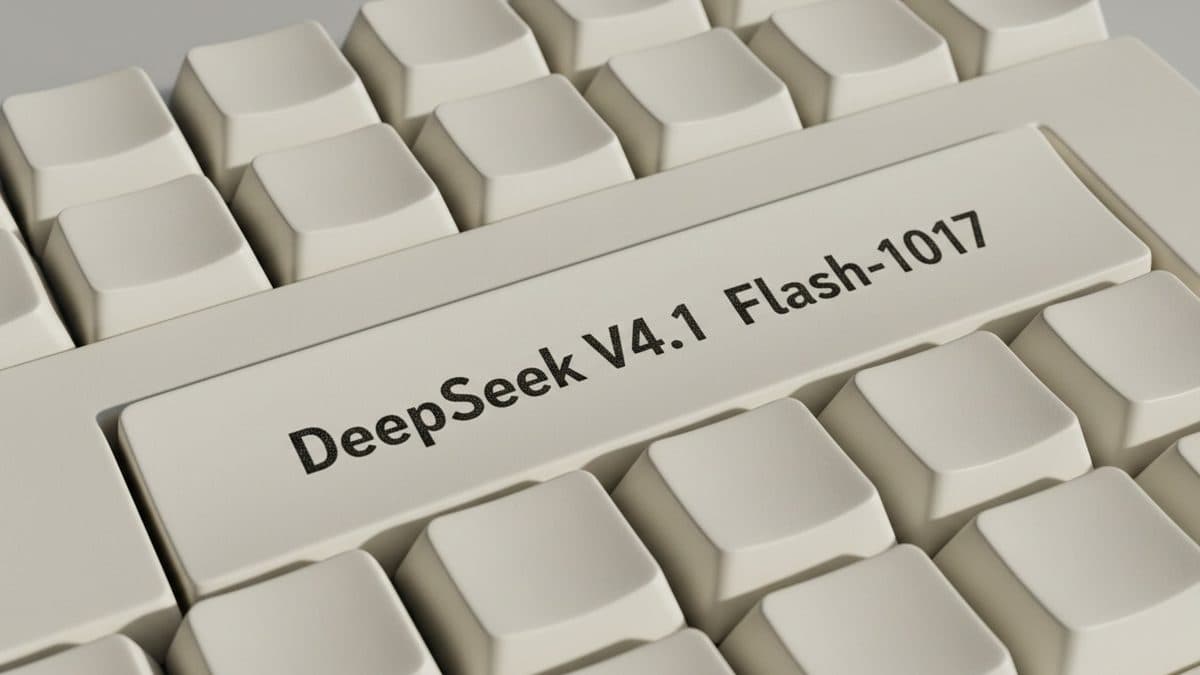
DeepSeek Raises $15 Billion and Widens the Race for Open AI Models
Chinese startup known for open, cheap-to-train AI models raised about 100 billion yuan, with CATL and Tencent among the investors, according to Bloomberg.


The fact
Chinese artificial intelligence startup DeepSeek raised about 100 billion yuan ($14.98 billion) in its latest funding round, according to a Bloomberg News report published this Thursday (22nd) and republished by Economic Times, based on sources close to the deal.
Battery maker Contemporary Amperex Technology (CATL) and internet giant Tencent Holdings, owner of WeChat, are among the round's largest investors, according to the report. Reuters said it could not independently verify the numbers as of publication, and DeepSeek itself has not publicly confirmed the figures.
In short: it's a billion-dollar round with heavyweight names from the Chinese market, but still without official confirmation from the company or details on valuation, use of capital, or each investor's stake.
Why this round matters more than the number suggests
DeepSeek isn't just another Chinese AI startup: it was responsible for one of the biggest scares in the global tech market in January 2025, when it launched the V3 and R1 models, claiming to have trained systems competitive with American labs at a much lower cost than OpenAI, Anthropic, and Google DeepMind. The episode sent chipmaker stocks tumbling and reignited the debate over how much it actually costs to train a frontier model.
Since then, the company has solidified a strategy different from most major Western labs: publishing open model weights, allowing any developer to download, run locally, or fine-tune without relying on a closed API. A $15 billion round, if confirmed, gives DeepSeek the resources to sustain this strategy at scale, at a time when training frontier models still demands capital-intensive investment in GPUs, energy, and data.
CATL and Tencent: what the money reveals
The composition of investors is a data point as relevant as the round's value. CATL is the world's largest battery maker, a central piece of China's energy and electric vehicle supply chain; Tencent is one of the largest internet and gaming companies on the planet, with a track record of heavy bets on AI applied to consumer products.
Neither of the two is a traditional venture capital fund. This suggests that the bet on DeepSeek is being read, within China, as strategic infrastructure, not just a financial opportunity. For those following the geopolitical race for AI, the detail reinforces a pattern already seen in the US, where Microsoft, Amazon, and Google also directly fund the labs they compete with or partner with: corporate capital, not just fund capital.
What changes for those building with AI outside the US and China
For founders and technical leaders in Brazil, the impact isn't the announcement itself, but what it signals about the trajectory of cost and access to frontier models:
- More runway for open models: if DeepSeek keeps releasing open weights at a pace competitive with OpenAI's and Anthropic's closed models, Brazilian startups gain a real alternative to reduce dependence on dollar-billed APIs by hosting or fine-tuning models locally.
- Price pressure on incumbents: the dispute between cheaper-to-operate Chinese labs and capital-intensive American labs tends to push the cost per token down across the industry, including plans sold to Brazilian companies.
- Regulatory and compliance risk: capital linked to CATL and Tencent, companies with a history of scrutiny in Western markets over security and technology export control issues, could make the use of DeepSeek models a sensitive topic for companies selling to clients in the US or the European Union.
- Strategic stack decision: founders who currently build their product on top of a single AI provider gain one more argument to evaluate multi-model architectures, reducing the risk of being locked into a single vendor.
None of these points is automatic. It depends on DeepSeek keeping up its pace of open releases and on the round actually materializing on the reported terms, but the direction of the movement is already a data point for those deciding where to place their AI infrastructure bets in 2027.
What remains unresolved
The original report is clear about the limits of what is known so far. Reuters could not independently confirm the numbers reported by Bloomberg, DeepSeek has not issued an official statement about the round, and there is no public information on the company's valuation after the investment, the percentage stake held by CATL and Tencent, or the specific use of the capital (datacenter expansion, researcher hiring, chip purchases).
There is also, as of this publication, no confirmation of how US restrictions on the export of advanced AI chips to China affect DeepSeek's ability to use this capital for training next-generation models. It's a point that any Brazilian founder considering betting on Chinese open models should monitor before committing their product architecture to them.
Translated from the Brazilian Portuguese original · Read the original
Critical PHP flaw exploited en masse hours after disclosure, Cloudflare says
Cloudflare recorded millions of exploitation attempts against a critical PHP vulnerability hours after the public disclosure on Wednesday (the 21st). Banks and government agencies have already suspended services; anyone running PHP in production needs to act now.