The EU's CRA turns supply chain security into a code obligation for anyone exporting to the bloc

- Reading
- 6 min
An InfoQ podcast with OpenSSF's CTO details how tools like Scorecard and SLSA became a practical path to complying with the Cyber Resilience Act, the European law that already affects anyone exporting software to the bloc.
A podcast published by InfoQ on November 16, 2026 put at the center of the conversation a question that already affects anyone exporting software to the European Union: how do you turn a dense, sweeping law into code practice?
The person answering was Christopher "CRob" Robinson, CTO of OpenSSF (Open Source Security Foundation) and chief security architect for projects at the Linux Foundation, as well as leader of Akrites, a Linux Foundation project for open source incident response. The interview, conducted by InfoQ editor Olimpiu Pop, centers on the Cyber Resilience Act (CRA), the European law on digital product security, and the tools OpenSSF has built to translate it into verifiable steps.
This matters to anyone building software in Brazil for a direct reason: the CRA doesn't regulate only companies headquartered in Europe. It applies to any product with digital elements placed on the European market, regardless of where the manufacturer is located. A Brazilian startup with a client in Germany, a consultancy maintaining a SaaS used by a retail chain in Portugal, a Brazilian open source library that becomes a dependency of a French manufacturer: all of them fall within the law's reach, directly or indirectly.
What OpenSSF built to unlock the law
CRob describes two workstreams that OpenSSF currently maintains. The first is the Security Baseline, described as the evolution of Scorecard, the tool that already measured the security posture of open source projects with a public score.
The Baseline includes 41 recommended security controls and practices. We analyzed global regulations like the EU Cyber Resilience Act (CRA) and frameworks like the NIST Secure Software Development Framework (SSDF) to curate a practical list of actions for project maintainers and consumers.
Christopher Robinson, CTO of OpenSSF
The Security Baseline is divided into three maturity levels. Level 1, the simplest, is equivalent to an average Scorecard score and takes about two hours for an experienced developer to implement, according to CRob. It covers mostly documentation: a published security policy, a clear onboarding path for contributors, branch protection configured on the repository.
The second tool is SLSA (Supply Chain Levels for Software Artifacts), which attacks a different point: not the development process, but the infrastructure behind it. IDE, developer workstation, source code repository, CI/CD pipeline, and distribution system all fall within scope. SLSA defines progressive maturity levels to harden each link in that chain.
Who actually needs to comply
One point CRob emphasizes deserves attention from anyone maintaining an open source project in Brazil: the CRA explicitly exempts non-profit maintainers. Those who don't profit from their own code are not legally required to comply with the law.
The problem is the next rung of the chain. Manufacturers and commercial companies that package that code into a product sold in Europe need to prove compliance, and that pushes them to demand security evidence for every dependency they use. In practice:
- A Brazilian SaaS company selling to a European client becomes a "manufacturer" in the eyes of the law and is accountable for the open source components it uses.
- A Brazilian library maintainer whose project becomes a dependency of a European product isn't sued directly, but sees adoption drop if the project's Scorecard is low.
- A service provider developing custom software for a European client may receive a contractual requirement for an SBOM (Software Bill of Materials) and a vulnerability report as a condition of the contract.
CRob sums up the practical use of Scorecard in this scenario: when choosing between two equivalent packages to integrate into a solution, the consumer can opt for the one with a stronger security posture, visible in the project's own public score.
The clock that's already running
The CRA is coming into force gradually, in multiple stages, according to CRob, who described the process as something starting this fall (the episode was recorded in early November 2026). Full enforcement of the law, including the product security requirements that affect the entire development cycle, arrives on December 11, 2027, a date CRob cited in the interview.
The deadline until 2027 might seem comfortable, but CRob draws attention to an effect already underway: other jurisdictions are watching the European rollout before drafting their own regulation. The UK, India, Japan, and Australia are cited as countries closely following the CRA.
My hope is that international bodies harmonize their standards rather than creating fragmented, conflicting regulatory requirements.
Christopher Robinson, CTO of OpenSSF
For Brazilian developers, this convergence movement is the practical reason to pay attention to the CRA even without a European client today: a standardized SBOM and a high Scorecard tend to become a recurring requirement in any market that regulates software security in the coming years, not just the European Union.
AI in the middle of the pipeline changes the math
The interview also squarely addresses the use of generative AI to write code within this regulatory landscape. CRob describes LLMs and AI agents as an open door for a new group of people who never formally wrote software, from fields like accounting, marketing, and operations, now generating code with simple prompts.
In the rush to adopt AI capabilities, teams risk overlooking 50 years of established software engineering discipline and security practices. AI makes it easy to bypass those foundational controls if guardrails are not explicitly built in.
Christopher Robinson, CTO of OpenSSF
OpenSSF's response to this risk is the Cyber Reasoning System, a modular harness where AI models can be plugged in, their behavior adjusted, and specific security "skills" applied during code generation. The foundation hired a dedicated AI security architect this year to lead the project, and plans to launch specific skills for Scorecard, SLSA, and Security Insights in 2027, so that AI agents apply these practices automatically during coding.
This changes the workflow for anyone already using a code copilot day to day: today, applying Scorecard's recommendations on a new repository is still manual work, as Olimpiu Pop himself recounts in the interview, describing having configured item by item on a recent project. OpenSSF's promise is to automate this trigger within the AI harness itself, for those without engineering background who wouldn't even know what to configure.
Digital sovereignty as a side effect
The thread connecting the CRA, Scorecard, and SLSA to the theme of digital sovereignty, according to CRob, is open source as an alternative to vendor lock-in. Open source allows you to inspect, fork, modify, and contribute back, instead of depending on a single commercial vendor, which leaves an organization free to combine an open-weight model with European cloud hosting and a web server developed in the United States, while maintaining transparency across the entire stack.
Pop connects this point to the local-first movement, in which data stays under the user's control instead of depending entirely on a centralized provider. The practical takeaway for anyone architecting systems in Brazil is that CRA compliance, SLSA-based hardening, and local-first data design stop being separate fronts and start reinforcing the same goal: less dependence on a third party's unilateral decisions about one's own software.
What's still left open
The interview doesn't resolve the most practical question for those working outside Europe: there is still no official guide for how a Brazilian company exporting software should prove CRA compliance to a European client or auditor. OpenSSF's Security Baseline is a technical starting point, not a certification recognized by the law.
There is also no guarantee of harmonization among the regulations that the UK, India, Japan, and Australia have yet to publish, which CRob calls a risk of regulatory fragmentation. Until then, the safest bet for anyone developing software who already serves or intends to serve a European client is to run Scorecard on their own project, map out Security Baseline level 1, and document what already exists before it becomes a contractual requirement.
Translated from the Brazilian Portuguese original · Read the original
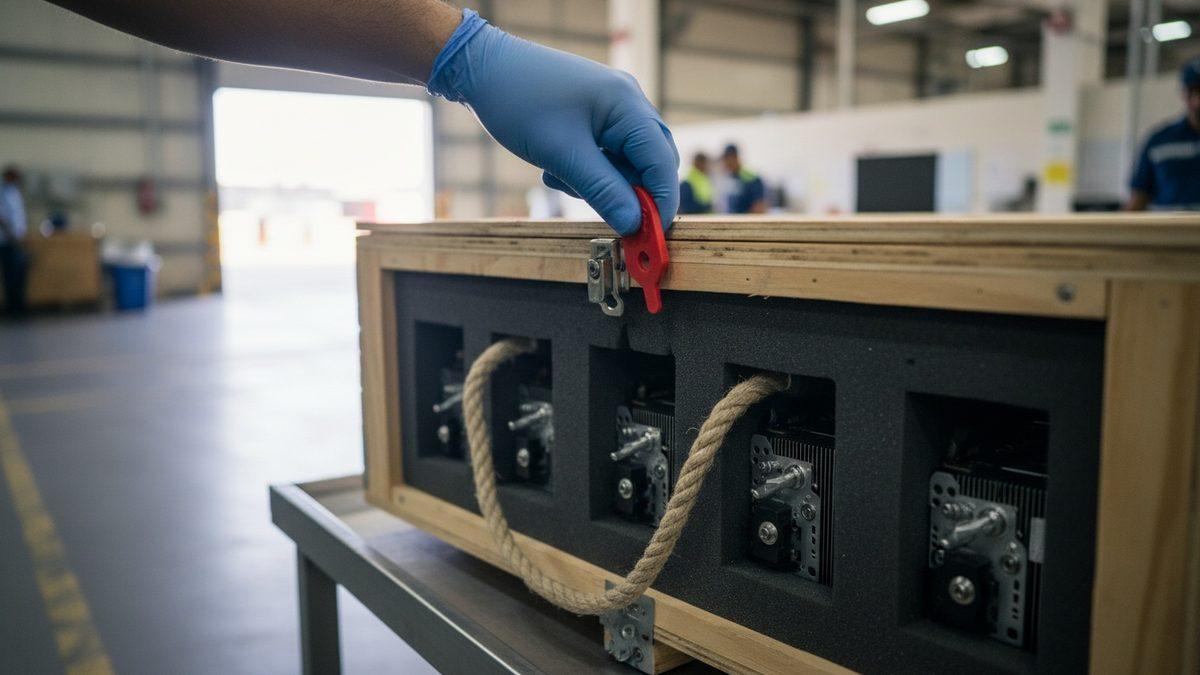
US restriction on AI chips aimed at China also hits Brazil
New set of rules from the BIS, published on November 16, 2026 and set to take effect on November 19, creates an extra screening step for buying AI chips and servers in Brazil, included among the countries seen as a triangulation risk for China.