Waymo suspends freeway rides across the U.S. after California DMV order

- Reading
- 5 min
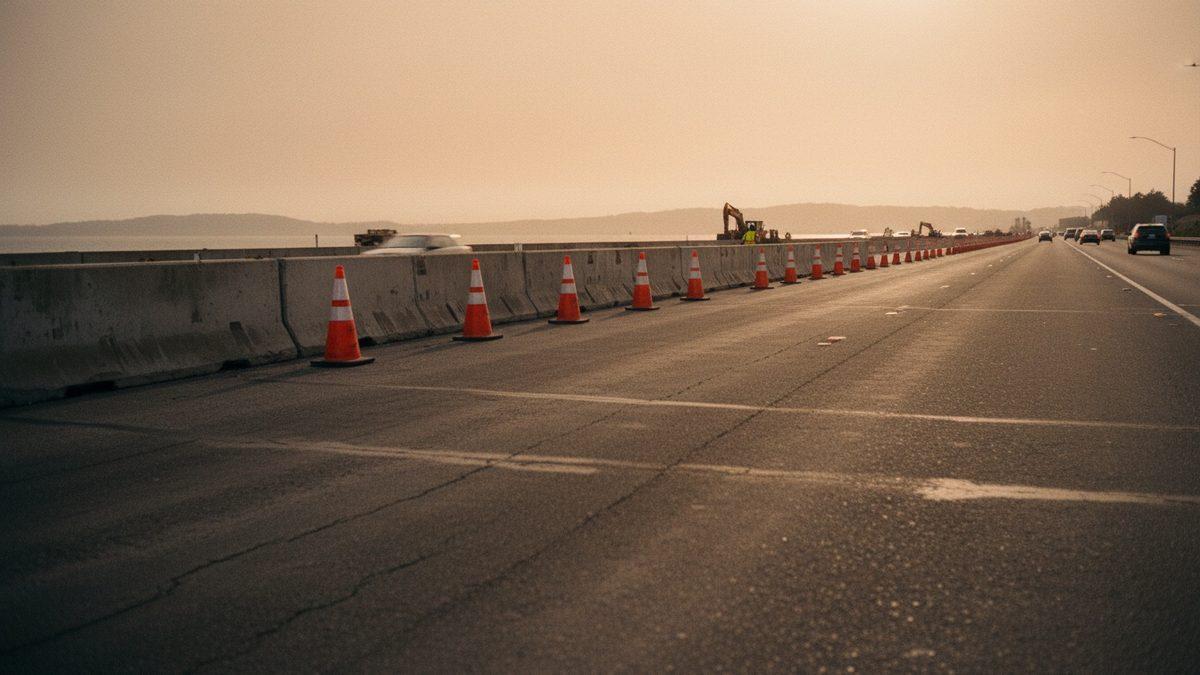
The California Department of Motor Vehicles restricted Waymo after three autonomous vehicles entered an active construction zone on Highway 101. The company suspended freeway rides in all U.S. markets to reassess the system.
What the DMV ordered stopped
The California Department of Motor Vehicles (DMV), the agency that regulates the testing and operation of autonomous vehicles in the state, issued a restriction on November 11, 2026 that bars Waymo from operating on California freeways. The order only became public on Tuesday, November 17, after the San Francisco Business Times first reported the case. The DMV confirmed the details to TechCrunch.
According to the agency, the decision came after two episodes: three Waymo autonomous vehicles entered an active construction zone on Route 101, near Burlingame, and a separate incident involved California Highway Patrol vehicles on Highway 280, in San Francisco. There were no injuries or collisions in either case.
The Department determined that Waymo's driverless freeway operations pose an imminent hazard to public safety due to recurring incursions by its vehicles into active construction zones where construction workers, vehicles and equipment are present, despite a prior restriction and corrective actions implemented following similar incidents that occurred on May 18, 2026.
Statement from the California DMV sent to TechCrunch
The restriction remains in place until Waymo demonstrates that it has implemented "effective corrective actions." There is no defined deadline.
The pattern that keeps repeating: construction zones
This isn't Waymo's first stumble with cones and construction sites. In May 2026, the company had already abruptly stopped operating on freeways, without publicly explaining the reason, while videos circulated on social media showing the robotaxis driving through traffic cones and struggling to navigate construction stretches.
In July, Waymo announced it had updated its autonomous driving software specifically to improve the system's behavior near freeway construction zones, and resumed service. The November episode shows that the fix didn't eliminate the problem: the DMV explicitly cites earlier "corrective actions" as insufficient given the recurrence.
For those who work with perception and planning systems in autonomous robotics, construction zones are one of the hardest edge cases to generalize: temporary signage, cones outside the mapped standard, workers giving informal instructions, reconfigured lanes. A patch that fixes the scenario observed in May doesn't necessarily cover the variation that showed up in November on the 101 near Burlingame.
Why Waymo shut down freeways in every market, not just California
The DMV order applies only to California. Even so, Waymo chose to restrict freeway operation in all 15 U.S. cities where it runs commercially, including markets outside California's jurisdiction.
Spokesperson Dana Gallagher explained the decision:
Safety is at the foundation of everything we do. Following recent freeway construction zone encounters on U.S. 101 in California that did not involve any injuries or collisions, the California DMV has implemented an operating restriction on freeway operations in the state. In alignment with our safety-first principles, we have also temporarily restricted freeway operations across our other operating markets to evaluate our performance.
Dana Gallagher, Waymo spokesperson
In practice, this is an engineering decision that treats a geographically localized incident as a sign of a model generalization problem, not an environmental one. If the software fails to recognize a construction configuration in Burlingame, the safety assumption is that it could fail in an equivalent configuration in Phoenix, Austin, or Atlanta, even without a recorded incident there. It's the equivalent of a feature rollback by scenario category, applied globally, rather than fixed only in the market where the bug appeared.
The ride service on regular streets was not affected. According to Gallagher, Waymo continues to serve more than half a million trips per week off freeways.
What this teaches those who build autonomous systems in production
Waymo's freeway feature history is a textbook case of release, rollback, and re-release of a high-risk feature:
- Late 2025: commercial launch of freeway access, a strategic decision to reduce travel time to airports and cross the Bay Area without relying on congested streets.
- May 18, 2026: construction zone incidents lead to a pause that wasn't publicly announced with a clear reason.
- July 2026: reactivation after a software update aimed specifically at improving behavior around construction zones.
- November 11, 2026: new incidents in the same type of scenario lead to a formal regulatory order, not just a voluntary pause.
The progression from a "silent pause" to a "documented order from a regulator" changes the weight of the incident: it stops being an internal product decision and becomes a formal regulatory constraint, with the criteria for resumption defined by a third party. For teams building high-risk AI products (autonomous vehicles, but also automated decision systems in healthcare, finance, or critical infrastructure), the episode reinforces that fixing the reported incident isn't enough: the regulator evaluates whether the fix generalizes, and the recurrence of the same type of failure after a publicly announced fix is evidence against the company, not in its favor.
What remains unresolved
The DMV has not publicly detailed what counts as an "effective corrective action" to clear Waymo to return to California freeways, nor has it given a deadline. The company said it is working with the agency and other state authorities to resume operation, but did not indicate a timeline.
There is also, as of this story's publication, no public technical explanation of what specifically failed in the system's perception or planning that allowed it to re-enter an active construction zone, months after the May incidents and the corrective actions announced in July. That detail matters for any engineering team following the case as a reference for how an autonomous AI safety incident is investigated and communicated (or not) to the public.
Translated from the Brazilian Portuguese original · Read the original

GitHub and Microsoft test AI that sends fix PRs, not just bug alerts
In a pilot with six open source projects, GitHub and Microsoft used an AI scanner verified by human researchers to deliver private reports with a suggested fix. Maintainers accepted 55 of the 99 fixes they received.