Gemini Starts Making Calls for You in Pixel 11 Test
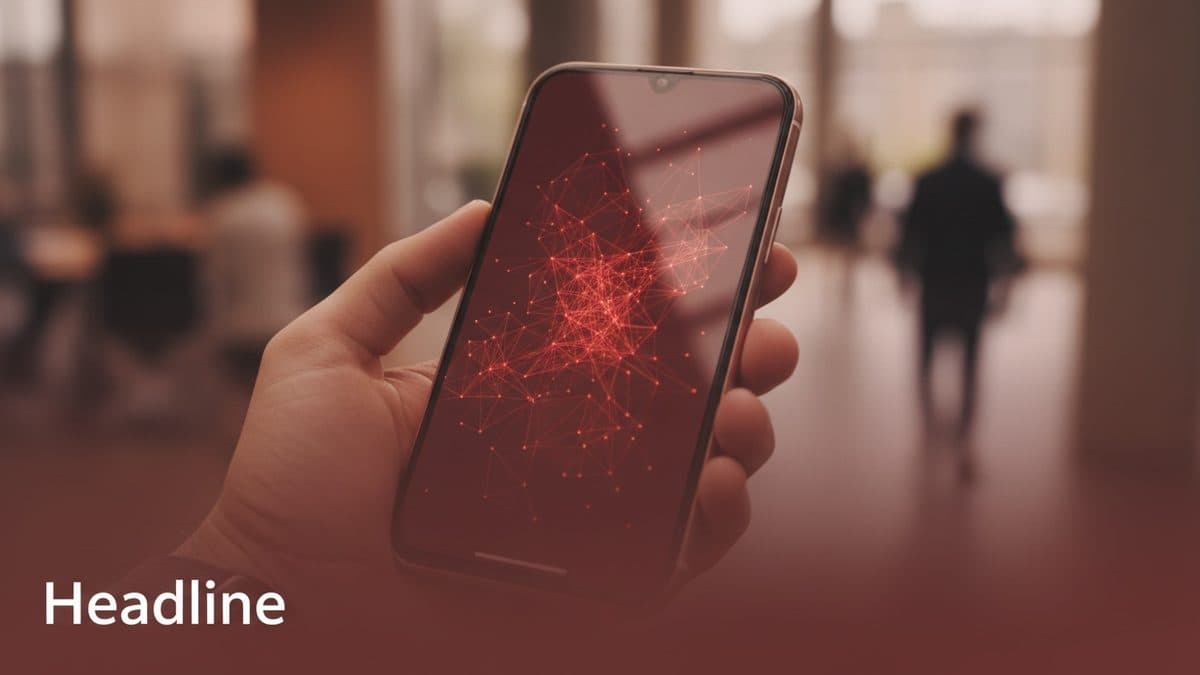
Google has launched Call for Me, an experimental feature that lets Gemini call businesses on the user's behalf. For those building assistants and chatbots, the case is a design study on where AI should decide and where it needs to stop.

Google has launched Call for Me, an experimental feature that lets Gemini call businesses on the user's behalf. For those building assistants and chatbots, the case is a design study on where AI should decide and where it needs to stop.
Google announced this week Call for Me, an experimental feature still in beta that lets Gemini make phone calls on the user's behalf. According to a Wired report, the feature is exclusive to the Pixel 11 and available only in the United States, in English, to those with a Gemini subscription who are enrolled in the public beta of the Phone by Google app.
The case is of interest to those building assistants and chatbots because it's a public example, with implementation details, of how a large company decides where an AI agent can act on its own and where it needs to hand control back to a human. It's exactly the problem any product team faces when putting an LLM in charge of real actions, not just text responses.
How Call for Me Works in Practice
The user asks Gemini to make a call (asking whether a hardware store has a specific tool, or booking an appointment at a barbershop, are the examples cited by Wired). The assistant can ask context questions before dialing, introduces itself to whoever answers, and holds a back-and-forth conversation until the request is resolved. If it hits an automated menu, it navigates the options and can wait on hold until reaching a human agent.
On the user's side, the interface shows a real-time transcript of the call, and it's possible to take over the call at any moment. The voice used is the same as Gemini Live, regardless of the user's preferred voice setting, which suggests a deliberate choice to standardize the "agent voice" separately from the "personal assistant voice."
There's an explicit exclusion list: Gemini does not call emergency services. Aside from that, the user can provide specific numbers when the business doesn't have an easy-to-find digital presence, as in the tattoo artist example cited in the report.
From Duplex to Gemini: Almost Ten Years of Trying
This is not Google's first effort in this direction. Duplex, announced almost ten years ago, let the now-defunct Google Assistant call restaurants and make reservations, and was discontinued a few years ago. Call for Me is described by Wired as a "second round" of the same idea, now with modern LLMs in place of the more limited voice models from the Duplex era.
The feature also connects to an already existing family of functions in the Phone by Google app on Android: robocall and telemarketing blocking, Hold for Me (which alerts when the wait is over and someone has picked up), Direct My Call (which shows the automated menu options in text before they're spoken, so the user can tap the right key directly), and real-time scam detection. Call for Me is the logical next step: instead of just helping the user handle the call, the agent takes over the entire call.
Where Autonomy Stops and the Human Steps In
The most relevant point for those designing agents is Google's response to Wired about the cases that still break: hard-to-understand accents, noisy environments, the chance that the person answering hangs up thinking it's spam, and the risk of the bot getting stuck in a loop asking to repeat the sentence. A Google spokesperson replied that "that's exactly what we want to keep testing," with the stated goal of improving accuracy across accents and noisy environments through real-world use. The company also confirmed that Gemini will hang up "politely" if the business can't fulfill the request, rather than simply cutting the call.
This design, live transcription, an immediate takeover button, an explicit blacklist of prohibited cases, and a defined behavior for graceful failure, is the backbone of any responsible voice agent architecture, and is worth copying regardless of which LLM or telephony provider is used.
What Changes for Those Building Voice Assistants in Brazil
Call for Me is not coming to Brazil for now: it's US-only, in English, tied to specific hardware. But the design pattern is directly applicable to those building voice or WhatsApp customer service bots in the Brazilian market, where adoption of conversational agents in banks, carriers, and retail is already high.
Here, the regulatory bar for consumer service tends to be stricter regarding access to human support, a topic already debated in sectors such as telecom, banking, and health plans. Any voice bot built for these sectors in Brazil already deals with an expectation of escalation to a human that Call for Me, for now, treats as an optional best practice.
In practice, this means that anyone designing a similar agent (for example, a bot that calls suppliers, schedules services, or confirms orders by phone) needs to decide, before writing the first line of function calling code, three things: what is the list of prohibited destinations or intents (the equivalent of Gemini's emergency block), how the human regains control of the interaction in real time, and what the agent does when it can't resolve the request: hang up, transfer, or escalate for a human to take over. Agentic voice tools available on the market already offer technical building blocks for this kind of task, but deciding where to put the brakes is up to the product team, not the platform.
What Remains Open
Wired raises a question that applies to any agent interacting with unsuspecting humans: what happens when the person on the other end doesn't know they're talking to an AI and hangs up out of doubt, thinking it's spam? Google hasn't detailed how Call for Me identifies itself in a way that reduces this friction, nor how it measures call success rates in the beta. There is also, for now, no public data on how many users are in the program or how many calls have already been completed successfully.
Wired's piece ends with a provocation that's more serious than it seems: if more and more companies are also putting chatbots on the phone (the example cited is the California-based chain Pizza My Heart, which uses a bot called Jimmy the Surfer to take orders by text), the next obvious stage is AI calling AI. For those building this kind of system, the challenge stops being just "does the bot understand the human" and starts including "can two bots understand each other without a common protocol," an interoperability problem that still has no defined standard.
Translated from the Brazilian Portuguese original · Read the original

China-linked hackers use AI pentesting tool to breach ConnectWise, Microsoft says
Microsoft attributed to a group tracked as Storm-0940 the use of the ARTEX AI pentesting framework to compromise ConnectWise and target hundreds of organizations worldwide. ConnectWise is a platform used by MSPs that serve companies in Brazil.