Google sends four TPUs to space to test data center in orbit
Google will launch four TPUs into low Earth orbit next week. The shipment is part of SpaceX's Transporter 18 mission.

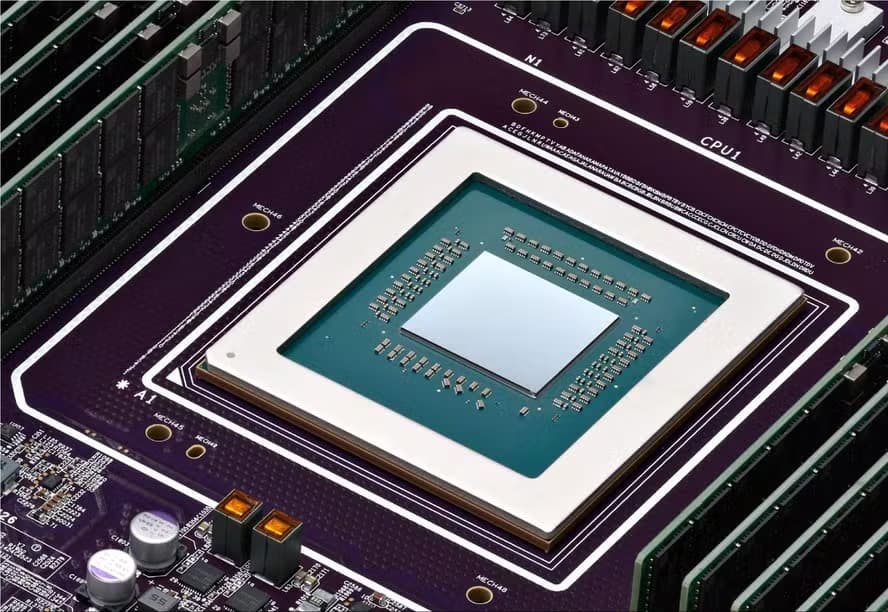
Google will launch four TPUs into low Earth orbit next week. The shipment is part of SpaceX's Transporter 18 mission. The satellite prototype is called Suncatcher, developed in partnership with Planet Labs.
The news came out on September 28. Moreover, it represents the first concrete step toward space-based data centers.
It's worth calibrating expectations right from the start. This flight avoids running real AI workloads.
Google wants to know if the chip survives launch
The goal is much more modest than the project's name suggests. The mission seeks real data on how the chips behave under launch conditions and in the space environment.
The first test involves brute force. The trip lasts just over 10 minutes, with the spacecraft subjected to forces of up to 10 g.
Some components face even more. However, peaks reach 100 g in specific parts of the equipment.
Vibration factors into the same equation. Solder, connectors, and packaging take a heavy toll during this stretch.
Radiation is the second major test
The orbital environment demands another kind of resilience. Energetic particles continuously hit the silicon.
Additionally, the company has already run lab tests. In these tests, the chips received a dose equivalent to five years in space.
Even so, lab and orbit differ quite a bit. Therefore, measuring real-world behavior remains necessary.
Notice what this means in practical terms. Radiation causes bit flips, memory corruption, and unexpected crashes.
Why anyone would want a data center in orbit
The answer comes down to power and cooling. In orbit, sunlight arrives without atmospheric interruption.
Also, the vacuum eliminates some of the problems of air cooling. Heat, however, needs to escape through radiation, which brings its own challenges.
There's also the physical space argument. Terrestrial data centers compete for land, water, and power grid connections.
This competition has grown significantly in recent years. Consequently, the search for alternatives has gained momentum.
Google faces problems every dev recognizes
Think about what changes for those writing software in this scenario.
First, latency. Low orbit reduces delay compared to geostationary satellites, yet communication still depends on pass windows.
Second, maintenance. Replacing a faulty board is out of the question, which pushes everything toward redundancy and fault tolerance.
Third, bandwidth. Sending training data to orbit and bringing results back comes at a high cost in link capacity.
For this reason, asynchronous workloads fit better. Batch inference and processing of images captured on-site make more sense than interactive service.
What to watch after launch
Keep an eye on the survival data of the four chips. This number defines the project's next step.
Also follow any reports on radiation-induced error rates. This metric will decide whether the idea moves beyond the prototype.
In the meantime, treat the topic with healthy skepticism. A satellite with four TPUs is far from a functional data center.
Follow our profile on Instagram!
Translated from the Brazilian Portuguese original · Read the original

Solo dev launches 11 apps in Rust and reignites the vibecoding debate
A Brazilian dev with a long career? No. The author behind the case is Brandon Thomas, a software engineer who launched ArtCraft on October 13.