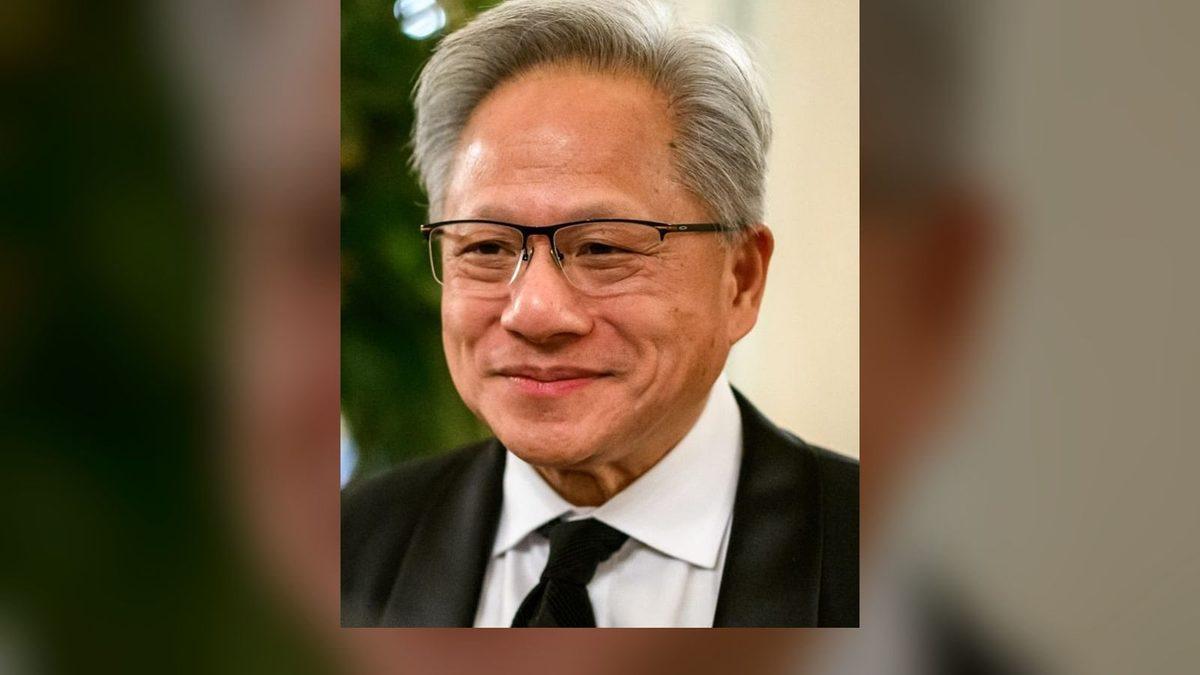
Jensen Huang Resigns From Nvidia Amid Chinese Espionage Scandal

- Reading
- 6 min
Jensen Huang stepped down as Nvidia's CEO after an alleged Chinese spy got close to him. A Brookings researcher explains why the real target may not have been technology, but influence over Washington.
The fact: a CEO falls, and the reason is still being written
Jensen Huang resigned as CEO of Nvidia this week, amid a scandal involving an alleged Chinese intelligence agent, identified as Alice Huang, an executive at the company Megaspeed. The news unfolded so quickly that The Verge's Decoder podcast had to update its own introduction minutes before publishing the episode, which had been recorded two days before the resignation was confirmed.
Megaspeed is an Nvidia customer and built a data center in Malaysia. According to Kyle Chan, a fellow at the John L. Thornton China Center at the Brookings Institution and a guest on the episode, the company may have served as a bridge for Chinese AI companies to access Nvidia's cutting-edge chips, such as those in the Blackwell family, circumventing US export controls.
For anyone running a technology company, the central fact isn't the affair itself. It's that the CEO of one of the most valuable companies on the planet, with something like 60 direct reports and a central role in the entire AI financial ecosystem, fell over a risk vector that normally doesn't appear on any crisis management committee's radar: a personal relationship as a geopolitical entry point.
What China wanted: it wasn't the source code
The obvious question is why someone would try to get close to Jensen Huang to obtain engineering secrets. Chan dismisses this hypothesis right away.
If you wanted the design specs for the latest Nvidia GPUs, I don't know if you would ask Jensen directly. I think you might want to go to his technical staff.
Kyle Chan, fellow at the John L. Thornton China Center, Brookings Institution
Huang's value, according to Chan, lies elsewhere: he is one of the few executives in the world who, according to the report, can call Donald Trump directly and get picked up in the middle of a conference. The most troubling hypothesis discussed on the podcast isn't technical leakage, it's influence over US chip export control policy, the kind of decision worth billions of dollars in revenue for Nvidia itself.
The governance failure that lasted a year
The most serious episode in the report, from the perspective of anyone running a company, isn't the affair: it's the investigation's timeline. According to the New York Times, cited on the podcast, American intelligence agencies had already flagged the case of Alice Huang and Megaspeed about a year before the resignation, in a memo overseen by Secretary of State Marco Rubio. Nothing happened during that period.
The report also describes how the US Department of Commerce spent months investigating Megaspeed, until Tim Teter, Nvidia's general counsel, directly contacted Under Secretary of Commerce Jeff Kessler. The case was then transferred to the Department of Justice, where, according to Chan, the inquiry stalled. Trump has publicly stated that the FBI is investigating the matter, and the first shareholder lawsuit against Nvidia has already been filed.
At the same time, the company's spokesperson, John Rizzo, and Teter himself publicly assured, for weeks, that there was nothing improper about the relationship between Huang and the alleged spy. A week later, Jensen Huang published an apology letter acknowledging the relationship. For Chan, this is the worst possible crisis pattern:
Nvidia has to tread very carefully here because what you don't want is exactly what's already happening, which is to start to deny or dismiss some of these issues and then turn around and have to say, 'Actually, there might be something there.'
Kyle Chan, fellow at the John L. Thornton China Center, Brookings Institution
Why this matters beyond Nvidia
The case exposes a structural risk that any founder dependent on a dominant infrastructure supplier needs to take seriously: concentrating decision-making power in a single person, with direct access to government, is a valuable asset and, at the same time, a single point of reputational and regulatory failure. No board of directors normally monitors the risk of a CEO becoming a target of foreign intelligence.
Three practical lessons emerge from the timeline described in the podcast:
- Binary crisis communication breaks trust: denying everything and then confirming part of what was denied is worse than admitting uncertainty from the start.
- Proximity to political power is both an asset and a liability: the same channel that helps the company influence public policy is the channel an adversary also wants to use.
- Ecosystem dependence (such as CUDA) creates a structural incentive to push for more permissive rules, which, according to Chan, was already true before any espionage: Huang publicly advocated for loosening export controls out of direct commercial interest.
What changes on the US-China chessboard
The scandal arrives at a moment when the debate over chip export controls was already split into two camps. On one side, those who favor tightening restrictions even further to keep the US ahead in AI. On the other, a group led until now by Howard Lutnick, the Secretary of Commerce, by Trump himself, and by Jensen Huang, which advocated for more exports, including to China.
According to Chan, the scandal tends to weaken the second group, regardless of where the investigation leads, because that side's arguments now carry the suspicion of having been influenced. This is likely to be compounded by a new political makeup: Chan notes that recently elected Democrats in Congress, with corruption among the most cited issues by voters in the last election, are likely to push for legislative investigations into the case.
A Chinese factor rarely discussed outside specialized circles, according to Chan, is that China isn't necessarily chasing the technological frontier in AI. China's strategy, he says, is to bet on diffusion: embedding existing technology deeply into the economy, rather than competing point by point over who has the most advanced model. Domestic chips like Huawei's don't need to match the performance of Nvidia's cutting-edge chips to meet that goal; they just need to be good enough and resilient to US sanctions.
What remains unresolved
None of this is settled. Chan describes a scenario in which a Congressional investigation might find no wrongdoing on Huang's part, and the case simply dissolves into the broader debate over export controls. But there's another scenario, in which additional revelations damage not only Nvidia and the US-China relationship, but the American AI boom as a whole.
There's also the retaliation variable: if the US expands restrictions on semiconductor manufacturing equipment (the same kind used by ASML, for example), China could respond by restricting rare earth exports, directly hitting supply chains already strained by the ongoing tariff war. For anyone deciding where to invest, hire, or build AI infrastructure, Chan's message is that the geopolitical risk surrounding chips is no longer hypothetical: it has become part of the cost of operating in this market.
Translated from the Brazilian Portuguese original · Read the original
Google open-sources TPU Sync code to synchronize cache and weights across TPUs
The TPU Sync library, now open-sourced under Apache 2.0, moves KV cache blocks and model weights between TPUs and promises to cut time to first token by up to 90% in long-context workloads.