Meta announces Ray-Ban Meta Audio, camera-free AI glasses to respond to spying accusations
At Connect 2026, the company introduced smart glasses that swap the camera for high-quality audio, trying to escape the "pervert glasses" nickname that video-recording models had earned.

Meta confirmed on Wednesday, during the Connect 2026 keynote, the launch of the Ray-Ban Meta Audio, its first camera-free artificial intelligence glasses. The name is bureaucratic, but the proposal is straightforward: drop video capture to try to solve an image problem the company had been accumulating since it launched its first smart glasses with built-in recording.
From camera to audio: the reason for the change
Meta's AI glasses with a built-in camera earned, according to reporting by TechCrunch, the informal nickname "pervert glasses" after users, mostly men, were caught using the device to film people without consent. Meta had already tried to mitigate the problem with an update that disables the camera if the recording indicator LED is tampered with, but the discomfort around the product persisted.
The Ray-Ban Meta Audio attacks the problem at the root: without a camera, there is no possible video recording. The device focuses on music, podcasts, voice calls, real-time speech translation, and communication with Muse, Meta's personal AI assistant that is already present across the company's entire glasses lineup. In practice, it's Meta's answer to something like Apple's AirPods with Siri, competing in the same on-face audio territory, without the reputational baggage of the cameras.
"Once you get used to high quality audio, it's just a thing that you want all the time, right?", said CEO Mark Zuckerberg during the keynote, explaining that the company realized it could design an entire category of glasses built around audio alone.
Specs and price
The Ray-Ban Meta Audio is manufactured by EssilorLuxottica, Meta's hardware partner for AI since the first Ray-Ban Meta models. Without needing to accommodate camera sensors, the glasses became thinner than the other models in the line and weigh just 43 grams. The frame has adjustable temple tips, interchangeable nose pads, and over-extension hinges.
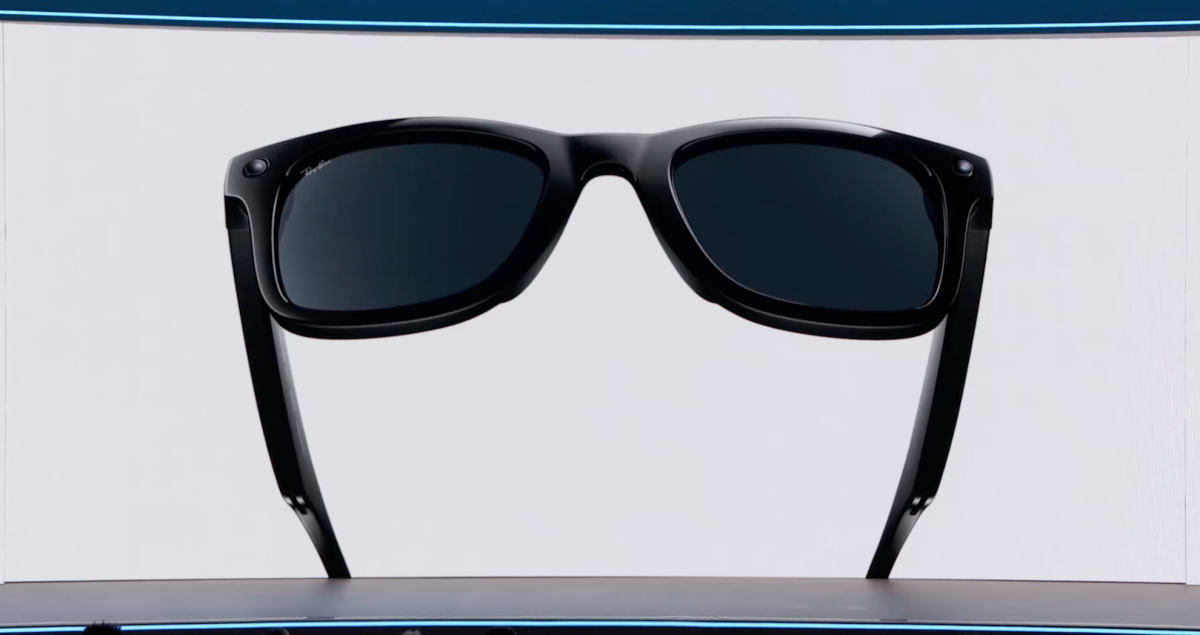
The battery promises up to 12 hours of continuous use on a single charge, reaching 48 hours with the included charging case, according to data released by Meta itself. The product comes in 23 color and lens combinations, in two styles: the "Clubmaster," Ray-Ban's retro-inspired design, and the "Burbank," described by the company as a classic, timeless rectangular shape. As with the other models, it can be ordered with optical prescription lenses.
The starting price is US$ 349, and pre-orders open on October 13, 2026 (date confirmed by Meta). As of the source's publication, there is no announcement of availability or specific pricing for Brazil.
The rest of the announcement: more powerful cameras in the video lineup
Connect 2026 didn't just bring the camera-free model. Meta also announced the next generation of its camera-equipped glasses, the Ray-Ban Meta (Gen 3), which arrives alongside the existing Wayfarer with two new shapes: Aviator and Zena, the latter with a cat-eye frame. Generation 3 has a 12 MP camera with support for 3K Ultra HD video, a six-microphone array, and up to nine hours of battery life.
The glasses line, made in partnership with EssilorLuxottica, also gains more styles and colors, along with a new brand partnership with singer Lisa, succeeding the previous collaboration with Kylie Jenner. Meta stated that expansion into more countries is also planned, without detailing a timeline.
All glasses in the line, with or without a camera, have access to Muse, Meta's personal AI assistant.
What's still coming
The company also previewed a list of future features for the glasses lineup: support for Dolby Atmos Capture, a feature that automatically picks the best photo among several captured frames, the option to switch between landscape and portrait mode, accessibility improvements for people with hearing loss, more detailed AI responses, different audio modes, and customizable controls.
One point stands out and still has no public technical detail: Meta mentioned a feature called "private processing," which the company describes as a way to prevent itself from accessing user data. The source does not specify how this works in practice, nor whether it involves on-device local processing, end-to-end encryption, or just a data retention policy. For those developing integrations with Meta's glasses SDK or evaluating these devices as a surface for capturing voice and location data, this is the detail to watch when the company details the architecture.
The Ray-Ban Meta Audio does not, by itself, resolve the debate over AI wearables and privacy, since the camera-equipped line continues to be sold and expanded in parallel. But it does indicate that Meta is segmenting the market: those who want to record video still have a more powerful camera option, and those who just want audio with built-in AI get a dedicated product, lighter and, at least on paper, without the image problem that plagued the previous lineup.
Translated from the Brazilian Portuguese original · Read the original

China-linked hackers use AI pentesting tool to breach ConnectWise, Microsoft says
Microsoft attributed to a group tracked as Storm-0940 the use of the ARTEX AI pentesting framework to compromise ConnectWise and target hundreds of organizations worldwide. ConnectWise is a platform used by MSPs that serve companies in Brazil.