Alan AndradeAuthor

- Reading
- 6 min
Ai2 report with 17 researchers defines five trust criteria for AI agents in science, and much of it is, in practice, an access control and auditing engineering problem.
A report published by Ai2 (Allen Institute for AI) on the Hugging Face blog on November 25, 2026, tries to answer a question that usually stays confined to marketing talk: when does an AI system stop being automation and actually become an agent that can be trusted? The team interviewed 17 scientists from the natural, applied, and social sciences, all based in the United States, about the responsible development of AI agents in scientific research.
This focus matters to those building this kind of system outside the lab too. The scientists interviewed didn't evaluate a specific product: in interviews, they described where they would accept delegating work to an agent, what could go wrong, and what kind of guarantee they would need before trusting an autonomous tool. The result is less an ethical manifesto and more a list of requirements, many of which translate directly into software architecture.
The five dimensions of trust
The study's central finding is a taxonomy of five axes that appeared repeatedly in the interviews: validation, privacy, objectivity, accountability, and transparency. Together, they describe a concern that goes beyond the system getting the answer right.
- Validation: the researcher needs to know whether the result is reproducible and matches the methods requested.
- Privacy: data from human participants or confidential information must not leak through the path the agent took.
- Objectivity: the agent cannot reinforce a favorite hypothesis by filtering only evidence that supports it.
- Accountability: someone needs to be identified as responsible for verifying and signing off on the AI-assisted result.
- Transparency: it must be possible to inspect how the answer was produced, not just receive the finished answer.
None of these points are exclusive to the lab. It's the same list that any squad putting an agent to work on production data should have on the table before the first deploy.
Where autonomy runs into scope
The report's most concrete point, and the one that most interests those who program, is about access scope. Several interviewees reported wanting to know not just whether the generated code works, but whether the agent accessed files outside what was authorized. The report explicitly proposes a coding benchmark that assesses "not just whether the generated code works, but whether the agent accesses files outside its authorized scope."
For those who already build pipelines with MCP, tool calling, or agents with database access, this sounds familiar: it's the same least privilege problem that already exists in API security, just applied to an agent that decides on its own which tools to call. A data analysis agent that has read credentials for an entire database, when it only needed one table, is exposed to the same risk that motivated the interviews, just at production scale instead of in the lab.
The report also suggests a literature review benchmark capable of detecting whether the agent ignores contradictory evidence, and a comparison between a data processing agent's method and the established human workflow. None of these benchmarks exist ready-made today: Ai2 treats them as a proposed direction, not a delivered solution, and that's worth noting before citing the study as if it were a launched product.
When rewriting everything is safer than using the ready-made draft
One of the study's most direct accounts comes from a political scientist who used Claude to review a manuscript and then decided to rewrite the entire paper from scratch, because he could no longer tell what was his own contribution and what came from the model.
I don't know what was AI and what was me.
Political scientist, participant in the Ai2 study
This episode illustrates a distinction the report insists on making: a technically correct task is not synonymous with an acceptable task. A biologist interviewed flatly refused to use AI to generate research ideas, considering it a non-transferable personal responsibility, while an anthropologist saw the most formulaic sections of a paper (methods and results description) as natural candidates for automation. The line isn't universal: it changes from field to field and, within the same field, from researcher to researcher.
For those building products with agents, this variation is the opposite of comforting, but it's useful information: there's no fixed list of "tasks every agent can do without supervision." Agentic products that try to sell generic autonomy, without letting the user configure where AI comes in and where it stops, tend to run into exactly this kind of resistance.
Generic guardrails also have a cost
The report offers an important counterpoint to the narrative that more restriction is always safer. A political scientist described how content filters that prevent the system from discussing certain topics got in the way of legitimate research on political violence and human rights violations: the same guardrail designed to prevent malicious use blocked academic use of the subject itself.
At the same time, researchers working with data from human participants asked for stronger privacy and access control guarantees. Both requests are legitimate and point in opposite directions: an agent without sufficient guardrails can expose confidential data; an overly rigid agent can stall valid lines of investigation.
The report's practical conclusion is that this fine-tuning cannot be decided solely by the team that builds the model. It proposes that scientific communities have a direct role in defining where the agent can go, which, translated outside the lab, sounds like an argument in favor of guardrail policies configurable by domain and by organization, rather than a single filter applied to every client.
What changes for those who build agents
Translating the findings into engineering decisions, three points come straight off the page:
- Logging and audit trails are not optional. If the user needs to know which files the agent touched and which methods it used, that has to be recorded from the very first tool call, not reconstructed later through reverse engineering.
- Access scope is a product requirement, not just a security one. Separating what the agent CAN access from what it SHOULD access in a specific task is the same least privilege logic that already exists in IAM, just decided task by task.
- Evaluating "task completed" isn't enough. A benchmark that only measures whether the code runs or whether the answer is correct ignores exactly what the interviewed scientists demanded most: how the result was produced.
None of this is exclusive to science. Any team that sells an "autonomous agent" to a corporate client will hear the same questions from a compliance auditor that the scientists asked the Ai2 researchers.
The limits of the study itself
Ai2 is transparent about the scope of the work: it's 17 interviews with scientists based in the United States, not a representative survey of global scientific opinion, and not an empirical evaluation of any specific agent on the market. Participants spoke both about the generative tools they already use today and about expectations for more autonomous systems not yet available.
This means the report works better as a list of questions to ask than as a ready-made compliance checklist. Ai2 treats the proposed benchmarks as a starting point for a "participatory benchmark," built together with scientists, and not as something already implemented. For those building agents outside of science, the value lies in recognizing that the same five dimensions of trust, applied to their own product, will probably expose similar gaps.
Translated from the Brazilian Portuguese original · Read the original
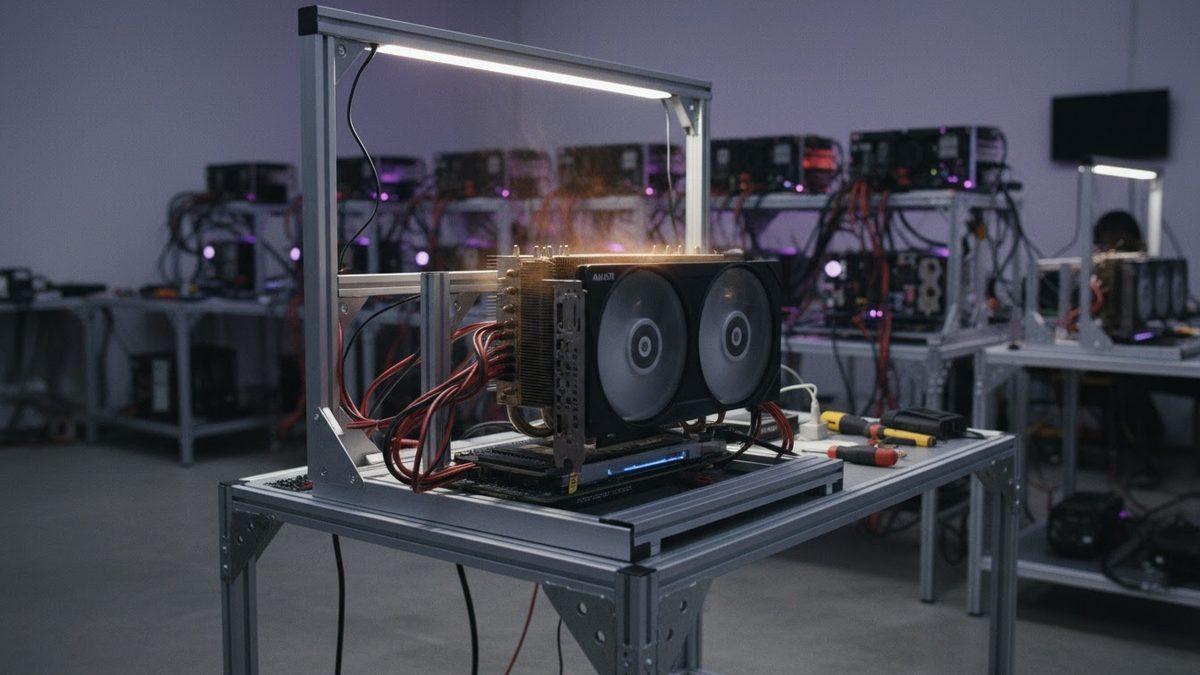
llama.cpp Dashboard Measures Local AI Performance on AMD Ryzen and Radeon Hardware
Hugging Face, in partnership with the llama.cpp project and AMD, published a public dashboard that compares tokens per second across different models, quantizations, and llama.cpp versions running on Ryzen and Radeon hardware.