5 min read
How AI abundance changes the logic of building software, according to a former Claude Code member
 Alan AndradeAuthor
- Reading
- 5 min
In a talk at AI Engineer CODE, Thariq Shihipar, who left Claude Code for OpenAI, explains why testing cheap AI variations frees up time for what requires human judgment.
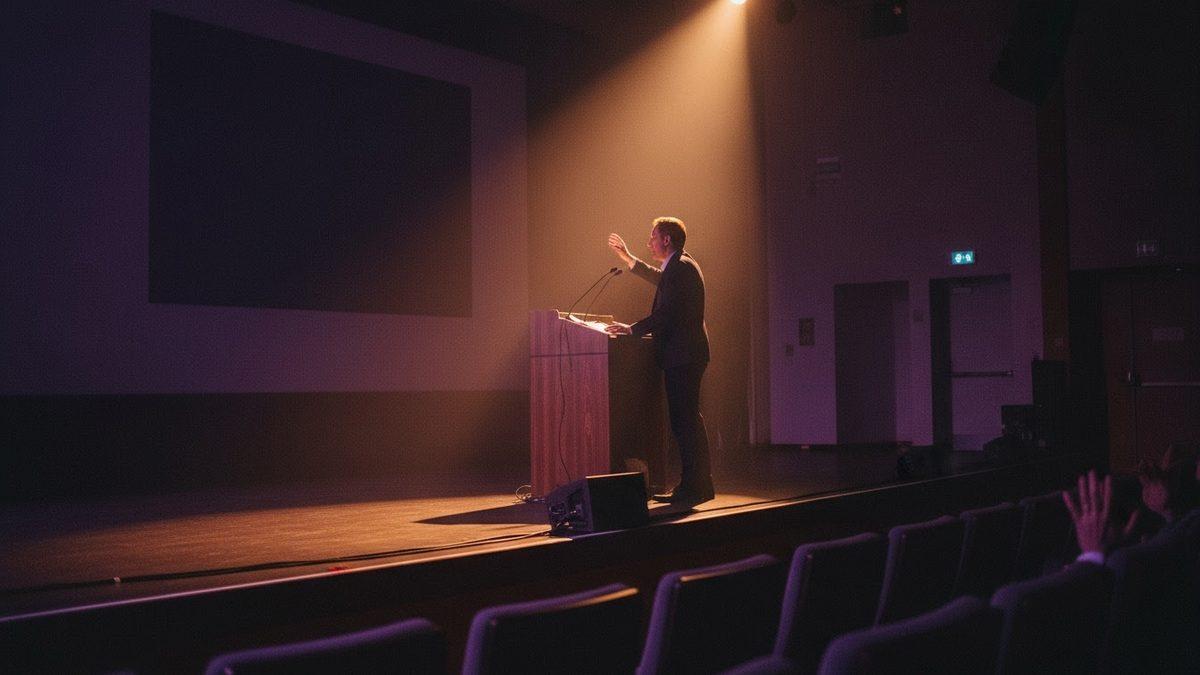
Thariq Shihipar took the stage at AI Engineer CODE, a conference aimed at people building products with AI, shortly before announcing his own departure from Anthropic for OpenAI. The episode aired on the Latent Space podcast on November 25, 2026, recorded before that change was announced. Shihipar worked on Claude Code, Anthropic's coding agent, and had previously given an earlier interview to the same podcast about the tool's future.
In the new episode, he tries to answer a broader question than the everyday use of an agent: what AI actually changes in the way software is built, beyond making code faster to write. The answer he proposes has two halves that seem contradictory.
From the logic of scarcity to the logic of abundance
On one side, a "revolution": AI cheap enough to produce software by the thousands, testing variations that would previously have cost too much even to consider. On the other, a "renaissance": the time left over from that mass production can be reinvested in making a single thing feel right, down to the detail, down to the finish. The thesis discussed in the episode is that these two forces don't compete for the same time budget, they feed each other.
Historically, every feature of a product carries a high opportunity cost: every hour spent implementing one variant is an hour that doesn't go toward another part of the product. That scarcity forces early decisions, often with no data at all, just intuition. Teams pick a direction, build it, and only find out months later whether it worked.
The /human folder and the live throw
According to the episode's summary, Shihipar shows this shift within the fighting game he develops as a personal project: a folder called /human, where he edits the size of a rock in the scenery and immediately tests throwing that object in the game, live, during the talk itself. There's no separate build, deploy, and validation cycle: the change and the test of the change collapse into a single gesture.
This is abundance applied to game balancing, an area that traditionally consumes weeks of manual tuning. In short: when the cost of testing a variation drops to near zero, the bottleneck stops being "can we build this" and becomes "is this worth testing". It changes the kind of human work that remains scarce.
The Dock he stopped using
Not all abundance produces the expected result, and that's the most honest point in the material released by Latent Space. Shihipar built an alternative Dock for macOS that switched modes automatically, a personal productivity prototype tested on himself before any other user.
The takeaway wasn't about switching the Dock's modes. According to the conversation's summary, what he realized actually mattered was noticing his own moment of distraction, not the mechanism he'd built to solve it. It's a reminder that any team that has shipped a feature "because it was quick to build" will recognize: producing the cheap variation is the easy part; understanding what it teaches about the real problem remains costly, even with AI.
Decision models with a defined action space
Another axis of the conversation, according to the episode's chapters, is what Shihipar calls a decision model: a system that chooses among actions a designer has previously defined, rather than acting freely on anything. The difference is subtle, but it matters for anyone running AI agents in production.
Giving an agent full autonomy is costly in terms of unpredictability: results vary too much between runs, and debugging "why did the agent do that" becomes an open-ended problem. Restricting the agent to choose from a set of actions already mapped out by the product team reduces the surface for error without eliminating the speed gain, a tradeoff similar to exposing function calling instead of letting a model generate arbitrary code to execute.
Adoption: the test that comes after the demo
Two of the chapters listed by Latent Space are called "Adoption" and "Work people can see". Based on the titles, the conversation separates two things that are easy to confuse when a prototype comes together quickly: a convincing demo on a conference stage and a tool the team actually keeps using once the novelty wears off.
The Dock case itself illustrates this distinction: building and using something once doesn't prove adoption, it only proves the build worked. For anyone deciding what to prioritize after an AI prototype, the question the episode seems to raise is whether anyone besides the person who built it would keep using it during an ordinary work week.
The bottleneck left when the build gets cheap
If producing variations becomes cheap, the scarce resource shifts: the question "which experiments deserve to run" becomes the new bottleneck. Compute isn't infinite, the attention of whoever evaluates the result isn't infinite, and not every testable variation is worth the time it takes to interpret the result.
AI Engineer CODE brings together exactly this kind of discussion: it's no longer about whether more can be automated, it's about what to choose to automate first. Latent Space makes the full transcript of the conversation available, along with the episode's summary and chapter markers.
What changes for those building in Brazil
For teams that already use Claude Code, Copilot, or Codex day to day, the practical takeaway isn't "use more AI", it's "decide what to do with the time AI frees up". A UI prototype that used to take two days now takes twenty minutes; the question left over is whether that gain turns into more features shipped in a hurry or into polishing time on a single interaction that truly matters.
It's also worth noting the career move behind the conversation: Shihipar left a central role in Anthropic's Claude Code for OpenAI shortly after recording this episode. In a market where these two labs compete for engineers who understand both the model and the product, Brazilian teams weighing which agent stack to adopt would do well to track where these professionals decide to build next, not just what the models announce.
Translated from the Brazilian Portuguese original · Read the original
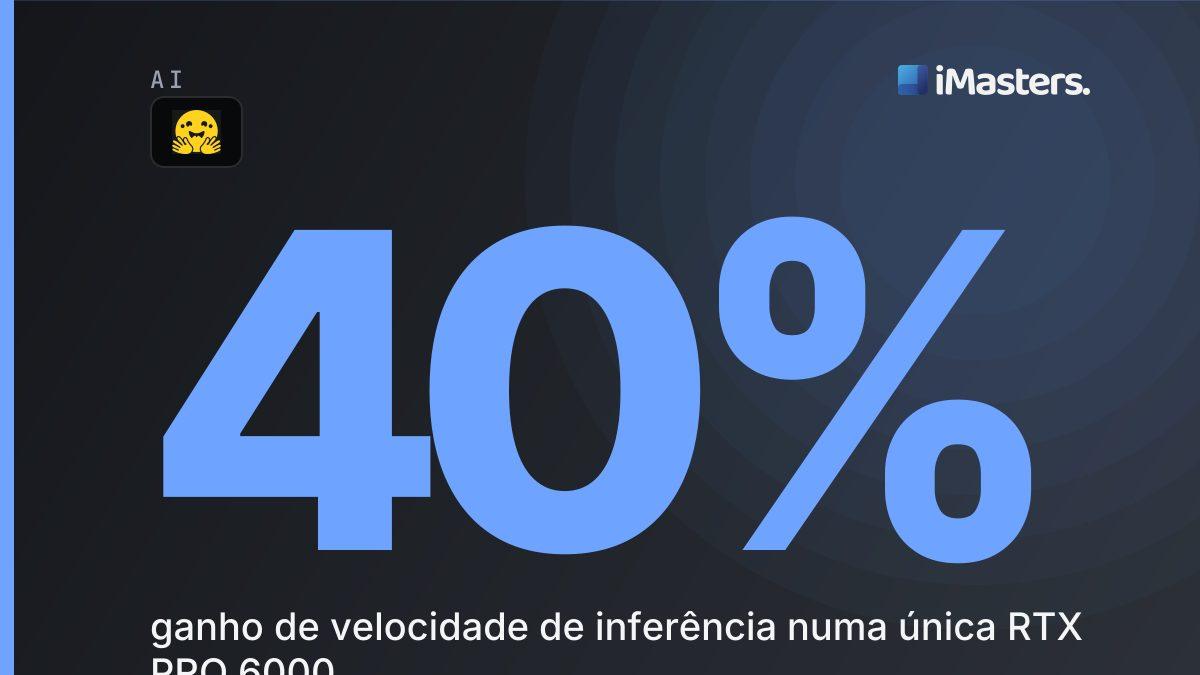
Hugging Face Optimizes Inkling 2 Mini Inference on a Single RTX PRO 6000
A code agent tuned Inkling 2 Mini inference on an RTX PRO 6000 and gained 40% speed without touching the model's weights. The result shows that competent agent inference fits on a single production GPU.