LinuxAI
Content type: Concept
5 min read
OpenAI and Cisco launch Shirudo, open-source runtime that shields Linux systems without rebooting
 Alan AndradeAuthor
- Reading
- 5 min
Shirudo uses eBPF to block a production system's vulnerable code while the definitive patch isn't ready, without needing to restart the service.
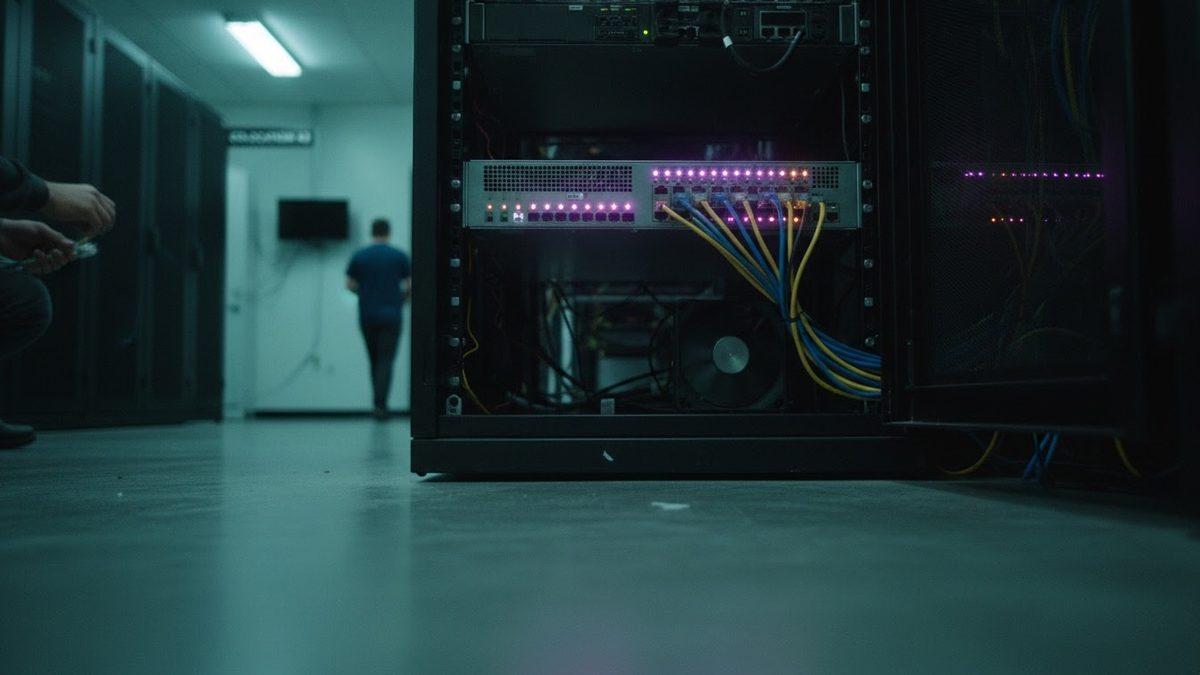
OpenAI and Cisco announced Shirudo on November 23, 2026, an open-source runtime to protect Linux systems in production while a definitive patch isn't ready. The proposal tackles a problem well known to anyone who works with DevSecOps: finding a vulnerability is fast, but testing and rolling out the fix across the entire fleet can take days or weeks, and during that window the service remains exposed.
The name already gives away the idea: Shirudo means "shield" in Japanese. Instead of waiting for the full patch cycle, the tool lets teams create temporary protections, called "shields," that specifically block the behavior exploited by the attack, without taking down the service or blocking legitimate traffic that passes through the same code path.
The problem Shirudo tries to solve
OpenAI's text describes a common dilemma: an exploit and a legitimate request often depend on the same system operation. Blocking that operation entirely would take the service down; not blocking it leaves the exposure window open until the patch ships. It's exactly the gap that separates "finding the bug" from "fixing the entire machine fleet."
To illustrate this, OpenAI and Cisco ran a controlled test with a vulnerability named Java4Shell against a running Elasticsearch instance. Using Codex, the team generated a shield that added an input check to Java's Base64 decoder and attached it directly to the already-running Elasticsearch process. When the exploitation attempt arrived, the shield rejected the malicious payload and blocked the attack, with Elasticsearch staying online without restarting.
How it works under the hood: eBPF, signing, and TPM
Shirudo is built on eBPF, the Linux kernel technology that allows small programs to run at specific points in the operating system without recompiling or restarting anything. That's what makes it possible to observe suspicious activity and apply a targeted protection to a system that keeps running. OpenAI organizes the project around four capabilities:
- Live protection: eBPF shields block vulnerable code paths without restarting the system, and security teams can simulate a shield's effect before actually activating it.
- Defense at machine speed: agents get programmable controls to investigate vulnerabilities, develop targeted shields, and validate their effectiveness against real exploits and workloads, but the security team still decides what gets deployed.
- Trustworthy deployment: each shield is cryptographically signed and verified before being loaded; Linux's own eBPF verifier checks the program against the kernel's security rules.
- Hardware-backed verification: Shirudo uses a Trusted Platform Module (TPM) to maintain a verifiable record of which protections were loaded or removed, giving operators auditable evidence that the system meets a given security requirement.
This combination of signing, kernel verifier, and TPM is what sets Shirudo apart from any ordinary mitigation script: the idea is that a shield should be something auditable and revocable, not an opaque patch applied hastily during an incident.
Why this matters for infrastructure operators
For DevSecOps teams, the practical gain is shortening the window between "vulnerability disclosed" and "system protected" without depending on the normal release cycle, regression testing, and maintenance window. Today, the most common alternative tends to be shutting down a service, putting a generic WAF in front of it, or simply accepting the risk until the patch ships. A surgical eBPF shield, tested before going to production, is a middle-ground option that didn't exist before in a standardized, open-source form.
This doesn't replace the definitive patch. OpenAI's own materials make clear that Shirudo is meant as a bridge: the vulnerability remains there in the source code, only the exploitation path is temporarily blocked. Anyone relying on the shield as a permanent solution is just postponing the problem, not solving it.
We're giving defenders better models and tools to find and fix vulnerabilities faster, but finding a bug today doesn't mean you can patch every system tomorrow. We are partnering closely with Cisco on Shirudo to help teams protect the systems they need to keep running while they build and roll out a fix. So many teams rely on the same software that it makes sense to build these tools in the open. Now when one team finds a better way to protect a system, others don't have to start from scratch.
Greg Brockman, President and Co-founder of OpenAIfoto: TechCrunch · CC BY 2.0
What still needs to mature
The project launches open, licensed under BSD 2-Clause, with the BPF programs dual-licensed under BSD and GPL, which makes adoption and third-party auditing easier. But it's the initial version of something OpenAI itself describes as "a first step": the company talks about strengthening the operating system foundations needed to deploy these protections at scale, including making the kernel and core services more robust, limiting workload permissions, and making updates and recovery safer.
The stated goal also includes making tested shields available alongside vulnerability disclosures (CVEs), giving operators a way to evaluate and deploy temporary protections while they prepare permanent patches.
The stated ambition goes beyond blocking a single exploit: the long-term idea is for AI agents to identify affected systems, validate protections, and deploy shields automatically, with applications running with only the minimum permissions needed, governed by policies generated and maintained automatically. That's still a promise, not a feature available today.
How to test it
Anyone who wants to evaluate Shirudo has three practical paths made available by OpenAI:
- Follow the VM quickstart to sign, load, and verify a test protection.
- Run the self-guided lab created by Isovalent to explore how the runtime works in practice.
- Sign up for the technical webinar scheduled for December 15, with implementation details.
The source code, documentation, and full repository are available on the project's GitHub, along with the technical walkthrough presented at the Linux Plumbers Conference, which shows step by step how to apply and verify a shield on a target host. For infrastructure teams that already use eBPF for observability (with tools like Cilium, from Isovalent itself), Shirudo arrives as an additional layer that reuses knowledge the team may already have, instead of requiring an entirely new security stack.
Translated from the Brazilian Portuguese original · Read the original
Google shows how to cut attacks on AI agents from 48% to under 1%
Benchmark published by Google on November 23 shows how a semantic policy mechanism blocks prompt injection in agents without blocking most legitimate tasks.