Cimed and Enter: when the founder's face becomes the brand's trust channel
At BRASA Summit Europe, Brunno Matias heard how Cimed and Enter use the voice of the people doing the work to build trust.

- Reading
- 4 min
Originally published on NewHack on November 15, 2026.
At BRASA Summit Europe, Brunno Matias heard how Cimed and Enter use the voice of the people doing the work to build trust.
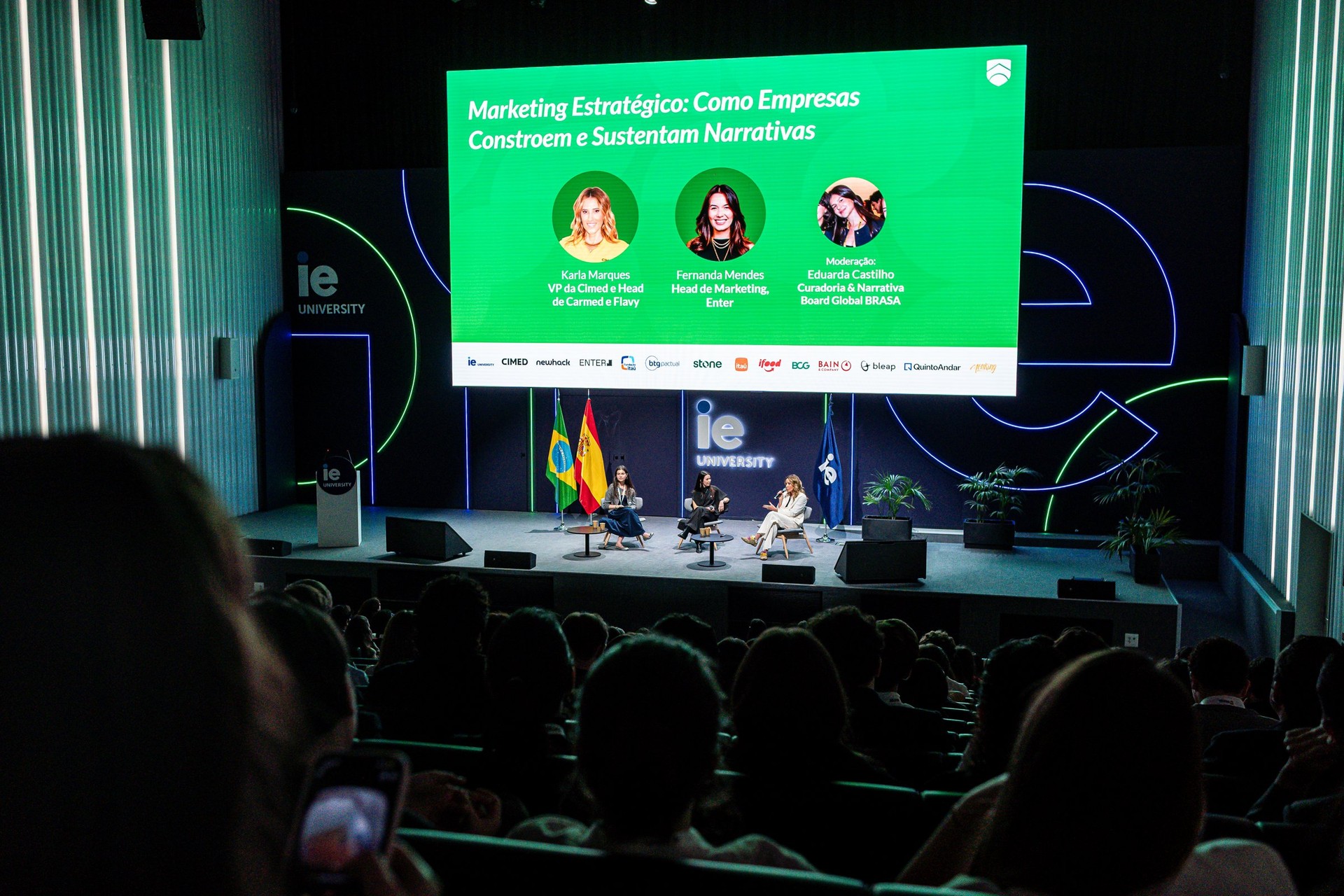
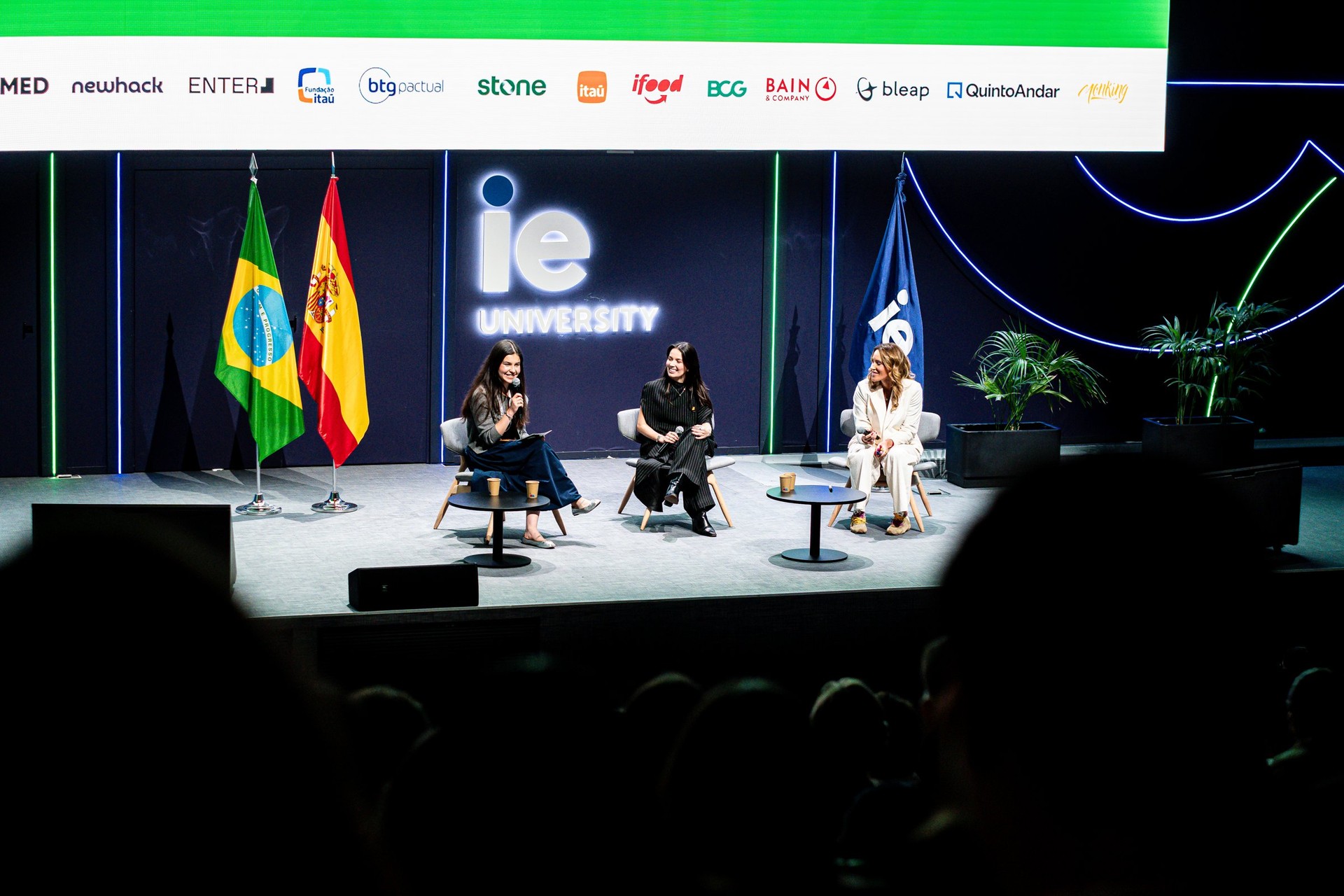
At BRASA Summit Europe, in Madrid, I attended the panel "Strategic Marketing: How Companies Build and Sustain Narratives," with Karla Marques, from Cimed, and Fernanda Mendes, from Enter. I left thinking about how a traditional company and an AI startup arrive at the same conclusion about communication through such different paths.
On one side, a family-owned pharmaceutical company. On the other, an artificial intelligence company that chose to start with the legal market, one of the country's most traditional sectors. Different strategies, same goal: make people trust the brand because they know who's behind it.
The family in front of the camera
Karla said she discovered the communicator in her only at age 50. She spent her life working in the Cimed business but had never put her face in front of the camera. Today she records frequently, with a small team, without elaborate production, and once a week shows the factory.
The reason is quite practical. Medicine has strict advertising rules. So Cimed uses the family and the consumer line to make the brand known. When a person gets to the pharmacy counter and has to choose between two generics, the question Karla asked on stage sums up the strategy: why wouldn't you buy the product from a family you know, that has an owner, and that shows up working every day?
This is founder-led growth to the core. The trust a person builds by seeing someone on social media transfers to the product, even when the product can't be advertised in the traditional way.
People like people, even in B2B
Fernanda brought the same principle to a very different context. Enter sells to legal departments, and she repeated several times that B2B is also made of people.
The story that struck me most was about a client case that needed to go live in a hurry. The first idea was to publish it with the company's image. She held the publication until she could get a photo of the client's people who had made the project happen. For her, they were the ones who had to appear, not Enter. And she said clients had already come in after seeing these cases on the website, wanting to know more, and turning into contracts.
Another idea of hers that applies to any founder: the same story needs to be told in different ways for different audiences. She called this cascading. A piece in a publication lawyers read, a video on the founder's LinkedIn, a stage like BRASA's. Each front translates what the company does for whoever is on the other side.
What holds people back isn't the tool, it's the judgment
Near the end, Karla gave the panel's most direct advice. Social media is available and free. What stops most people from showing up is the fear of judgment, almost always from friends and family.
She noted that it's rare for someone to recommend a product spontaneously in conversation, and that this isn't malice, it's just how the mind works. So if you don't put yourself out there for more people to see, you end up waiting for a referral that probably won't come. A video with few views can bring the client you needed.
Anyone who works in startup communication knows this block well. The founder knows how to explain the business better than anyone but freezes up when it's time to hit record.
How this happens at NewHack
Listening to both of them, I thought about our own case. At NewHack, Rodrigo Terron is that face. He's been going to Web Summit since 2017, has attended BRASA conferences since 2019, and came to Madrid as a mentor. When he posts about something he saw on a stage or learned in a mentoring session, the people following along aren't consuming brand content. They're listening to someone who's actually lived it.
My work in communications is similar to what Fernanda described. Take what Terron sees and experiences and cascade it into different formats: an article like this one, a short LinkedIn post, a carousel, a behind-the-scenes video. The story is the same, the way of telling it changes depending on who's going to read it.
If you're just starting out
You don't need a big team or expensive production. Karla records quickly and without structure, and Fernanda used a client photo to build trust. What the two have in common is consistency and honesty.
If I were starting today, I'd do three things. I'd choose a simple format I can repeat every week. I'd show the actual work, like Karla does with the factory, instead of just talking about it. And I'd put clients and partners at the center of the stories, like Fernanda does in her case studies.
The rest comes with time. Trust is built little by little, post by post.
Translated from the Brazilian Portuguese original · Read the original
Datasette gains support for local models via datasette-llm 0.1a11 plugin
The datasette-llm plugin, which serves as a common LLM configuration layer for other Datasette plugins, now accepts any endpoint compatible with the OpenAI API. In practice, this opens the door to LM Studio, Ollama, and llama.cpp running on your own machine.