Fernanda Gentil and what changes when you decide to bet on your own work
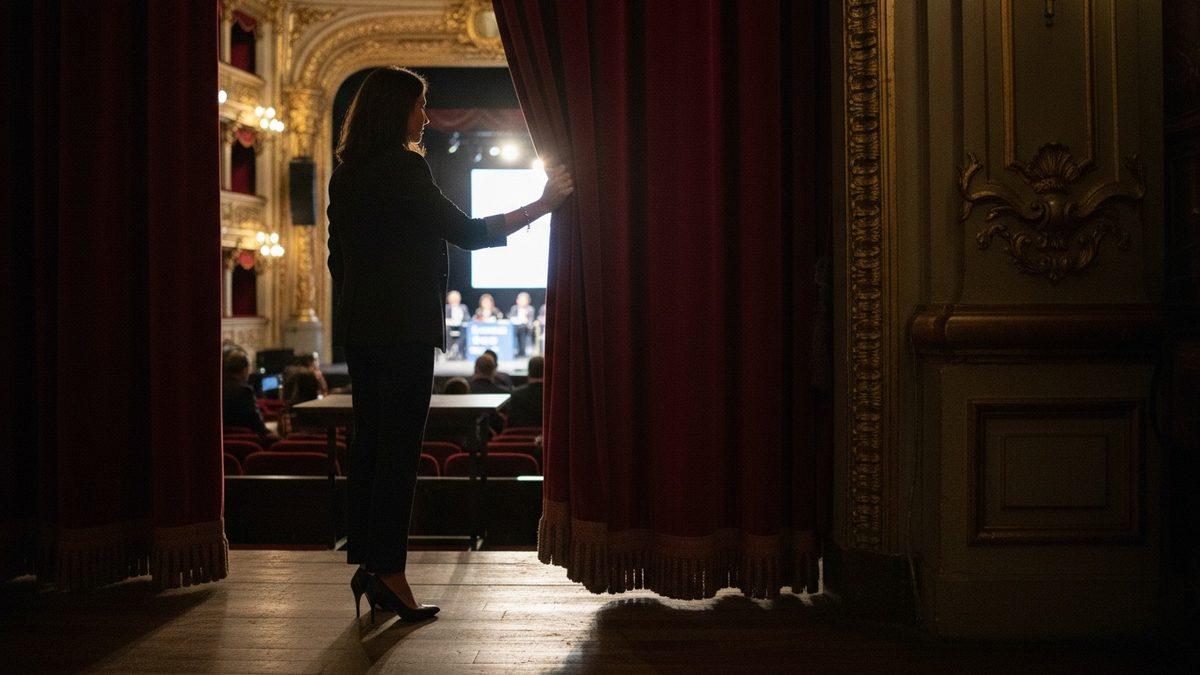
At the BRASA Summit Europe, a conference organized by the Brazilian Student Association, in Madrid, I heard Fernanda Gentil talk about her decision to leave Globo, Brazil's largest television network, after 15 years. The conversation made me think about what we carry from an established career when we decide to build something on our own.

- Reading
- 5 min
Originally published on NewHack, on November 13, 2026.
At the BRASA Summit Europe, a conference organized by the Brazilian Student Association, in Madrid, I heard Fernanda Gentil talk about her decision to leave Globo, Brazil's largest television network, after 15 years. The conversation made me think about what we carry from an established career when we decide to build something on our own.
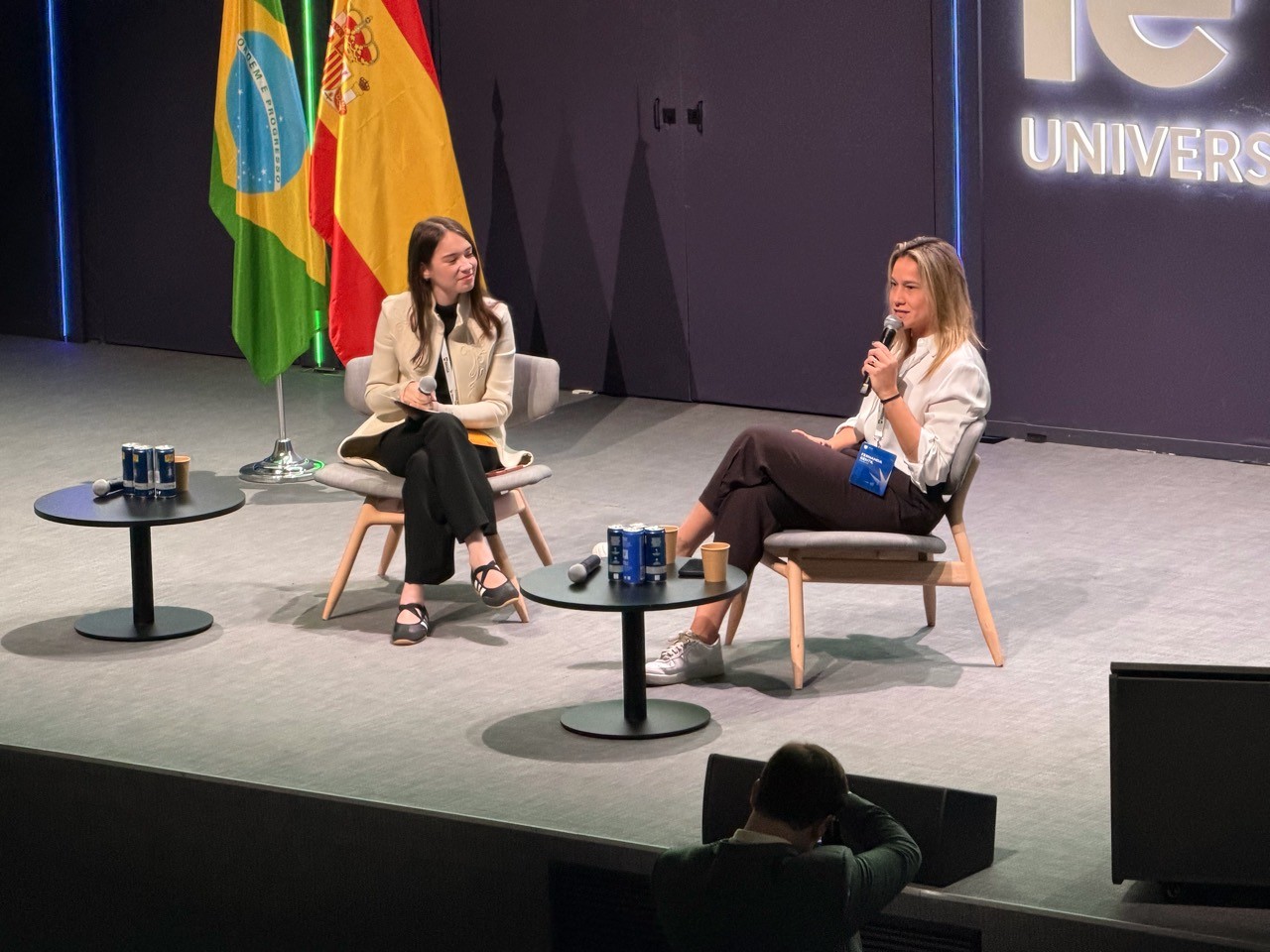
I'm a big fan of BRASA. I've been attending the conferences since 2019 and always leave impressed by the quality of the conversations. I've had the chance to join a panel and lead a workshop at the Sorbonne, in Paris, to speak at the 2024 BRASA Summit Americas at Columbia University, in New York, and to talk about entrepreneurship to Brazilian students at Berkeley. This time, I came to Madrid as a mentor at the BRASA Summit Europe.
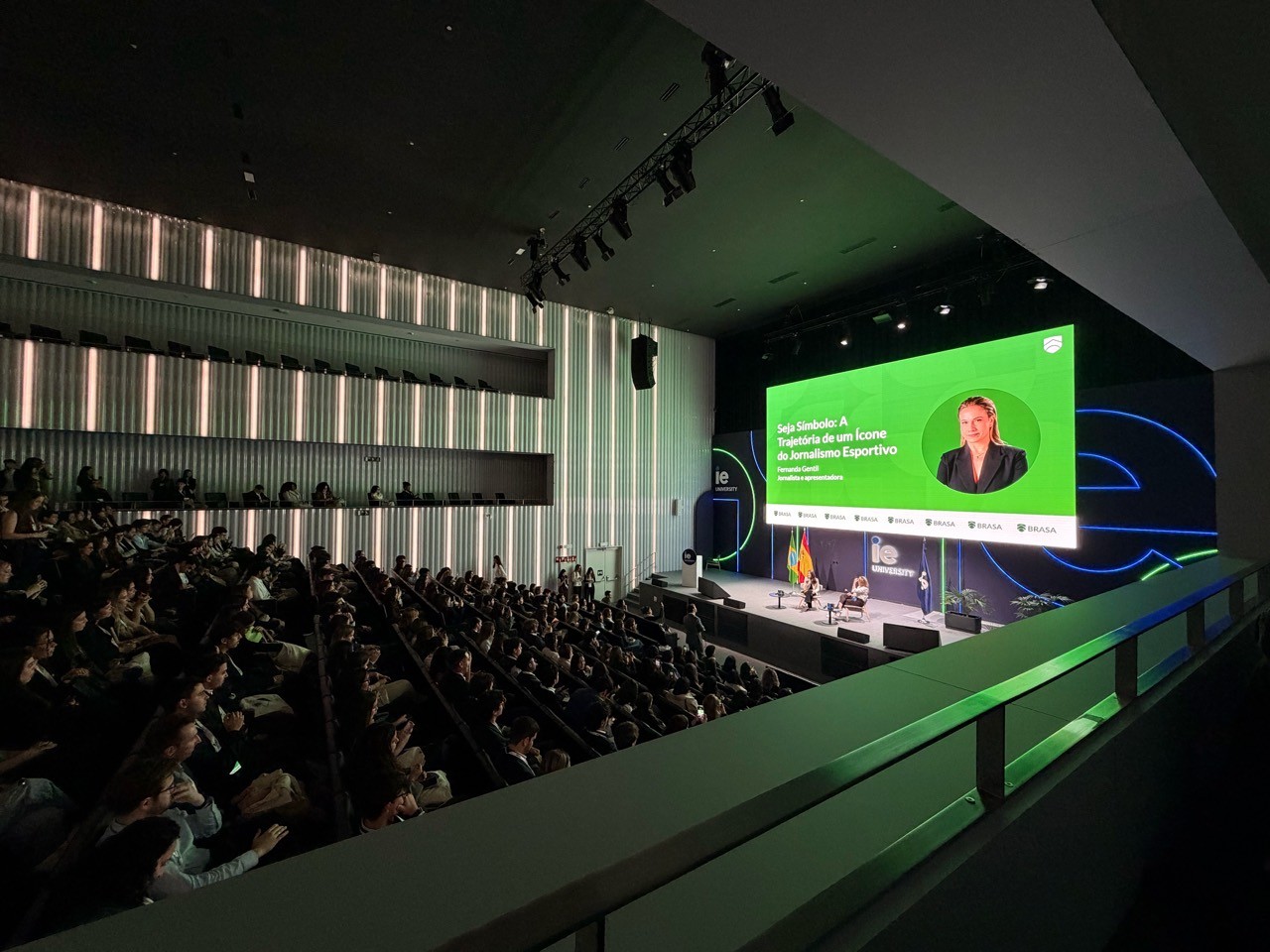
On the big screen at IE University, the conversation with Fernanda Gentil focused on the career of an icon of sports journalism. Among the moments in that story, one interests me especially as an entrepreneur. After 15 years at Globo, she decided to leave at a time when she still had a contract, but no new project planned at the network. Outside of it, she had offers and wanted to try her own channel. To make the decision, she also had to consider what would happen if she stayed. Fernanda Gentil's interview with UOL
What you take with you when you leave
In 2009, working in production at SporTV, Globo's cable sports channel, Fernanda tracked news from local teams, selected what might interest the channel's news shows, and gathered the material. Two months later, she moved into reporting. Then came the 2014 and 2018 World Cups, the Rio Olympics, Globo Esporte, and Esporte Espetacular. By the time she decided to leave, she had spent years learning how to pick a story, work live, and speak to different audiences. Memória Globo
Part of that work was highly visible. Many people got to know Fernanda during the 2014 World Cup. Another part usually goes unnoticed: the network had programming, teams, and an audience that already knew where to find her. On your own channel, some of those decisions become yours. Which format is worth repeating every week? How does someone discover the first episode? What makes that person come back for the second?
Shortly after leaving, Fernanda was announced at CazéTV, a Brazilian streaming channel known for its football coverage, to cover the Women's World Cup. I found that combination interesting. On one hand, the chance to build a channel with her own voice. On the other, a partnership that let her return to major coverage alongside a team that already had an audience. For anyone thinking about starting something after years at a company, it's worth looking at both possibilities. A first project with a partner can put your work in front of an audience while you figure out what you want to build on your own. Fernanda Gentil's interview with UOL
The audience needs a chance to come back
A question from the audience about women's football brought another dimension to the conversation. Beyond money, what's still missing for the sport to grow? Fernanda talked about investment, visibility, and commercial support. To explain equity, she asked us to imagine a child and an adult trying to see over a wall. If each gets a crate to stand on, the adult might be able to see over to the other side while the child still only sees the wall.
I found myself thinking about what has to happen before someone becomes a fan. I need to know when the team plays, be able to watch, and start recognizing the players. If I watch a good match and then go weeks without finding the next broadcast, it's hard to build the habit. Part of the investment exists precisely to create those conditions. When current audience numbers become the main argument for deciding how much to invest, that part of the story gets left out.
It's a question that also applies to anyone trying to launch a new product in the market. If few people came back, what happened between the first experience and the second? Did the product solve a problem that comes up often? Did people know where to find it again? The answers lead to different decisions. You can spend months improving something the audience has barely had a chance to try.
The work after the decision
When asked how to stand out in journalism with the rise of AI, Fernanda talked about checking sources and experimenting with writing, scripting, and direction. She also talked about learning from what went wrong in the previous piece of work. I liked hearing that answer after a conversation about such a major career change. Leaving Globo made news in a single day. Figuring out which formats were worth continuing to do was work that took many deliveries.
If this decision came up in a mentoring session, I'd start with the project the person can already put out into the world. For a journalist, that could be coverage they can repeat for a few rounds, with a place to publish and readers they can hear back from. For someone leaving a company to start their own thing, it could be a first client served with the skills they already have. After a real delivery, it's possible to talk more precisely about what people were looking for, why they came back, and what's still worth building.
Translated from the Brazilian Portuguese original · Read the original
How Resend designs API and documentation for AI agents to choose on their own
Zeno Rocha, CEO of Resend, tells the Latent Space podcast how the company treats agents like Claude Code as a separate developer audience, from markdown documentation to an MCP server with more than 80 tools.