In a November 28 post, Simon Willison argues that generating illustrations in SVG or Canvas with LLMs beats models like Nano Banana and ChatGPT Images, because the result remains editable element by element.
 Alan AndradeAuthor

- Reading
- 5 min
- Tables
- 1
In a November 28 post, Simon Willison argues that generating illustrations in SVG or Canvas with LLMs beats models like Nano Banana and ChatGPT Images, because the result remains editable element by element.
Simon Willison published, on November 28, 2026, an argument that matters directly to anyone who builds interfaces: illustrations generated as code (SVG, HTML and CSS, Canvas, Blender scripts, WebGPU shaders, PDF) are becoming more useful than images produced by dedicated models like Nano Banana (Google) and ChatGPT Images (OpenAI). The reason isn't aesthetic, it's operational. When the image is a text file describing shapes, colors, and positions, the model itself (or you) can edit a specific element without regenerating the whole piece.
It's the difference between asking again and fixing. Bitmap image models accept iteration through text or visual annotation, but they treat the image as a single surface: there's no way to select one element and manipulate it in isolation. Code solves this because each shape, text, or 3D object is an addressable entity within the file's own structure.
The Gemini 4 Neon experiment
Willison tested Gemini 4 Neon in AI Studio by asking for an SVG poster to promote the kākāpō recovery project (an endangered New Zealand bird), featuring the research data prominently and a 1970s graphic design aesthetic. The process wasn't perfect on the first try.
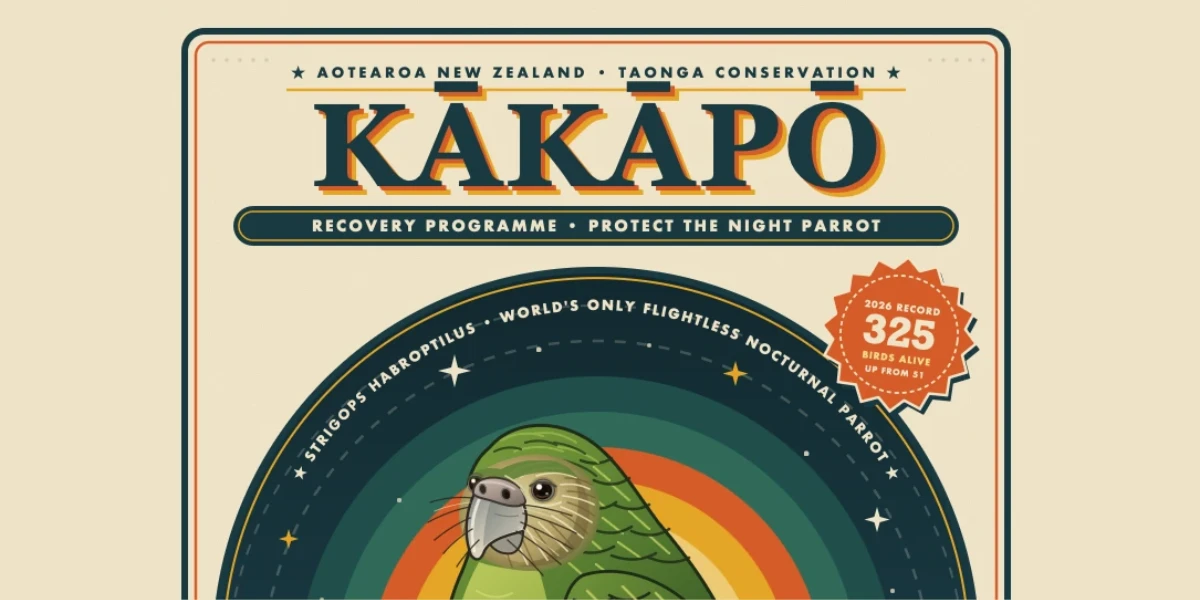
Because AI Studio doesn't render SVG natively, the model can't see its own visual errors without human help. Willison had to upload screenshots and point out specific problems: asking for the kākāpō to look more realistic (with a search for reference images) and fixing text that didn't fit inside a pill-shaped element.
The final result included research data fetched via Google by AI Studio itself, which Willison checked and confirmed was correct, plus a precise biological detail: red rimu fruit on the branch, a species essential during the bird's breeding season. The central point, according to him, isn't whether the poster turned out pretty: it's that everything in it is editable afterward. You can open the SVG in Inkscape, Adobe Illustrator, or Boxy SVG and adjust it visually, or edit the text directly in the code.
Why this matters for product builders
The list of formats a coding agent can generate goes far beyond posters: programmatically assembled image files, HTML and CSS, 2D Canvas elements in HTML, Blender scripts, WebGPU shaders, PDF. Any image mechanism representable as a file on disk or as a script's output becomes a target for a model with access to a coding agent.
This explains part of the vibe coding wave for games: models like Claude Opus 5.5, GPT-6 Astra, and Gemini 4 Neon already generate game assets (3D models, textures, sprites) entirely through code. Building this way means that adjusting, reusing, and remixing the asset is, again, the model writing more code, not a new round of pixel generation from scratch.
For anyone maintaining technical documentation, a design system, or an interface prototype, the practical advantage translates into:
- Readable diff in version control: SVG and code are text, so
git diffshows exactly what changed in an illustration, unlike a binary PNG. - Component reuse: an icon or diagram becomes a reusable function, not a standalone file.
- Integration with existing tools: the result opens in the vector editor the design team already uses.
- Typographic consistency: text in SVG uses a real font, without the glitch risk that appears when an image model draws letters as shapes.
Where dedicated image models still win
Willison doesn't dismiss Nano Banana and ChatGPT Images. Both have evolved considerably over the past roughly 15 months and now preserve details of an existing image across multiple rounds of conversation, something that used to turn into visual chaos with every edit.
The problem is structural, not one of quality: these models still produce visible glitches when zoomed in, generate text as shapes (without the guarantee of a real typographic system), and treat the image as a flat surface, with no layer or element that can be manipulated in isolation. For photorealistic images, according to him, the dedicated model remains the right bet.
| Criterion | Dedicated image model | Code-based illustration |
|---|---|---|
| Targeted editing of one element | Limited, rewrites the whole scene | Direct, element is addressable |
| Text in the image | Drawn as shape, can glitch | Real font, consistent typography |
| Photorealism | Strong | Weak |
| Diff in version control | Binary, unreadable | Text, readable in git diff |
| Reuse as component | Low | High |
An update Willison noted in the post itself: Ideogram 4.0 already promises "bounding-box layout control" via a structured JSON prompt, a sign that bitmap image models are also trying to close this positional-control gap.
The Anthropic case and the bitter lesson
The most interesting angle of the piece might be the one about Anthropic. Until recently, the company had no dedicated image model equivalent to Nano Banana or ChatGPT Images, and Willison saw this as a competitive disadvantage, since the corporate world still runs on slide decks and enterprise clients expect a ready-made image generation feature.
The solution came from another direction: Claude started producing visually competent presentations and website designs via code, with Claude Design offering a complete design-system platform built on top of code-generated images.
This feels like another variant of the bitter lesson: I was convinced a specialist image model was necessary to serve customers with design problems. It turns out the text-output LLMs just kept getting more capable until they could handle visual design by writing code.
Simon Willison, author of the blog Simon Willison's Weblog
What remains open
The most honest caveat in the post itself is that he only tested this manually, prompt by prompt, in AI Studio, without an automated agent fixing the SVG on its own (since the tool doesn't render SVG). A real production workflow still depends on someone (human or another agent step) running the render and feeding the visual feedback back to the model to close the loop without constant manual intervention.
For anyone deciding today between asking for a ready-made image or asking for the code that draws it, the practical criterion is clear: if the final result needs to be edited later, versioned, reused as a component, or integrated into a build pipeline, code wins. If the goal is a one-off photorealistic image, the dedicated image model remains the right tool.
Translated from the Brazilian Portuguese original · Read the original

Como os labs de IA compram dados de código para treinar modelos
Startups that are barely a year old are generating around $100 million a year in revenue by selling code training data to OpenAI, Anthropic, and other labs. An episode of Latent Space featuring G2i's CEO details how this market works from the inside.