The 'rice of electronics' is running short: MLCC shortage could make AI infrastructure pricier
Global stockpiles of multilayer ceramic capacitors have fallen to a record low amid AI server demand, and prices are already climbing. The squeeze is likely to reach the broader market.

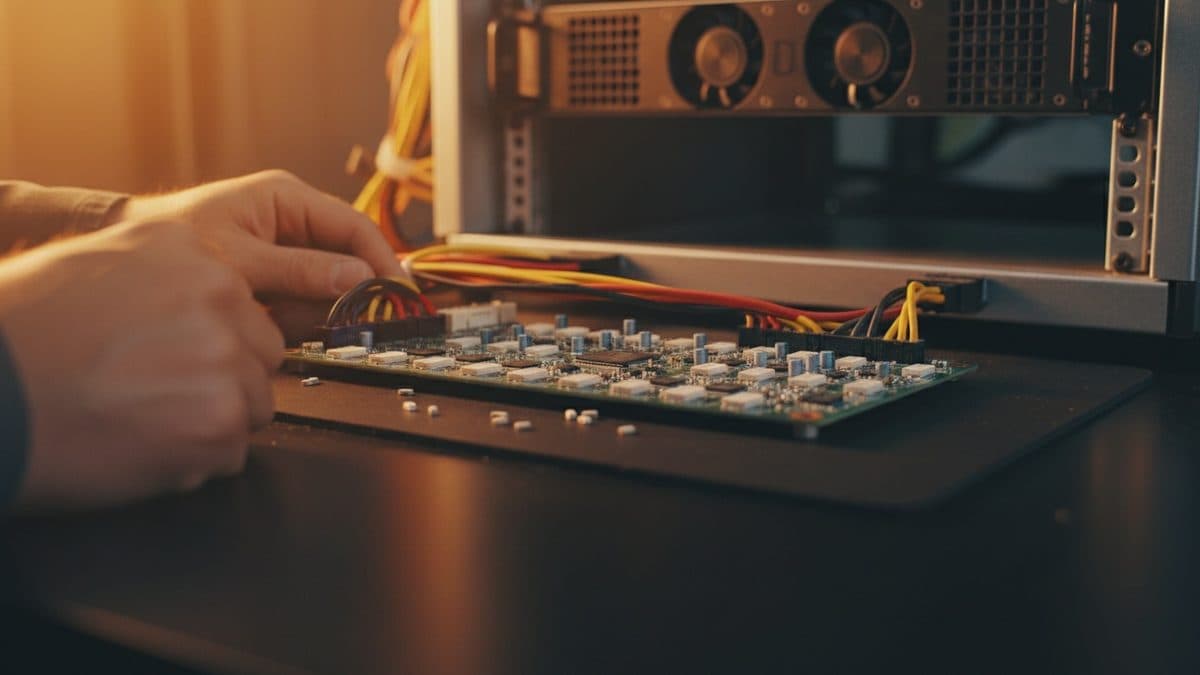
After memory and optical modules, the new commodity squeezed by the AI server boom is tiny and cheap per unit, but present in almost every circuit board: the MLCC (multilayer ceramic capacitor). A report from UBS Evidence Lab, reported by the South China Morning Post, shows that global stockpiles of these components have fallen to their lowest level on record.
What the MLCC is and why it matters
Nicknamed the "rice of the electronics industry," the MLCC is a passive component that acts as an electrical buffer on boards: it stabilizes voltage, filters noise and stores charge on a small scale. It is used by the thousands in a single product. A high-performance AI server consumes these capacitors in much greater volume than a common device, precisely because it has more power lines, GPUs hungry for stable power, and fast buses that require filtering.
It's a mundane component, worth cents apiece, but indispensable. Without enough MLCCs, a server motherboard cannot be assembled, no matter how available the expensive chips (GPU, memory) are. Hence the concern: the bottleneck isn't in what's expensive, but in what has always been treated as abundant.
The numbers behind the squeeze
According to the UBS report, led by analyst Shingo Hirata, the data points to a clear tightening between supply and demand:
- The inventory volume at distributors globally fell 8% as of August 9 compared with four weeks earlier, extending a downward trend.
- With the average unit price rising, the total inventory value at distributors rose 10% over the same period (fewer parts, more expensive).
- Year over year, through the end of July, the unit price index rose 13%, distributor volumes plunged 22%, and inventory value grew 6%.
The squeeze also showed up at major manufacturers. As of August 9, Japan's Murata Manufacturing saw its inventory volume fall 8% compared with four weeks earlier, and South Korea's Samsung Electro-Mechanics (SEMCO), 20%.
"We believe the supply-demand tightness could start in AI-related channels and distributors and then spread to the market as a whole," the UBS analysts wrote. In other words: today the effect is concentrated in the AI server supply chain, but the trend is to spill over into electronics in general, such as automotive, mobile phones and consumer boards.
A potentially long demand cycle
The point UBS highlights isn't just the current peak, but its duration. Some analysts believe this could be the longest demand cycle in the history of the MLCC sector. The logic is that AI datacenter construction isn't a one-off surge: it involves multi-year investment plans from major cloud providers and manufacturers, which sustains demand for hardware, and therefore for capacitors, over several years.
MLCC has become, in the report's words, the latest "darling" of AI-driven investors, following in the footsteps of memory chips (whose prices soared with HBM for GPUs) and optical modules (used in datacenter interconnects). The pattern repeats itself: a component once considered commoditized becomes scarce and commands a price premium because AI infrastructure consumes it in unprecedented volumes.
What changes for those building in Brazil
Brazil doesn't manufacture AI servers or MLCCs at any meaningful scale, which means the country is a price taker in this chain. The impact arrives through two paths:
Cost of imported hardware. Local datacenters, integrators and companies that assemble or buy servers to run on-premise AI workloads feel any price increase in components passed on by global manufacturers, made worse when combined with exchange-rate effects. If the squeeze spreads from the AI niche to the broader market, as UBS projects, the effect also hits consumer boards, networking equipment and embedded electronics.
Cloud cost. Most Brazilian startups run AI in the cloud, not on their own hardware. There, the effect is indirect and slower: cost pressure on the server manufacturing chain tends, over time, to be reflected in the prices providers charge for GPU instances. It's not an immediate pass-through, but it's one more item on a bill that was already under pressure from the global scramble for GPU capacity.
For infrastructure teams, the practical takeaway is about capacity planning: projects that depend on buying new hardware (datacenter expansion, local inference clusters) may face longer lead times and less predictable prices while the cycle lasts. It's worth locking in quotes in advance and having a backup plan between buying and renting capacity.
What remains open
The UBS report measures a snapshot from early August and a downward trend in inventories, but it doesn't pin down how far prices will go or how long the squeeze will last. The "longest cycle in history" thesis is one reading held by part of the market, not a settled fact. It's also unclear how quickly the squeeze will spill over from AI channels to the broader market, or whether manufacturers like Murata and SEMCO will manage to expand capacity in time to ease the pressure. For Brazilian developers, the signal to watch is simple: when "bread and butter" components start getting expensive, the cost of the entire hardware stack rises with them.
Translated from the Brazilian Portuguese original · Read the original
China-linked hackers use AI pentesting tool to breach ConnectWise, Microsoft says
Microsoft attributed to a group tracked as Storm-0940 the use of the ARTEX AI pentesting framework to compromise ConnectWise and target hundreds of organizations worldwide. ConnectWise is a platform used by MSPs that serve companies in Brazil.