4 min read
Tencent releases quantized Hy4 Flash to run on Mac mini and desktops without a dedicated GPU
 Redação iMastersNewsroom
- Reading
- 4 min
- Tables
- 1
The GGUF version of Hy4 Flash reduces the model from 410GiB to as little as 126GiB and now runs on 64GB Mac minis and Nvidia PCs, via llama.cpp and the Strata engine.
On November 26, 2026, Tencent released GGUF-format quantized weights for Hy4 Flash, its language model, along with deployment instructions that extend the tool's local use to desktop computers, including a Mac mini with 64GB of memory. The release came through AngelSlim, Tencent's own model compression project, and includes several compression levels with support for both Apple Silicon and Nvidia hardware.
For those following cutting-edge open models, the concrete gain is one of hardware scale: a model that previously required a server with an expensive GPU now has a documented path to consumer desktops. It's this angle, valuable to those building AI agents in production without a data center budget, that explains the interest in the news.
From 410GiB to 126GiB
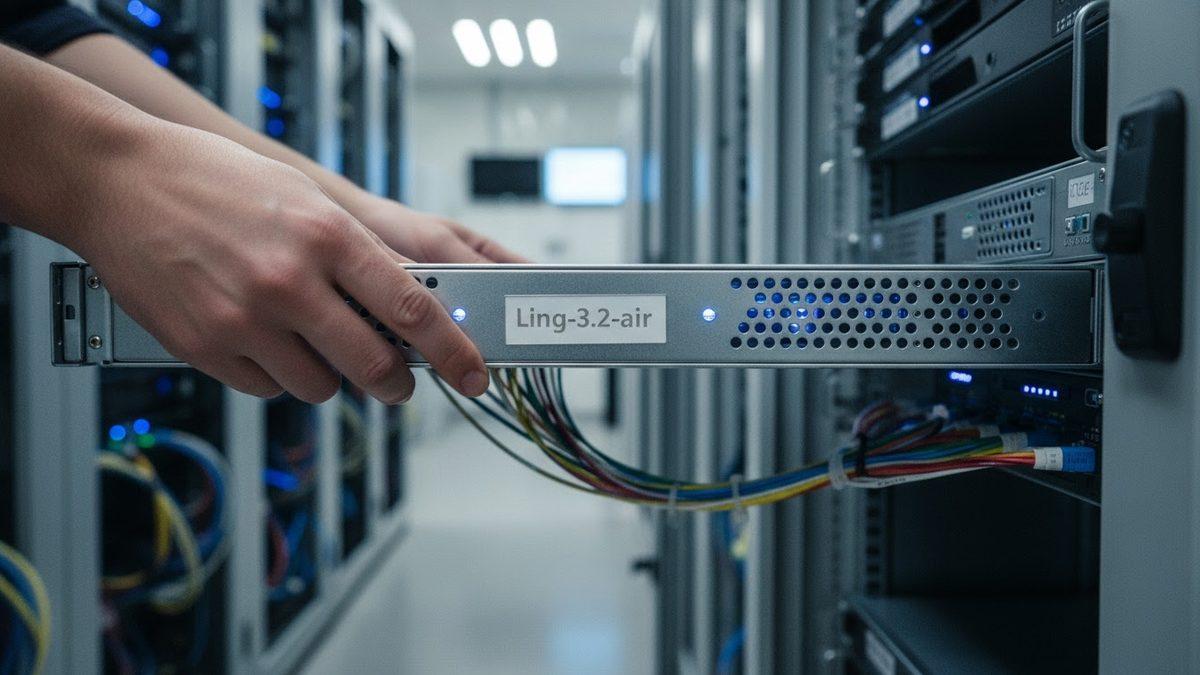
The original weights of Hy4 Flash total approximately 410GiB. The smallest version listed in the release reduces that footprint to about 126GiB, using AngelSlim's quantization levels. This compression is what makes it feasible to load (or at least run) the model on machines without a GPU cluster.
The technical detail that stands out is the existence of "expert weights" cited by TechNode: the mention of expert weights streamed from SSD points to a mixture-of-experts architecture, in which only part of the network is activated for each token generated. It's this characteristic that allows Tencent to offer an execution path even on machines with less memory than the model's total size.
How execution works in practice
To do this, Tencent relies on Strata, an inference engine that can stream expert weights from SSD storage when the available RAM is smaller than the model's total size. In practice, this eliminates the requirement that the entire model fit into memory at once, trading speed for feasibility.
The release also includes a vision encoder for image input and a draft model for speculative decoding, a technique that speeds up text generation by proposing candidate tokens with a smaller model before validating them with the main model. Configuration guides were published for both llama.cpp and Strata.
The numbers reported by Tencent
Tencent released its own benchmarks across two Apple Silicon hardware scenarios, using Strata's streaming technique and, in the second case, a heavier quantization version:
| Hardware | Memory | Version / technique | Reported performance | Context |
|---|---|---|---|---|
| Mac mini M4 Pro | 64GB | smallest version, SSD streaming | ~17 tokens/second | 8,000 tokens |
| Mac with M5 Max | 128GB | Q3_K | ~47 to 50 tokens/second | multiple context sizes tested |
The numbers come from Tencent itself, with no independent audit mentioned by TechNode. Still, they provide an initial benchmark: 17 tokens per second is slow for interactive chat, but it's a plausible rate for agents running background tasks, batch processing pipelines, or prototypes that don't depend on instant response.
What changes for those building with local AI
For teams already running local LLMs via llama.cpp, quantized Hy4 Flash enters the radar as one more mid-to-high-weight option that doesn't require a dedicated server GPU. Simultaneous support for Apple Silicon and Nvidia broadens the audience: anyone with a 64GB Mac mini or a PC with a relevant Nvidia card gets a documented path, instead of having to adapt generic instructions.
The built-in vision encoder also matters for those building multimodal agents: having image input in the same weight package avoids setting up a separate pipeline just for vision. And the draft model for speculative decoding is an engineering detail that normally only appears in well-optimized production deployments, now available out of the box for those running it locally.
The trade-off is clear in the numbers: even the most compact version still takes up 126GiB on disk, and the reported 17 to 50 tokens per second are far from the experience of a well-provisioned cloud API. Anyone who decides to follow this path trades recurring cloud inference costs for investment in fast storage and patience with latency, an equation that only works for use cases that can tolerate that pace.
What remains open
TechNode does not provide details on Hy4 Flash's original parameter count, nor a comparison of output quality between the quantized versions and the original model. There is also no benchmark available in the material comparing quantized Hy4 Flash with other open models of similar weight running locally, nor any indication of a commercial use license for the compacted version. For those evaluating adoption, it's worth following the AngelSlim repository for these details before committing a production project to the solution.
Translated from the Brazilian Portuguese original · Read the original
Dell fine-tuned open-source embedding model to fix RAG search broken by internal terms
In a presentation at QCon AI, Distinguished Engineer Rachel Shalom detailed how Dell's internal search team diagnosed and fixed RAG retrieval failures on internal acronyms and products by fine-tuning an open-source embedding model.