Generative AI and the urgency of rebuilding our relationship with truth
Generative artificial intelligence is no longer a futuristic promise. It is here, shaping the way we communicate, consume content

Generative artificial intelligence is no longer a futuristic promise. It is here, shaping the way we communicate, consume content, and, above all, how we perceive what is real. Tools like Sora, from OpenAI, and Veo 3, from Google DeepMind, are clear demonstrations of how far we have already come in producing realistic videos, with gestures, environments, and emotions that border on the indistinguishable.
The advance is impressive, but it carries a central dilemma: when everything can be simulated, what can we still trust? In times of algorithms that replicate voices and expressions with perfection, the authenticity of audiovisual records, which for decades was our anchor to reality, is called into question.
The latest survey by the OCDE (the Organisation for Economic Co-operation and Development), Truth Quest, reveals that only 60% of people worldwide are able to identify false content. In Brazil, that figure is even lower (54%). And perhaps the most alarming data point is this: we are the country that most trusts social media as its main source of information.
This combination of hyperconnectivity and low fact-checking capacity makes us easy targets for automated disinformation. Fake videos with strong emotional appeal, created with AI, have been spread with the aim of polarizing, manipulating, and confusing. And often, even technology professionals have difficulty recognizing these simulations.
We need to develop critical skepticism
AI-driven disinformation goes far beyond politics. It compromises the role of journalism, weakens science, and opens gaps in digital security. A survey by Ipsos shows that 51% of Brazilians already believe that AI will make the spread of fake news even worse, a justified fear, and one that needs to be taken seriously.
Faced with this new scenario, it is urgent that we invest in robust digital education. A skill that will become increasingly essential is what I call critical skepticism: learning to question what we see, to seek out sources, to distrust the fluidity of content before accepting its veracity.
Technology companies play a fundamental role in this equation. Veo, for example, already has safeguards that prevent the use of images or voices of public figures without authorization. In addition, its videos are also created with invisible watermarks that can be detected by verification systems. It is quite possible that social media platforms themselves will soon have their own digital watermark checkers to indicate whether a video was created by AI. But this type of control is still far from universal and may not be enough.
We need to move toward a model of international AI governance that balances innovation with responsibility. This does not mean limiting progress, but ensuring transparency, security, and accountability in every new application developed.
Inevitable advance, indispensable maturity
According to projections by Grand View Research, the global generative AI market is expected to exceed US$ 109 billion by 2030, with a growth rate of more than 35% per year. The growth is exponential and inevitable. What is within our reach is how we choose to deal with it.
Fear cannot be the answer. What we need is preparation. This involves training society to detect manipulations, interpret signs of distortion, check reliable sources, and seek evidence. Only then will we be able to transform informational chaos into critical awareness.
The fact is that truth has already been disfigured by words, and now it can be fabricated with sound and image. But this does not need to paralyze us. On the contrary: it can be the starting point for building a more analytical, responsible, and technically equipped society.
AI, by itself, is not a villain. It can indeed be a powerful ally in solving problems, personalizing education, boosting productivity, and even fighting disinformation itself. Everything depends on how we integrate it into our lives, which must be done with clarity, ethics, and discernment.
Our greatest protection in the age of disinformation will not be an algorithm or legislation, it will be our ability to reflect before believing. We must be prepared for this new reality where doubt is a sign of wisdom.
READ ALSO
- Vibe coding: the future of programming may be more spoken than written
- AI: Machine Learning and Deep Learning are shaping the future
- Cybersecurity goes hand in hand with advances in the AI era
- AI agents prove we have already reached the next level of technology
- AI and privacy: protecting our data in the digital world
Translated from the Brazilian Portuguese original · Read the original
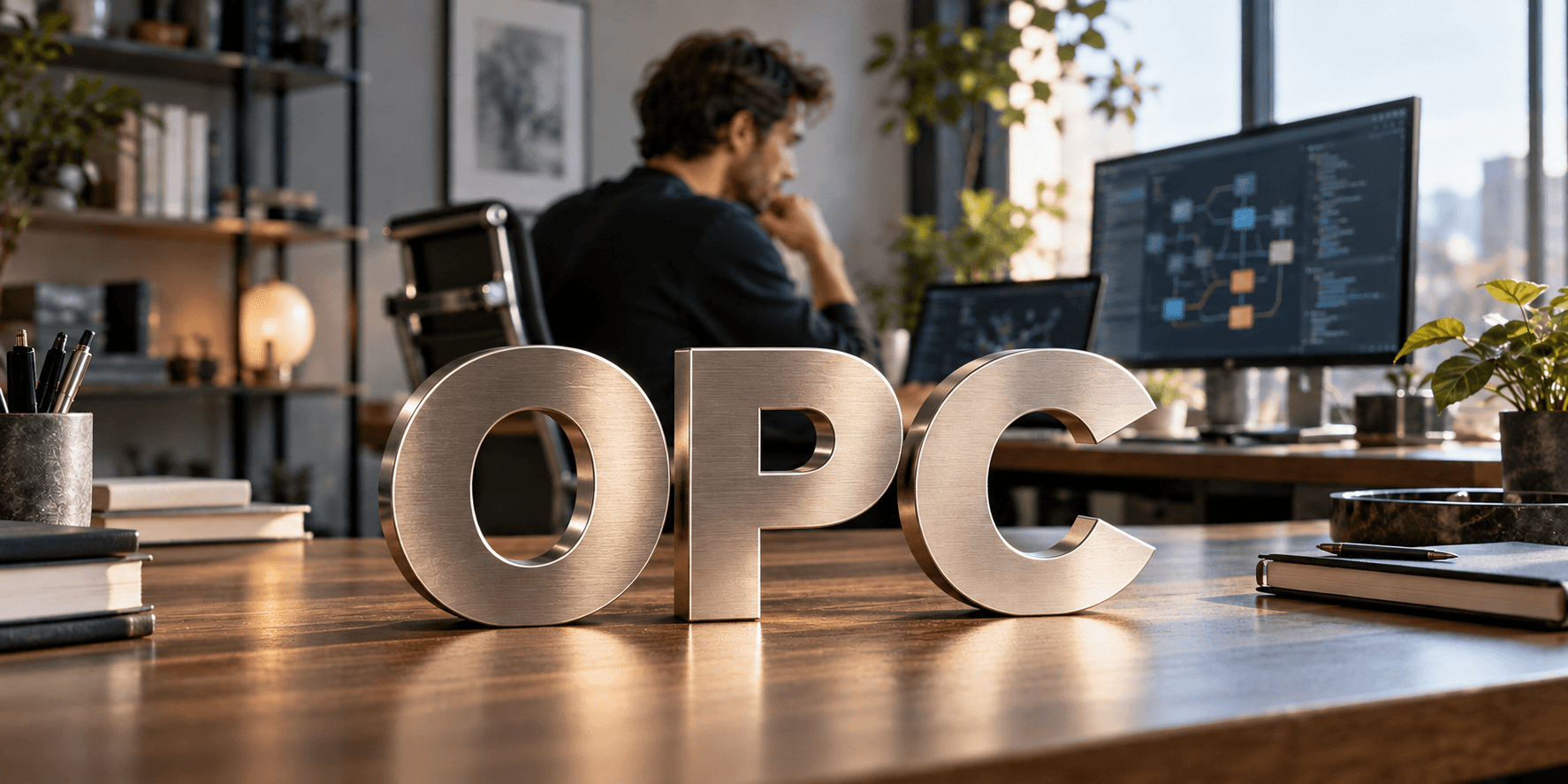
OPC is the new startup
The One Person Company (OPC) model is gaining ground as artificial intelligence and AI agents advance, expanding a single person's capacity to develop products and run businesses. This article examines the opportunities and limits of this format, including costs, human oversight and the challenges of winning customers and growing.