The next generation of startups may not sell software; it will sell work done

- Reading
- 7 min
The announcements from Oracle AI World 2026 show how AI agents are beginning to execute business processes, beyond just assisting users. The article analyzes the impacts of this transformation on the SaaS model and the opportunities for Brazilian startups to build specialized solutions, integrate systems, and generate value through market knowledge.
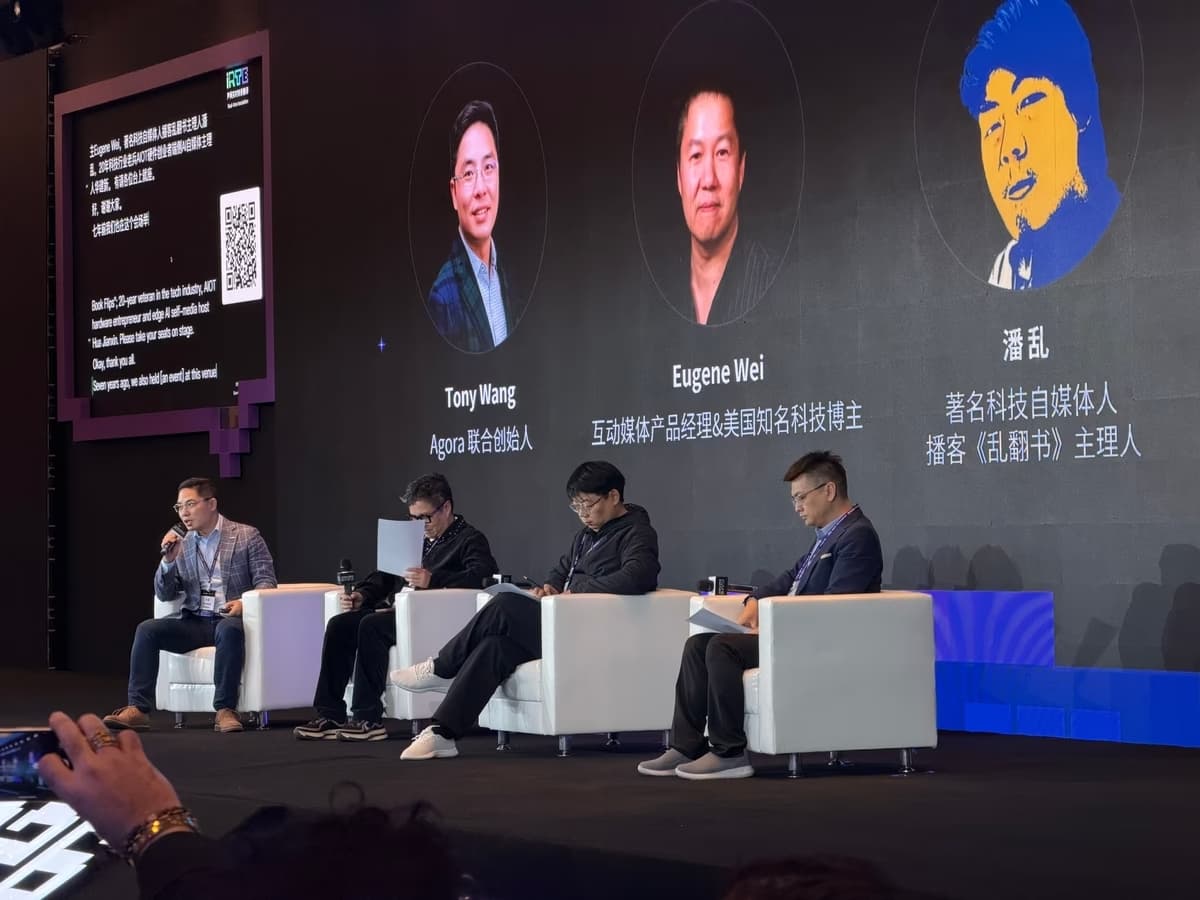
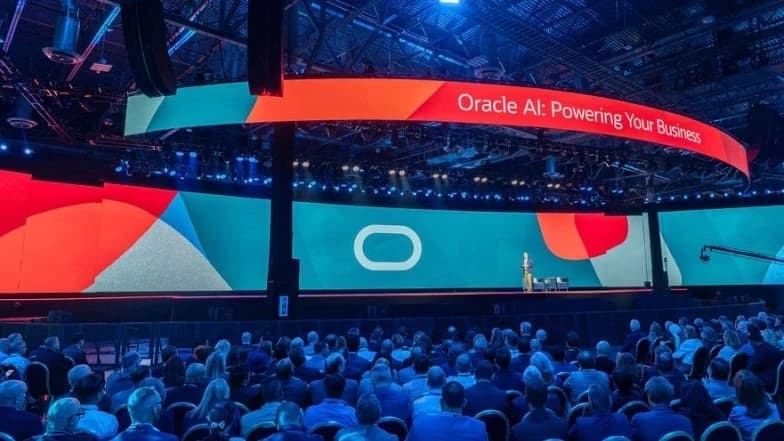
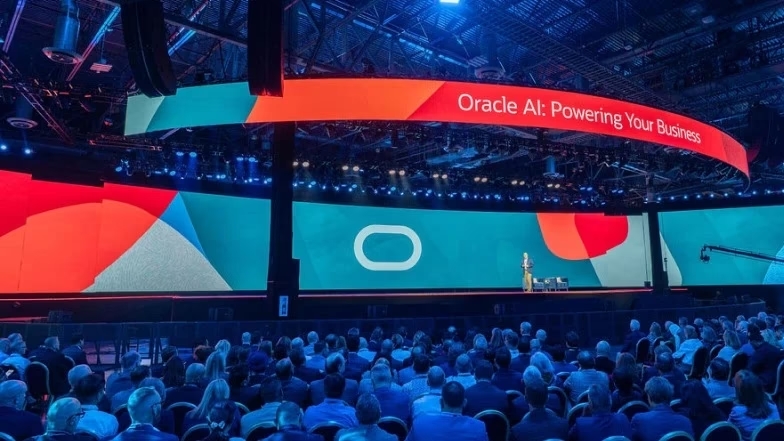
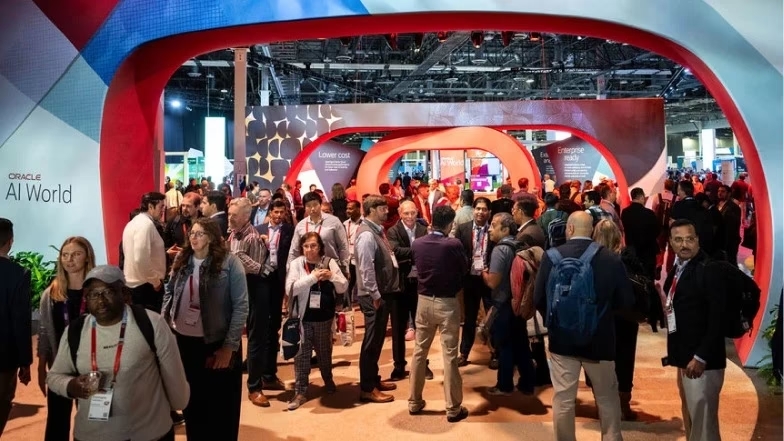
Over the past few weeks, I traveled through California and China, visiting technology companies, discovering new solutions, and talking with entrepreneurs from different parts of the world. Now I'm in Las Vegas, following Oracle AI World 2026.
One thing has become increasingly clear in these conversations: we're starting to discuss artificial intelligence in a different way.
Not long ago, almost everything revolved around the models. Which one was smarter? Which one coded better? Which one could produce the best texts or images?
These questions remain important, but there's another discussion gaining momentum.
What happens when artificial intelligence stops just helping a person work and starts performing part of the work for them?
This is one of the main messages coming through in Oracle's announcements this Monday.
I didn't attend the opening keynote in person, but I'm here at the event and took a close look at what the company is presenting and, more importantly, what it represents beyond the Oracle ecosystem.
Because, looking only at the product names, it might seem like just another sequence of corporate launches. But I believe there's a much bigger shift happening.
Software is starting to execute the work
To understand the significance of these announcements, it's worth remembering that Oracle sits at a fundamental layer of operations for thousands of companies: the systems that manage finance, people, inventory, purchasing, and sales.
Its suite of applications called Oracle Fusion brings together exactly these business management tools.
And it's within these systems that the company is embedding a new generation of artificial intelligence.
Among today's announcements are 25 agentic applications available for different business areas.
But what does this mean in practice?
Imagine the difference between asking an AI to analyze a spreadsheet and asking it to investigate a financial discrepancy, pull information from different systems, identify possible causes, and prepare a correction for approval.
In the first case, the AI helps someone work. In the second, it takes part in executing the process.
Another interesting announcement was Fusion Companion, a technology that interprets a user's goal and coordinates the tools, agents, and approvals needed to carry out a given activity.
Fusion Agentic Home, in turn, works as an interface inside Oracle Fusion where people can delegate tasks to agents and track their execution.
Think of a manager who needs to solve a purchasing problem. Instead of navigating through several screens, checking contracts, verifying suppliers, and manually starting approvals, they could describe the problem and let the system coordinate the authorized steps.
Oracle also presented the possibility of accessing these capabilities through tools like ChatGPT.
This points to something interesting: maybe users won't need to know each software's interface so deeply anymore in order to get their work done.
If AI understands the goal and can execute the process, the value of software starts shifting from the tool to the outcome.
And what does this change for those building a startup?
This discussion particularly interests me because I've spent much of my career building technology companies.
At Shawee, I saw firsthand how software could transform the organization of hackathons. Later, at Rocketseat, I experienced up close the evolution of tools and the way developers learned to build products.
Today, with NewHack, I frequently talk with founders who are building solutions based on artificial intelligence.
And there's a question I consider increasingly important.
If a startup sells software that helps someone carry out a certain activity, what happens when a larger platform starts performing that same activity automatically?
Imagine a startup that offers a corporate expense analysis tool.
Its product organizes information, generates reports, and helps managers identify savings opportunities.
Now imagine that the client's own financial system incorporates an agent capable of analyzing contracts, identifying out-of-policy spending, and recommending or executing authorized actions.
The startup doesn't necessarily lose its market. But its value proposition starts being questioned.
It may need to offer a more specialized solution, integrate different systems, or even change the way it charges for the product.
For decades, much of the SaaS market grew by selling software subscriptions and licenses.
AI opens up room for models where the customer pays for documents processed, operations completed, or results delivered.
This doesn't mean the end of SaaS. It means part of the industry may need to rethink what it's actually selling.
And there's a huge difference between selling access to a tool and taking responsibility for executing a piece of work.
Big tech has an advantage, but that doesn't eliminate room for startups
There's an important aspect to this transformation.
Oracle isn't starting from scratch. It already has customers, systems already in place, business data, and commercial relationships built over decades.
That represents a huge competitive advantage.
A startup can develop an excellent AI experience, but it still needs to convince the customer to adopt its solution, integrate it with existing systems, and trust it to execute important processes.
On the other hand, large platforms can't solve every problem in every industry.
And it's precisely in this space that I see opportunities.
Startups can build specialized solutions for markets such as agribusiness, logistics, healthcare, industry, and financial services.
They can also connect different systems, something especially relevant for companies that use technologies from multiple vendors.
But there's a point I consider fundamental: an impressive AI demo doesn't necessarily mean a working business.
Real companies have incomplete data, specific rules, old processes, and unexpected situations.
An agent needs to know when to take an action, when to ask for approval, and when to recognize it doesn't have enough information.
The next generation of AI startups will need to master not just the technology, but also the processes they intend to automate.
Brazil may have an interesting opportunity in this transformation
Brazil has a large business market, complex sectors, and countless operations that still depend on manual work, spreadsheets, and systems that don't talk to each other.
At the same time, we have entrepreneurs and technology professionals who deeply understand these problems.
A Brazilian startup that understands the particularities of a tax process, a logistics operation, or a customer service flow can find opportunities that a global platform can't address with the same depth.
We don't necessarily need to develop the world's most advanced AI model to build relevant companies using AI.
We can create value by combining existing models with specialized knowledge, data, integrations, and distribution.
And there's another interesting movement happening: large technology companies are creating paths for startups to build products within their ecosystems.
Oracle itself has the Oracle Startup Growth Engine, a program aimed at startups with validated products and growth potential.
The initiative includes possibilities such as infrastructure credits, technical guidance, preparation for enterprise sales, and access to the Oracle Cloud Marketplace, a platform where companies can offer solutions to Oracle ecosystem customers.
More than infrastructure, the interesting part is the chance to get closer to large corporate customers.
For a B2B startup, distribution can be just as important as technology.
The program presented on the official website has specific conditions for the European operation, and participation and benefits are subject to evaluation. It's worth keeping an eye on availability and the criteria applicable to Brazilian startups.
For those building an enterprise-focused AI solution, this is an initiative worth paying attention to.
Learn about the Oracle Startup Growth Engine
The question left for founders
Oracle AI World is still going on here in Las Vegas, and we still have more days of presentations, demos, and conversations ahead.
I want to use this time to better understand how these technologies are being applied, what results companies are achieving, and where limitations still exist.
But today's announcements already reinforce a perception I've been building up over these trips.
The next phase of artificial intelligence won't be defined only by models that answer better.
It will be increasingly shaped by systems capable of understanding context, coordinating activities, and executing processes reliably.
For large companies, this represents an opportunity to redesign operations. For developers, it changes part of the skills needed to build products.
And, for founders, it opens a discussion that goes well beyond adding AI to software.
Maybe the most important question for the next generation of startups isn't which software we're going to build, but which work we can perform better than any other alternative.
It's a shift in perspective worth following closely.
And over the next few days, I want to keep sharing what's being discussed here and what it might mean for the Brazilian technology ecosystem.
Sources and references
Translated from the Brazilian Portuguese original · Read the original

OPC is the new startup
The One Person Company (OPC) model is gaining ground as artificial intelligence and AI agents advance, expanding a single person's capacity to develop products and run businesses. This article examines the opportunities and limits of this format, including costs, human oversight and the challenges of winning customers and growing.