DeepSeek restricts long conversations and limits API usage due to lack of computing capacity

- Reading
- 5 min
The Chinese platform cut off old conversations, reduced message size, and imposed a daily usage limit after demand for its models surged faster than its infrastructure.
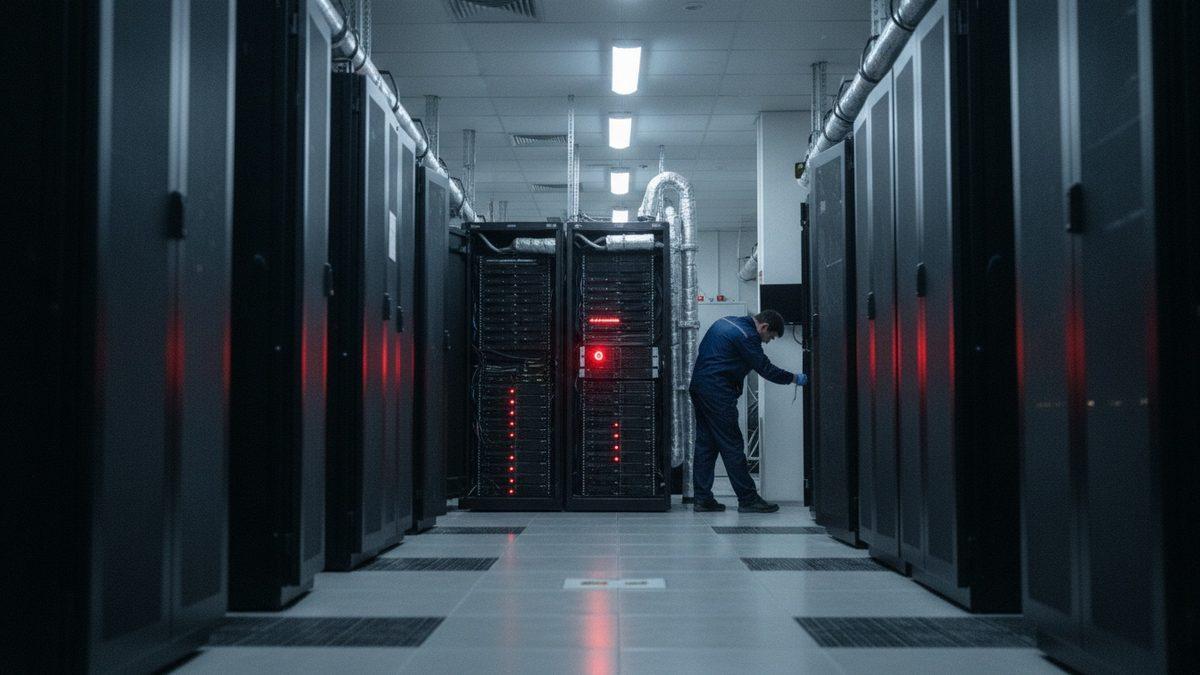
DeepSeek, the Chinese company behind one of the most widely used AI model families as a cheap alternative to OpenAI and Anthropic, began showing users, in November 2026, warnings about a lack of computing capacity. According to a report by the Chinese site ITHome, republished by CNews, the platform started blocking the resumption of conversations inactive for more than seven days, reduced the maximum size of an input text to about 40,000 characters, and introduced a daily limit on requests.
For those evaluating migrating production workloads from OpenAI or Anthropic to the DeepSeek API because of its lower price, this is a moment for caution: the company has not published any official statement explaining the limits or a timeline for removing them.
Why demand overwhelmed capacity
The direct trigger, according to the OpenRouter aggregator cited by CNews, was an abrupt jump in usage of the V4.1 Flash model. In the week of October 19 to 25, 2026, this model processed 33.6 trillion tokens, an increase of 801% over the previous week, and took the global lead in volume processed among the models tracked by the aggregator.
The scale of the shift becomes clearer when looking at the starting point: in late July and early August 2026, V4.1 Flash's weekly volume was 7.22 trillion tokens. In less than three months, demand more than quadrupled. According to ITHome, the pace of demand growth is comfortably outstripping the expansion of DeepSeek's own computing capacity.
What changes, in practice, for API users
The new limits directly affect any application built on top of the DeepSeek API, not just the consumer-facing chat:
- Conversations paused for more than seven days cannot be resumed, which breaks flows that depend on long-term context or asynchronous sessions.
- The maximum input size dropped to about 40,000 characters, a limit that can cut off long prompts, RAG setups with a lot of injected context, or lengthy documents pasted directly into the conversation.
- There is now a daily cap on requests; upon reaching it, the platform displays a generic message about exhaustion due to high server load, without detailing the limit's value or when it resets.
None of these changes came with a changelog, release note, or advance notice in the API documentation, according to the CNews report. This is the opposite of what is expected from a provider meant to run in production: without a formal announcement, teams that integrated DeepSeek via API have no way to plan around the new limits or know whether they are temporary.
Failures pile up since October
Usage limits are not an isolated event. According to DeepSeek's official status page, the platform recorded eight IT incidents since October 2026, affecting both the chat service and the API for the V4 Pro and V4.1 Flash models. These incidents also hit third-party developers who consume the DeepSeek API within their own products, according to the report.
In cold numbers, from August to October 2026 the availability of the V4.1 Flash API stood at 99.46%, which is equivalent to approximately 47.3 hours of projected downtime in a year. For comparison, providers that sell enterprise SLAs typically aim for 99.9% or higher, equivalent to less than 9 hours of annual downtime. The difference matters for anyone deciding which API to bet a critical application on.
The long-term plan: a 1 GW data center
DeepSeek's structural response to the bottleneck was already in the works before the current crisis. In July 2026, it became known that the company plans to build an AI data center with 1 GW of capacity in Inner Mongolia, an autonomous region in northern China.
Former Nvidia CEO Jensen Huang estimated in July 2026 that an AI data center with that capacity would cost around US$ 50 billion if built in the American market, although the cost of equivalent projects in China is significantly lower. Part of that capacity is only expected to come online in late 2027 or early 2028, according to the CNews report, meaning the mismatch between demand and DeepSeek's own infrastructure is likely to continue for at least another year. In parallel, the company is also considering renting additional computing capacity from third parties while it builds its own infrastructure.
Signs that free access may change
Even before the current limits, developers had already spotted hints in the service's code of a possible paid subscription aimed at individual users, according to the findings cited by CNews. The company has not publicly confirmed the feature, but the combination of scarce capacity, explosive demand growth, and traces of monetization in the code suggests that the current model, free and without heavy restrictions, may not be sustainable as it stands.
What this means for anyone considering migrating
DeepSeek's appeal to engineering teams has always been clear: models competitive with the main Western rivals at a fraction of the training cost and, in practice, of API usage cost. That cost calculation still holds, but it now comes with an operational risk that was not on the radar six months ago.
A few practical points for anyone already using the DeepSeek API in production or considering migrating:
- Monitor DeepSeek's official status page with the same discipline used to monitor any critical provider, since incidents have been recurring since October.
- Avoid relying on long-duration dialogue sessions or very long prompts until the limits policy becomes clear and documented.
- Have a fallback configured for another provider in case the daily limit is reached or the service is unavailable, especially in production flows aimed at end customers.
- Consider that today's low cost may not include, in the near future, unlimited access: the hint of a paid subscription in the code is a signal to watch before designing an architecture around the free tier.
DeepSeek's capacity slack, according to the company's own expansion plan, is only expected to actually materialize between late 2027 and early 2028. Until then, anyone building on top of the DeepSeek API is, in practice, betting on a provider in rapid expansion with no operational slack, which may be an acceptable price for those testing and prototyping, but is a risk to weigh carefully for those depending on the API in production.
Translated from the Brazilian Portuguese original · Read the original

Uber creates framework to decide whether an AI agent's action is appropriate in context
The company detailed a framework that goes beyond identity and API permissions to assess whether an autonomous agent's action makes sense in context, covering the agent's entire lifecycle.