Linux
Content type: News
4 min read
Ladybird launches public alpha on macOS and Linux, first browser engine built from scratch in years
After more than four years of development, Ladybird moves off the drawing board with an alpha release for macOS and Linux, bringing the first entirely new rendering engine since Blink arrived in 2013.
 Redação iMastersNewsroom
- Reading
- 4 min
After more than four years of development, Ladybird moves off the drawing board with an alpha release for macOS and Linux, bringing the first entirely new rendering engine since Blink arrived in 2013.
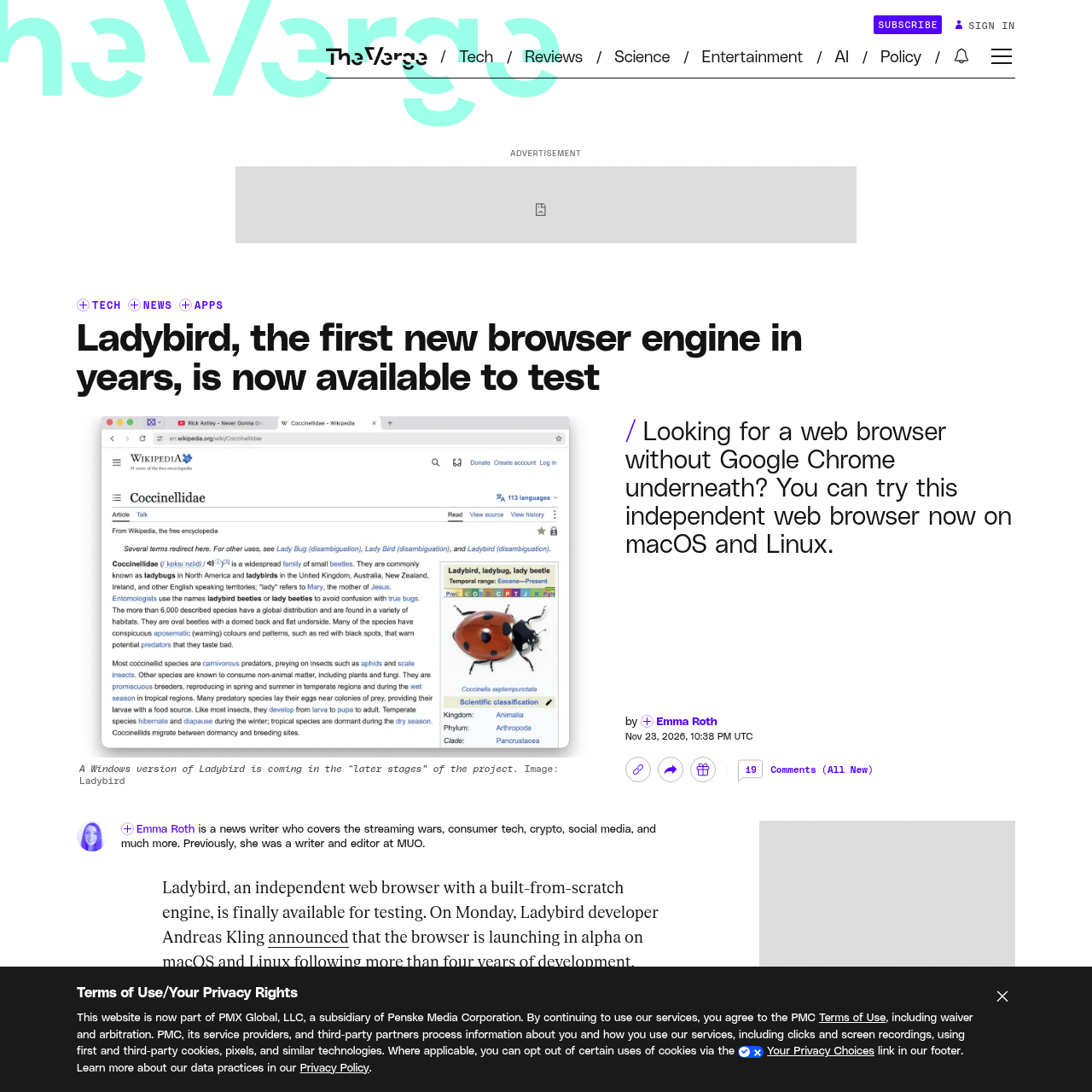
The Ladybird project announced, this Monday (11/23), the availability of an alpha version of its browser for macOS and Linux. The launch marks the public debut of a rendering engine built entirely from scratch, something that hadn't happened in over a decade in the browser market, according to a report by The Verge.
The announcement was made by Andreas Kling, Ladybird developer, after more than four years of work on the project. The Windows version still has no release date: according to Kling, it should arrive at a "later stage" of development.
Why a new engine is news
Today, practically every browser on the market runs on one of three engines: Gecko, WebKit or Blink. Gecko, used by Firefox, first appeared in Netscape 6, in 2000. WebKit arrived with Safari in 2003, as a fork of KHTML, the engine from the KDE project. Ten years later, the Chromium project, funded by Google, forked WebKit to create Blink, which today powers Chrome, Edge, Opera and most Chromium-based browsers.
This means that the vast majority of browsers a developer tests day to day actually share two codebases: WebKit and Blink (Firefox with Gecko is today the main real alternative). Ladybird proposes to be a genuine third way, without inheriting code from any of the three.
Who is behind it and with what goal
Ladybird is maintained by a nonprofit organization whose stated goal, according to the project's website as cited by The Verge, is to create "an independent, fast, and secure browser that respects user privacy and fosters an open web." The project began as an experiment in C++ and, over the course of development, the team started porting parts of the code to Rust, a process that was supported by AI tools, according to the report.
Migrating a browser engine codebase, historically one of the most complex types of software that exist, from C++ to Rust is a heavy engineering task on its own. Doing this in parallel with building the engine from scratch helps explain why the project took more than four years to reach a public alpha.
What the announcement says about the current state
Kling was direct about the limitations of the released version. In his post announcing the alpha, he states that the browser built around the Ladybird engine "is modest but functional" and notes that "some websites won't work" during the alpha.
is modest but functional" / "some websites won't work
Andreas Kling, Ladybird developer
In other words: it's not a replacement for a daily-driver browser, but rather a test build aimed at those who want to closely follow the engine's progress, including web developers curious to see how their sites behave outside the WebKit/Blink axis.
What changes for those who build for the web
For front-end and QA, the arrival of a fourth relevant engine on the radar has concrete implications, even in alpha stage:
- The testing matrix grows: sites that are currently validated on Chromium (via Chrome/Edge), WebKit (Safari) and Gecko (Firefox) gain a fourth possible target for compatibility checks, especially around newer CSS and APIs.
- Real bugs are worth reporting: since the project is at an early stage, finding and reporting incompatibilities on real sites carries more weight than it would with mature engines, where case coverage is already high.
- Less dependence on a single engine: part of the web community sees the concentration around Blink as a risk to the evolution of open standards; a functional independent engine is a practical, not just theoretical, counterpoint to that argument.
- A chance to contribute: being open source and in alpha, areas like support for CSS Grid, advanced Flexbox, or newer JavaScript APIs tend to have documented gaps, which opens room for direct collaboration from anyone who already works with rendering engines or wants to learn about the subject.
None of these fronts replace the established engines in the short term. But the public availability of the alpha is the first point at which Ladybird stops being just a project followed from afar and becomes something a developer can install, run against their own project, and see with their own eyes where the engine still breaks.
What remains open
The absence of a Windows version limits the immediate reach of testing for a large share of the web developer base, who use that operating system day to day. There is also, in the report, no public timeline for exiting the alpha phase, nor details on what share of the code already runs in Rust versus C++. These are points that tend to emerge as the project moves forward and that will determine whether Ladybird actually becomes a viable fourth engine option or remains a niche experiment followed mainly by enthusiasts and contributors to the project itself.
Translated from the Brazilian Portuguese original · Read the original

NariQ compresses Qwen3.8-27B into a 10 GB file with BF16 performance on agent tasks
Nari Labs released a quantization technique that shrinks the Qwen3.8-27B model from 53.8 GB to about 10 GB without losing performance on long-horizon agent tasks, but the gain comes with hardware and software requirements readers need to know before migrating.