

Microsoft details Surface Laptop Ultra and Dev Box with Nvidia RTX Spark chip for running AI on PC
At an event in San Francisco, Microsoft revealed prices for the Surface Laptop Ultra and the Surface RTX Spark Dev Box workstation, along with a Windows 11 feature to isolate AI agents.

From Promise to Price
In June, Nvidia announced agreements with Microsoft and other PC makers to build machines "ready for AI and agents" based on the RTX Spark chip, but without concrete details on price or technical specifications (TechCrunch). On Wednesday (October 7), at an event in San Francisco that coincided with the city's Tech Week, Microsoft finally put numbers on the table: the Surface Laptop Ultra notebook and a new workstation, the Surface RTX Spark Dev Box.
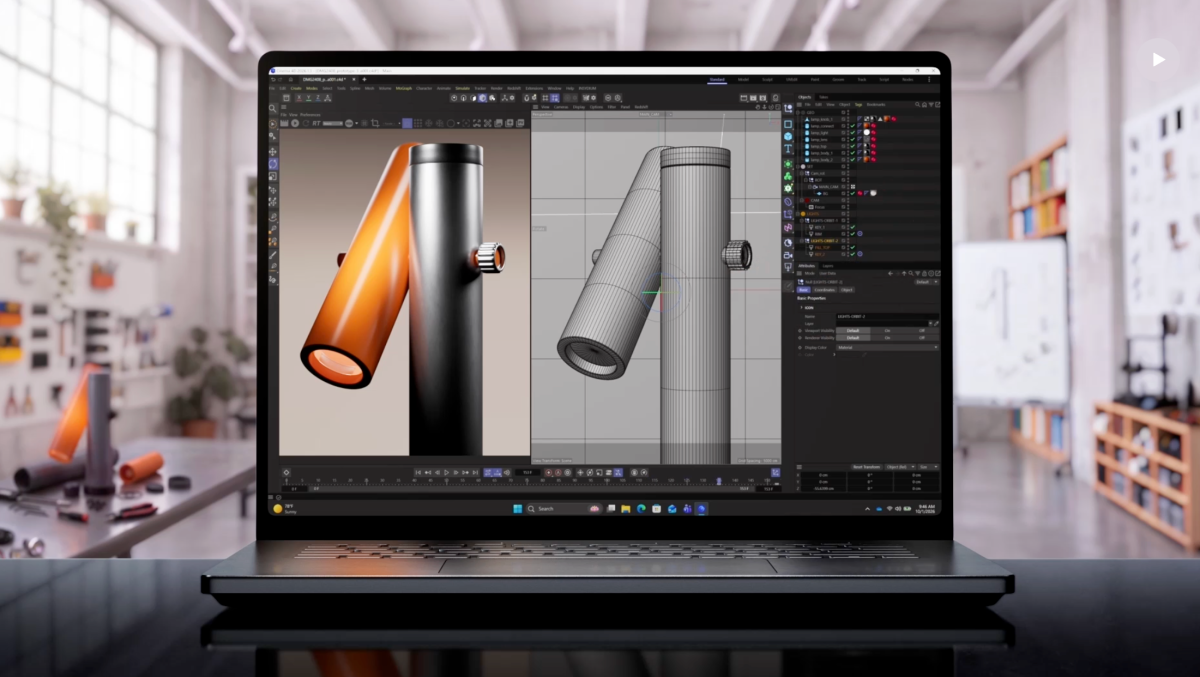
The core idea behind both devices is to run AI models locally, directly on the machine, without relying on the cloud (and without the recurring cost of API calls). To that end, Microsoft beefed up the CPU, GPU, unified memory, and cooling system compared to previous Surface generations.
How Much It Costs to Run AI Locally
The Surface Laptop Ultra comes in two models: one starting at US$ 2,600 and another, with a more powerful chip, starting at US$ 3,700. With memory and storage upgrades, the price climbs to US$ 5,900 for the top configuration, which Microsoft already says is sold out.
The Surface RTX Spark Dev Box, meanwhile, is the company's bet for those who develop AI software day to day: a workstation starting at US$ 6,000 that comes with VS Code, GitHub Copilot CLI, WSL, and PowerShell 7 pre-installed out of the box.
Microsoft wasn't the only one announcing hardware with the RTX Spark chip that day. Dell detailed the specs of its XPS 16 Creator Edition, already available for pre-order at Best Buy for US$ 3,800, with delivery expected later in October.
| Product | Starting Price | Price Ceiling | Stated Use |
|---|---|---|---|
| Surface Laptop Ultra | US$ 2,600 | US$ 5,900 | Productivity, content creation, gaming |
| Surface RTX Spark Dev Box | US$ 6,000 | — | AI development workstation |
| Dell XPS 16 Creator Edition | US$ 3,800 | — | Content creation and development |
Windows 11 Gets Isolation for Agents
The hardware launch came alongside a software change that matters to any Windows developer, RTX Spark or not: a feature called "Execution Containers," which isolates AI agents in a sandbox. According to Microsoft, it is rolling out to all Windows 11 users, not just owners of the new Surface devices.
CEO Satya Nadella used the event to frame the move within a broader agent orchestration strategy:
One of the things we realized in the last 3-4 years is that just having a model doesn't do much for anything. You really do need to orchestrate, and you need to have memory outside of the model. You need to have this harnessed layer that is able to take multiple models plus context, plus memory, and the action space.
Satya Nadella, CEO of Microsoft
He went on to explain the reach of that layer beyond Microsoft's own apps:
Not just for our apps but apps for anyone's agent. That's what the Windows platform is all about going forward.
Satya Nadella, CEO of Microsoft
What the Tool Bundle Really Sells
It's worth noting that VS Code, GitHub Copilot CLI, WSL, and PowerShell 7 are already free and installable on any Windows PC, including a three-year-old desktop. The Dev Box's differentiator isn't that software bundle, but the hardware behind it: an Nvidia RTX Spark GPU and unified memory sized to run AI models locally without blowing through RAM or waiting minutes for a response.
For those who already run open models locally with ollama or similar on a consumer GPU, the practical question is whether the gain in performance and unified memory justifies the US$ 6,000 entry price, compared to renting GPU in the cloud on demand when a project needs more muscle.
Targeting Those Who Swapped Windows for Mac
Microsoft made clear who it's targeting: it's offering up to US$ 1,000 off for anyone trading in a MacBook Pro for one of the new Surface devices. The reason, according to TechCrunch's reporting, is that the Mac has become a popular choice among developers and AI agent enthusiasts, especially in Silicon Valley.
It's a direct acknowledgment that part of the developer base has migrated to Apple silicon in recent years, and Microsoft wants to pull that audience back with an argument built on AI-dedicated hardware, not just general productivity.
What Remains Open for Those Deciding on Hardware in Brazil
As of this article's publication, Microsoft has not announced a date or price for the Surface Laptop Ultra or the Dev Box in the Brazilian market, and none of the sources mention availability outside the United States. Recent history of Surface launches in Brazil suggests a late arrival with import taxes baked into the final price, but that's an inference, not data confirmed by the company.
For anyone deciding on a development stack today, two points are worth attention regardless of hardware:
- Execution Containers is rolling out to all of Windows 11, which means agent sandboxing stops being exclusive to new machines and becomes a platform feature.
- The math on investing in a local workstation versus on-demand cloud GPU gets tighter with Brazilian exchange rates and taxes, especially when the competitor is a service billed in dollars per hour of use, not a device bought once.
With Dell also launching a machine with the same RTX Spark chip and more manufacturers expected from the agreements Nvidia closed in June, the trend is for this "AI PC" category to gain more price options in the coming months, which only reinforces the importance of waiting for clarity on availability in Brazil before deciding.
Translated from the Brazilian Portuguese original · Read the original
Google brings agentic AI to Gemini, starting with businesses
At a Google Cloud event this Thursday (10/8), the company unveiled a unified agent in Gemini that plans, delegates to subagents, and acts on internal systems like Git, BigQuery, and Jira, before it reaches everyday consumers.

