Oracle Cancels $7 Billion Deal With Tencent Under Trump Pressure, FT Says

- Reading
- 3 min
Oracle backed out of leasing AI chips to Tencent after the US government intervened, according to the Financial Times. The case shows how political decisions can unravel cloud contracts signed between private companies.
What happened
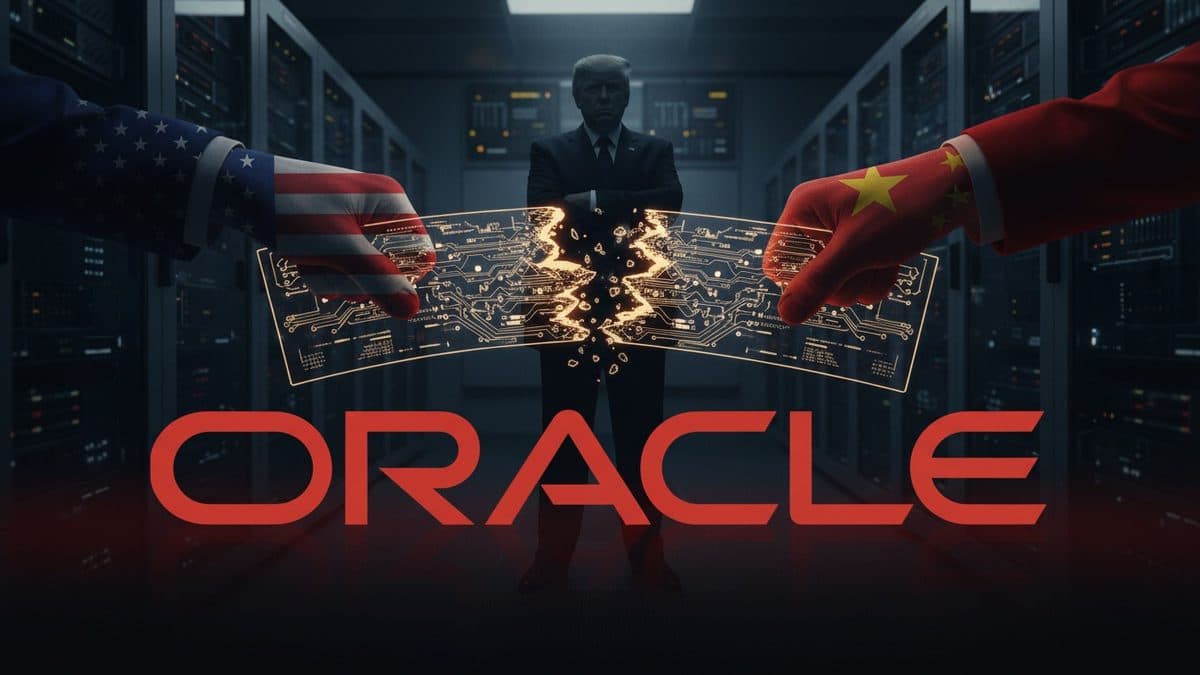
Oracle canceled a multibillion-dollar contract to lease artificial intelligence chips to China's Tencent after bowing to pressure from the Trump administration, according to a Financial Times report published this Wednesday (4) and reported by Reuters. US government officials approached Oracle to express concerns about the deal, according to people familiar with the matter cited by the British newspaper. Neither Oracle, Tencent, nor the White House responded to Reuters' requests for comment, and Reuters said it could not independently verify the FT's information.
The deal that never materialized
The FT had reported in October that Tencent had signed its largest infrastructure leasing contract outside China: a deal estimated at $7 billion with Oracle. The contract called for five years of use of Oracle data centers in Southeast Asia and would give Tencent access to roughly 100,000 advanced AI chips. This was hardware the Chinese company cannot buy domestically, because of export restrictions imposed by Washington and, according to the FT, also because of Beijing rules that favor the use of domestic chips.
Since 2022, the US government has restricted the export of advanced AI chips to China, in an attempt to curb China's progress in cutting-edge artificial intelligence. Until last week, the deal with Oracle was one of the biggest public examples of how Chinese companies try to get around this embargo by using data centers from cloud providers outside the country.
Pressure from both sides
Oracle was not the only party under pressure. According to the FT, high-ranking officials from Guangdong province, where Tencent is headquartered, visited the company to ask that it prioritize Chinese chips over foreign hardware. Washington wants to prevent Chinese companies from accessing cutting-edge AI capacity through indirect means; Beijing, in turn, wants to shield its semiconductor industry from dependence on American suppliers. Tencent was squeezed between the two pressures, and the cancellation suggests that, in this round, both capitals got what they wanted.
The risk this exposes for anyone building AI infrastructure
For founders and tech leaders in Brazil, the episode matters less for its Chinese side and more for what it reveals about how cloud and AI contracts can be unraveled by political decisions, not just by commercial breach. Oracle Cloud Infrastructure is a supplier to Brazilian companies looking for an alternative to AWS, Microsoft Azure, and Google Cloud to run AI workloads. The Tencent case shows that, even without any contractual violation between the parties, a government can derail a multibillion-dollar deal signed between two private companies.
In short: anyone deciding where to host models, train LLMs, or lease cutting-edge GPUs is increasingly subject to decisions made outside the negotiating table, whether in Washington, Beijing, or any other capital with weight over the semiconductor supply chain.
This doesn't mean Brazilian companies are a target of US export restrictions, which specifically aim at China. But the logic behind the episode (geopolitical control over who gets access to advanced AI chips) affects the global supply of computing capacity, GPU prices, and hardware delivery timelines for any company outside the United States, including in Brazil.
What's still unclear
None of the three parties involved had publicly confirmed the cancellation as of this article's publication. There is no information about possible fines, financial compensation, or whether the chip capacity reserved for Tencent will be redirected to other Oracle customers. It is also unclear whether the episode sets a formal precedent (a kind of mandatory review of cloud contracts with Chinese companies) or whether it was a one-off case negotiated behind the scenes.
Why this is on the radar of tech company leaders
AI infrastructure decisions are no longer purely technical or financial matters. For anyone negotiating long-term contracts with American, Chinese, or any cloud providers from countries with geopolitical weight in semiconductors, the Oracle-Tencent episode is a practical reminder. Political risk clauses, supplier contingency plans, and chip provider diversification have stopped being a luxury for large companies and become a checklist item for any business that depends on GPUs at scale.
Translated from the Brazilian Portuguese original · Read the original
US Voters Reject Data Centers in More Than 30 Cities at Tuesday's Polls
In at least nine US states, residents approved moratoriums and bans on data centers in Tuesday's election (November 3), a direct message to the accelerated expansion of AI infrastructure.