US Voters Reject Data Centers in More Than 30 Cities at Tuesday's Polls
In at least nine US states, residents approved moratoriums and bans on data centers in Tuesday's election (November 3), a direct message to the accelerated expansion of AI infrastructure.

- Reading
- 4 min
In at least nine US states, residents approved moratoriums and bans on data centers in Tuesday's election (November 3), a direct message to the accelerated expansion of AI infrastructure.
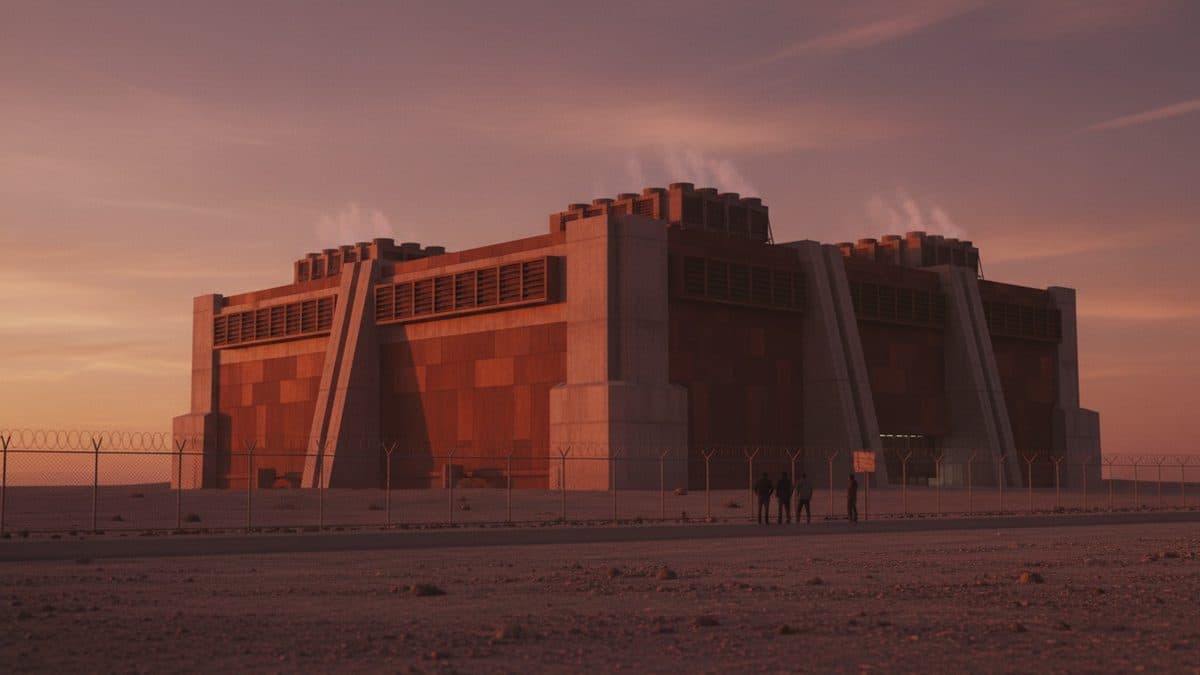
In the municipal and state elections held in the United States on Tuesday, November 3, 2026, voters rejected data center projects in practically every place where the issue appeared on the ballot. According to a report by Semafor, residents of more than 30 localities spread across nine states approved moratoriums, outright bans or other restrictions on these projects, often in direct response to specific projects already underway in the region.
The result comes at a time when billions of dollars are being poured into building infrastructure to train and run AI models, with hyperscalers competing for land, power and water on an industrial scale. The ballot box reaction is the clearest political translation yet of local discomfort with this pace of expansion.
Edgewater and Perry: Two Concrete Cases
In Edgewater, Florida, voters overwhelmingly approved an amendment that embeds a ban on data centers directly into the city's charter, according to Semafor. This means the restriction does not depend on a municipal ordinance that could be repealed by a future administration: it becomes part of the foundational document that organizes local government, raising the legal bar for any future project.
In Perry, Ohio, the vote took a different path: instead of banning data centers, voters approved a measure that imposes financial and operational restrictions on hyperscalers seeking tax exemptions in the city. In practice, this conditions the tax incentives, historically used to attract this type of investment, on stricter trade-offs, which reduces the region's economic appeal for projects that rely heavily on these benefits.
Explicit Political Pressure on the Campaign Trail
The rejection was not limited to local ballot measures. According to an analysis cited by Semafor, Democratic candidates in more than 130 federal and gubernatorial races ran campaign ads with an anti-tech tone or explicitly against data centers this election cycle. The topic stopped being a technical niche and became campaign ammunition on a national scale.
The pressure also reached politicians who had previously openly championed the industry. Texas Governor Greg Abbott, described in the report as someone who just months earlier was a declared AI enthusiast, began promising tougher regulation on data centers during the campaign. Even so, he lost the election, according to Semafor, a sign that the change in rhetoric was not enough to offset the political damage associated with the issue.
The Market Already Treats Local Opposition as Risk
The report notes that banks and asset managers financing the construction of this infrastructure have already started treating community opposition as a credit risk factor. This changes the financial equation for projects that were previously assessed mainly on criteria such as access to power, land availability and proximity to fiber networks.
In response, hyperscalers are rushing to hire professionals dedicated to community relations (community liaisons), according to Semafor, a role that until recently was not a priority in the expansion of this type of infrastructure and is now being treated as a central piece of any new project.
The Rebranding That Didn't Convince
Faced with the shift in public mood, tech companies have been trying to reposition the image of these projects, swapping the term "data center" for "compute campus" in communications and public relations materials. The strategy, however, has had mixed results so far, according to reporting by journalist Ashley Gold published by Semafor itself and cited in the original report.
The episode illustrates a limit of corporate rebranding: changing a project's name does not alter the concrete concerns raised by communities, such as energy consumption, demand for cooling water, generator noise and the impact on neighboring property values. These points tend to remain at the center of the debate regardless of the label used.
What This Means for Infrastructure Professionals in Brazil
Brazil is experiencing a similar movement to attract investment in AI-focused data centers, with hyperscalers announcing expansions in states such as São Paulo, Minas Gerais and Rio Grande do Sul in recent years. The result of the American ballot box is a warning sign for those planning this expansion here: acceptance of a data center project can no longer be treated as a given just because it brings jobs and investment.
For infrastructure architects, product teams and technical leaders involved in decisions about where to host AI workloads, the episode reinforces a practical point: criteria such as renewable energy availability, water consumption and relationships with the local community are no longer just ESG issues, but are also becoming schedule risk and operational continuity issues. A project that faces political resistance can be delayed or even blocked after its budget and technical architecture have already been defined.
It remains to be seen to what extent this electoral movement will translate into federal regulatory barriers in the United States, and whether the pattern will repeat in other elections or in other countries also racing to build AI infrastructure, including Brazil.
Translated from the Brazilian Portuguese original · Read the original

Fake North Korean job interview led to $6.3 billion theft at Binance
A Binance report published this Tuesday details how a months-long campaign, with fake interviews and malware disguised as a technical test, paved the way for the largest cryptocurrency theft on record.