Itaú buys 100% of NeoSpace for R$2.9 billion and brings its generative AI bet in-house
The bank paid R$2.92 billion for 100% of NeoSpace, a startup that had already been a partner since 2025. The deal repeats a playbook Itaú had already used with the same founders, at Zup.

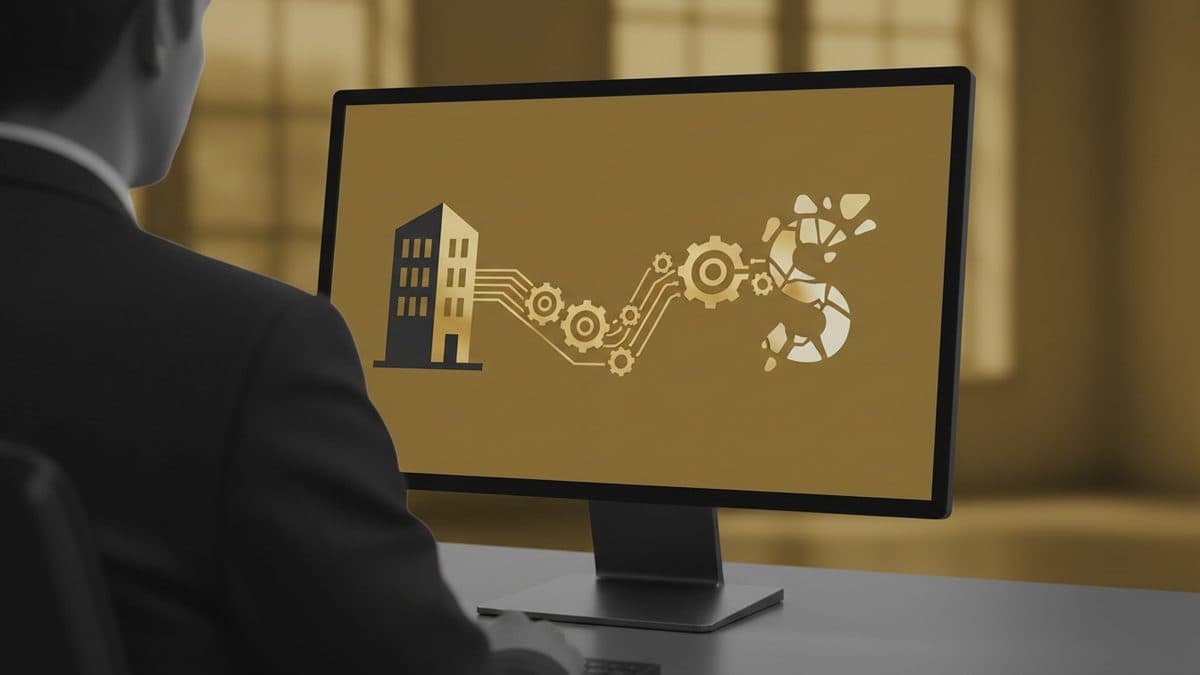
The bank paid R$2.92 billion for 100% of NeoSpace, a startup that had already been a partner since 2025. The deal repeats a playbook Itaú had already used with the same founders, at Zup.
Itaú Unibanco announced on the morning of Monday, October 26, the purchase of 100% of NeoSpace for R$2.92 billion, according to NeoFeed. The deal closes a cycle that began in January 2025, when the bank led an $18 million round in the startup, valuing it at the time at $100 million, according to a NeoFeed report.
For those who think about product strategy and tech M&A in Brazil, the case matters less for the value itself and more for the playbook: this is the second time Itaú has bought a company tied to the same Zup founders, Bruno Pierobon, Felipe Almeida, and Gustavo Debs. In 2020, the bank had already paid more than R$500 million for Zup, the software company created by the trio. After selling Zup, Pierobon, Almeida, and Debs founded NeoSpace in late 2023 alongside a fourth partner, Thiago Teixeira, and, less than three years later, sold again to the same buyer.
From minority partner to full owner
The sequence of numbers shows how the relationship evolved. In 2025, Itaú put in $15 million of the round's $18 million, alongside angels such as Martín Escobari (General Atlantic), Micky Malka (Ribbit Capital), Nigel Morris (QED), and Hans Morris (NYCA Partners), as detailed by Brazil Journal at the time. That gave the bank a 15% stake, according to InfoMoney.
The R$2.92 billion now paid for 100% of the company represents a significant jump over the $100 million valuation attributed to the startup in January 2025, according to NeoFeed, even though the difference in currencies and dates between the reports doesn't allow for a precise multiple calculation. That jump only makes sense if Itaú is buying not just technology, but the ability to lock that technology in for itself before another bank, or NeoSpace itself in future rounds, dilutes control.
For scale: Itaú is valued at R$532 billion, according to the same NeoFeed report. The R$2.9 billion acquisition represents less than 1% of the bank's market value, small change for the buyer, but a significant sum for the seller, and that changes the incentive calculus on both sides of the table.
The technical thesis: Large Data Model, not Large Language Model
NeoSpace doesn't compete head-on with OpenAI or Anthropic in the race for general-purpose language models. Its bet is on what the company calls a Large Data Model (LDM): instead of training only on text, the model processes any format and source of a company's data to identify and anticipate customer behavior patterns.
In practice, this means NeoSpace doesn't sell access to a closed foundational model, it builds platforms so each client can train its own models on its own data. Ricardo Guerra, CIO of Itaú, summed up the logic to Brazil Journal back in 2025, when the bank announced the initial investment:
We're living through a technological evolution that allows us to deliver increasingly personalized services and experiences. The technology lets you understand customers' needs and solve their problems faster, or even surprise them.
Ricardo Guerra, CIO of Itaú Unibanco
This positioning choice is also a competitive shield: by not fighting over the same data and the same training infrastructure as the American giants, NeoSpace avoids a capital war it couldn't win. A survey by the Federal University of Goiás (UFG, a Brazilian public university), cited by NeoFeed, mapped more than 50 LLMs developed in Brazil, including names like WideLabs, NeuralMind, and Clarice.ai, most of them without the kind of corporate check that NeoSpace landed.
Why Itaú kept the company "independent"
Despite the full acquisition, Itaú chose to keep NeoSpace operating as a separate company, under Pierobon's leadership. The official justification is to preserve the pace of research and the culture that, according to Itaú CEO Milton Maluhy Filho, underpin the bank's ambition:
Brazil has already shown its ability to set international benchmarks in banking innovation, and we have the opportunity to raise that bar with frontier artificial intelligence. The acquisition of NeoSpace is a strategic investment in that ambition.
Milton Maluhy Filho, CEO of Itaú Unibanco
But there's a business argument behind the institutional narrative. NeoSpace has been generating revenue from clients outside the financial system, in telecom, aviation, and energy, and is also in advanced talks in the United States and Europe, according to Pierobon's comments to NeoFeed. Keeping the brand and operation separate from Itaú makes it easier to sell services to the bank's direct competitors, a Bradesco or a Santander would hardly buy a data model from a subsidiary visibly labeled "Itaú."
This design also repeats, in an expanded version, the commercial agreement closed in 2025: in that round, Itaú had already secured 12 months of exclusivity over NeoSpace's conversational solution and perpetual exclusivity over anything developed in partnership, according to Brazil Journal. The 100% acquisition replaces those contractual clauses with direct ownership, less elegant legally, but more definitive.
The counterpoint the press release doesn't address
The strongest argument against this deal isn't technical, it's structural: buying 100% of an AI startup tends to kill exactly what makes it valuable. Language and data models improve with scale and client diversity; a company that answers to a single controlling shareholder, however strong the autonomy rhetoric, tends to prioritize the owner's roadmap at the expense of competing clients.
If NeoSpace really wants to compete in telecom, aviation, and energy with players other than Itaú, the fact that the bank holds 100% of the capital is, at the very least, a strange signal for any telecom CTO weighing whether to adopt the technology. The bank's response, so far, has been simply to reaffirm Pierobon's operational independence, which is necessary, but not sufficient to convince a rival client.
What changes for those building products and investing in AI in Brazil
For founders of AI startups that have banks or large corporations as strategic investors, the NeoSpace case is a reminder that a minority investment tends to be the first chapter, not the end of the story. Whoever accepts a corporate venture capital check like Itaú's is, in practice, negotiating the terms of an eventual full acquisition, even if today's contract talks only about a commercial partnership.
For those who make technology decisions inside banks and large companies, the message is different: building vertical foundational models, trained on proprietary data, remains too expensive a bet to make alone from scratch, which is why Itaú preferred to buy a team that had already validated the thesis, rather than build the R&D in-house. The bank's i.ai platform, launched in late July with the goal of reaching 100% of the superapp's individual customers by the end of 2026, is the product that will test whether this bet was worth the price paid.
Translated from the Brazilian Portuguese original · Read the original
PHP flaw reinforces why self-hosting became a risky bet for developers
A critical vulnerability found in every version of PHP, combined with a wave of flaws in Node.js, GitLab and other platforms in the same week, reignites Ben Thompson's thesis: hosting your own server stopped being viable, even for those who know what they're doing.