Lucas CardosoAuthor
- Reading
- 5 min
Tencent Hunyuan open-sourced DFly2, a draft model for speculative decoding that runs alongside Hy4 flash and promises speed gains without altering the target model's weights.
On the afternoon of November 26, 2026, Tencent Hunyuan open-sourced DFly2: weights, training code, and a technical report for a draft model for speculative decoding, published through the AngelSpec framework. According to the announcement, reported by Pandaily, DFly2 does not replace Hy4 flash, Hunyuan's main model released earlier. It is an acceleration component that runs alongside the target model, keeping weights and outputs unchanged.
For anyone deploying LLMs in production, this matters for one direct reason: speculative decoding is already common practice in stacks like vLLM, TensorRT-LLM, and llama.cpp, typically via techniques such as Medusa, EAGLE, or lookahead decoding. What Tencent is publishing is its own implementation, designed specifically to work with DSA-style sparse attention models, with speed numbers declared by the company.
How speculative decoding works, in practical terms
The problem speculative decoding solves is simple to state: generating text token by token with a large LLM is slow because each token requires a full pass through the network. The idea is to use a small, fast model (the draft) to "guess" several tokens in a row, and then the large model (the target) verifies these guesses in a single parallel pass, accepting the ones that match what it would have generated itself.
When the draft gets a long sequence right, the large model produces several tokens for the computational cost of just one. When it gets it wrong, the pipeline discards everything wrong from that point on and continues normally. The gain doesn't come from a smarter model: it comes from making use of hardware parallelism that would otherwise sit idle during sequential generation.

Expert views
What people are saying about it.
Official Google Search Central guide, updated in December 2025, brings together in one place the technical controls for AI Overviews and AI Mode and explains how to measure the impact in Search Console.
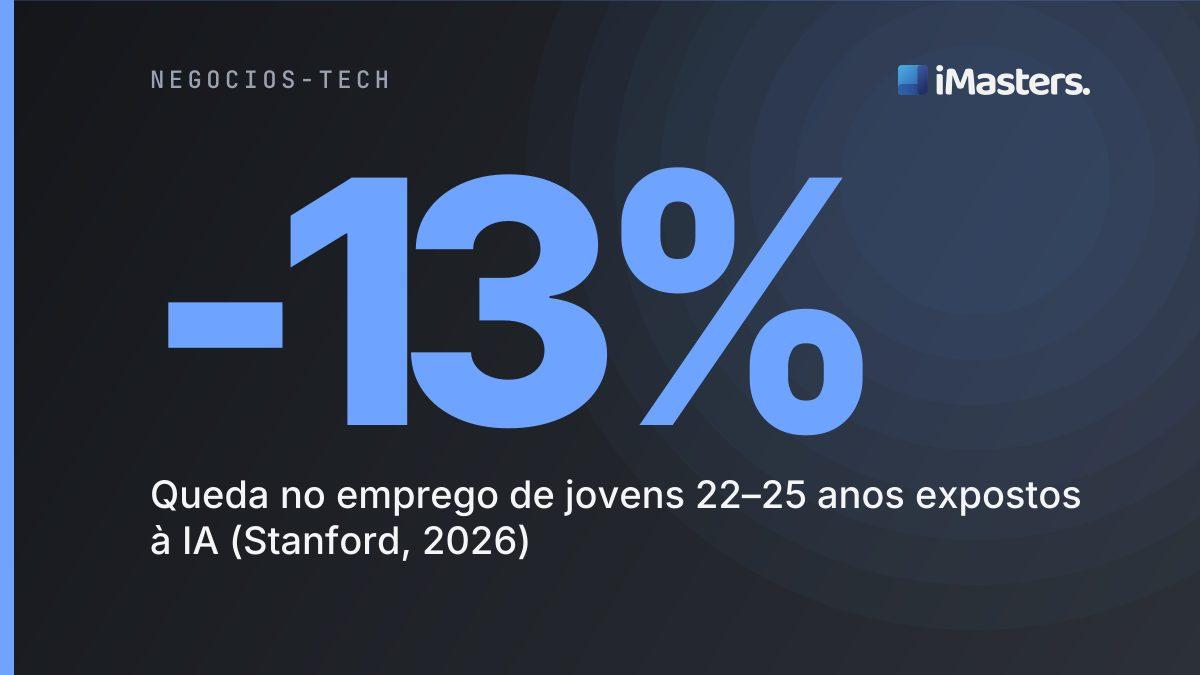
A Stanford study shows a real decline in youth employment in roles exposed to AI. For the Brazilian founder, the question isn't whether AI replaces the intern, it's what the company loses when it stops training today's junior, who would be tomorrow's senior.
The AI infrastructure fintech raised $6 million led by NXTP after quadrupling its enterprise client portfolio in 2026, going from two to eight contracts. The bet behind the round says more about verticalized models than about the check itself.
The important guarantee for anyone evaluating this technique is that, when well implemented, it is lossless: the final output distribution is identical to that of the target model running alone, because the verifier rejects any draft that deviates. The gain is only in latency and throughput, not in response quality.
Why sparse attention (DSA) requires a purpose-built draft
The central technical point of the announcement is that DFly2 was designed for models with DSA-style sparse attention (DeepSeek Sparse Attention), not for traditional dense-attention transformers. According to the official material, each DFly2 draft layer shares the corresponding sparse-attention key-value cache (KV cache) of the target model, using up to 2,048 positions selected by the indexer.
This solves a specific problem: in sparse-attention models, a generic draft that tries to reconstruct the attention pattern from scratch tends to lose accuracy because it doesn't see the same relevant positions the target model selected. Sharing the KV cache avoids two problems at once: the attention cost per draft token stops growing with context size, and there's no need to maintain a separate KV cache just for the drafter, which would save memory in long contexts.
In practical terms, for those operating long-context models (1M tokens, in the case of Hy4 flash, according to Pandaily's earlier coverage of the model's launch), this engineering detail is what distinguishes a pluggable draft model from an experiment that doesn't scale to production.
The declared numbers, and why to treat them as the company's own measurement
Pandaily, citing the Chinese site IT Home, which in turn cites official Tencent materials, reports that across 19 public evaluation sets DFly2 outperformed two competitors from the same family of techniques, DFlash and DSpark, in acceptance length and overall speed. In long-text and agentic task scenarios, the speed advantage over DSpark is about 12% and 30%, respectively, according to the official numbers, with a peak of 4.2x on a single isolated item.
This 4.2x figure is important to contextualize: it's the declared peak on a specific item, not a representative average across all tested tasks. In agentic tasks and on the internal WorkBuddy benchmark, Tencent says DFly2's acceptance length is 10.4% ahead of DSpark.
Worth noting: all these comparisons are evaluations conducted by Tencent itself, with no independent benchmark published so far. This doesn't invalidate the number, but it means it should be read as a starting point for your own validation, not as a fact established by a third party.
Compatibility beyond Hy4 flash
A detail that goes unnoticed in the main announcement, but that matters to anyone making infrastructure decisions: the AngelSpec README, also updated on November 26, 2026, states that DFly2 now trains on DeepSeek-V4.1-Flash and GLM-5.3-Flash, with MoE drafter weights made available for both Hy4 flash and these two other models.
This matters because DeepSeek and Zhipu (GLM) are direct competitors to Hunyuan in the Chinese open-model market. An acceleration component that explicitly supports competitors' models, not just its own, signals that Tencent is positioning AngelSpec as a reusable piece of infrastructure, not as a closed-ecosystem lock-in around Hy4 flash.
Where this fits for those already running inference here
For Brazilian developers already using vLLM or TensorRT-LLM with speculative decoding configured, the practical point isn't switching stacks, it's checking whether the target model in production uses DSA-style sparse attention. If it does, and if it's Hy4 flash, DeepSeek-V4.1-Flash, or GLM-5.3-Flash, DFly2 is a direct candidate to test as a drafter, because it was trained specifically for these models' sparse KV cache pattern.
For those running traditional dense-attention models, DFly2 doesn't apply: its advantage comes exactly from coupling to the sparse cache, and a draft designed for that scenario doesn't deliver the same gain (nor was it designed to) outside of it.
What's still unknown
The technical report and the code are already published, but Tencent has not disclosed, according to the available material, any third-party benchmarks, nor details on the drafter's own training cost. There are also no production adoption numbers, as of Pandaily's original publication, outside the company's internal tests. Anyone evaluating DFly2 for real use should treat the 4.2x, 12%, and 30% gains as Tencent's own reference figures, to be confirmed against their own workload before any architecture decision.
Translated from the Brazilian Portuguese original · Read the original

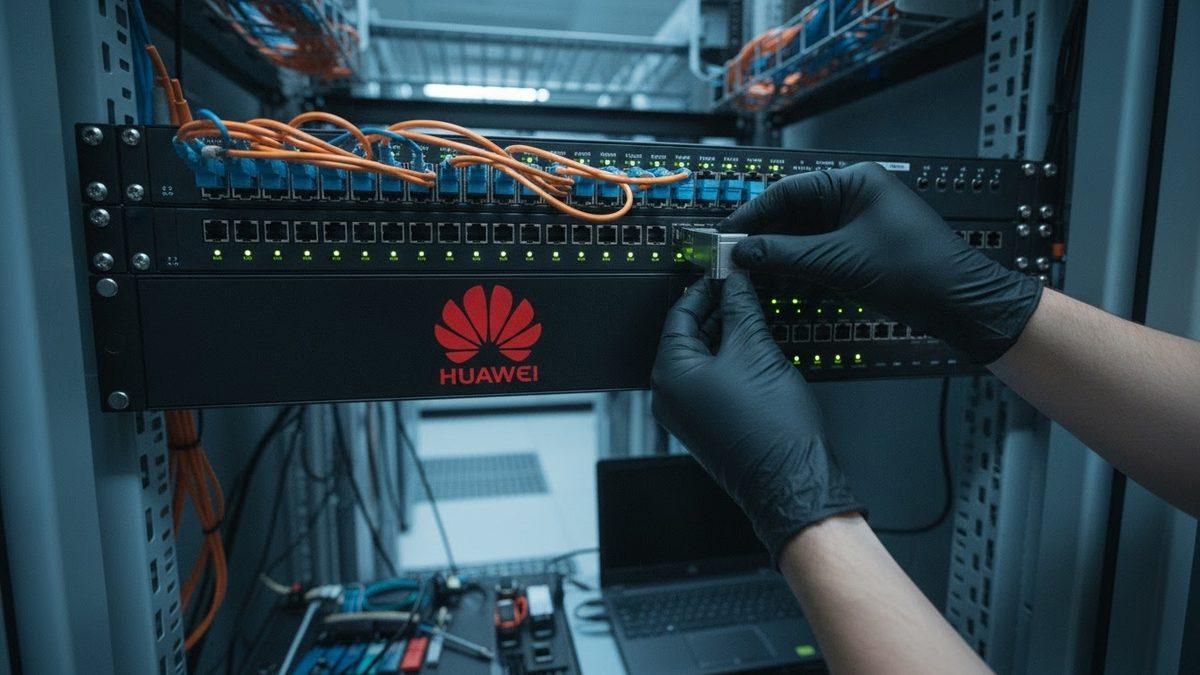
Huawei tallies 100 million Qiankun parts in cars, but still hasn't built a single one
The company says it has shipped more than 100 million Qiankun parts to 26 brands and over 60 models. The number counts components, not cars sold, and reveals Huawei's strategy of becoming the supplier of the car's intelligence without entering manufacturing.