Vanessa GuerraAuthor
- Reading
- 5 min
- Tables
- 1
A Stanford study shows a real decline in youth employment in roles exposed to AI. For the Brazilian founder, the question isn't whether AI replaces the intern, it's what the company loses when it stops training today's junior, who would be tomorrow's senior.
The temptation is obvious. If an AI tool can organize a spreadsheet, build a presentation, and draft a report in minutes, why keep an intern to do the same thing in two days? On the surface, it's a simple P&L calculation: less junior headcount, less supervision cost, more margin this quarter. The problem is that this calculation, the way most boards are doing it, measures only the numerator and ignores the denominator.
The number every founder should have on the table before approving the internship budget
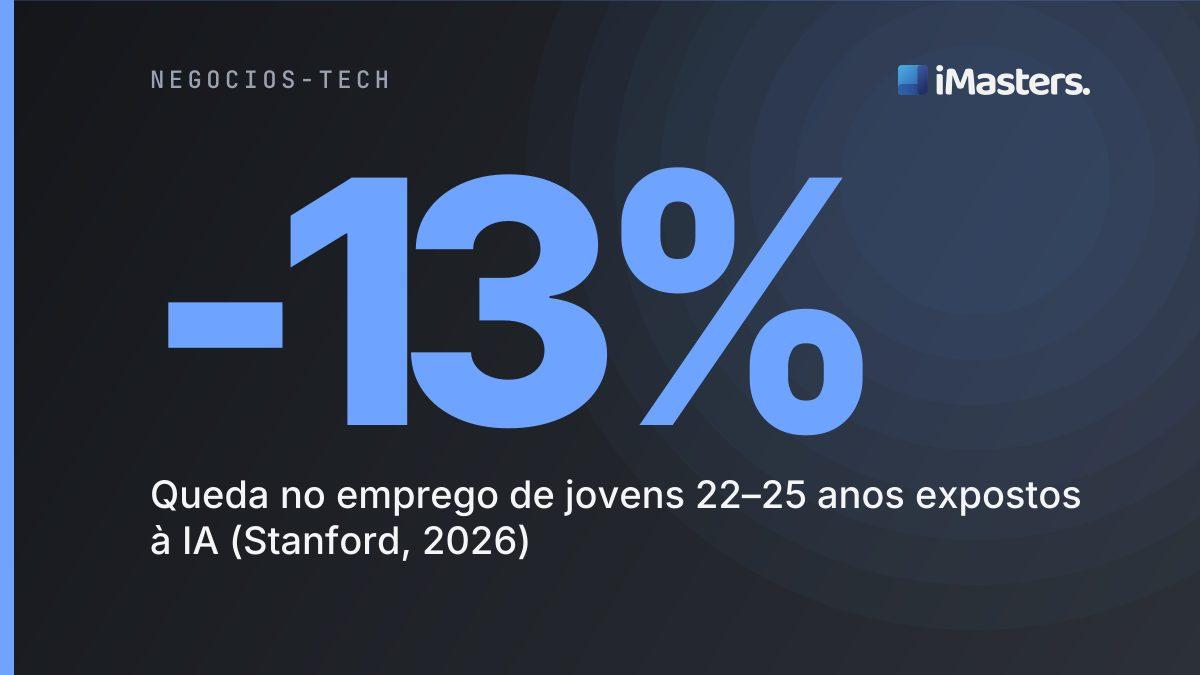
A study by the Stanford Digital Economy Lab, updated in August 2026, compared employment among young Americans aged 22 to 25 in occupations more exposed to artificial intelligence against occupations less exposed. The result: in the most exposed roles, this group's employment level was 19% below what would be expected had it followed the trajectory of young people in less automatable professions.
This isn't a futurist's prediction. It's observed data, in a market (the American one) that has historically led corporate adoption of generative AI productivity tools. The age bracket (22 to 25) is exactly the intern and trainee range: people who would now be entering the learning curve that, until recently, ran through reports, spreadsheets, and presentations.
In Brazil, the data doesn't exist with the same granularity, but the warning applies doubly. Training mid-level and senior developers here was already a bottleneck before AI entered the picture: Brazilian companies have historically treated internships as a cost center to be minimized, not as a strategic pipeline to be protected. If the American market already shows a 19% contraction with more mature training infrastructure, the risk of an even more aggressive cut here is real.

Expert views
What people are saying about it.
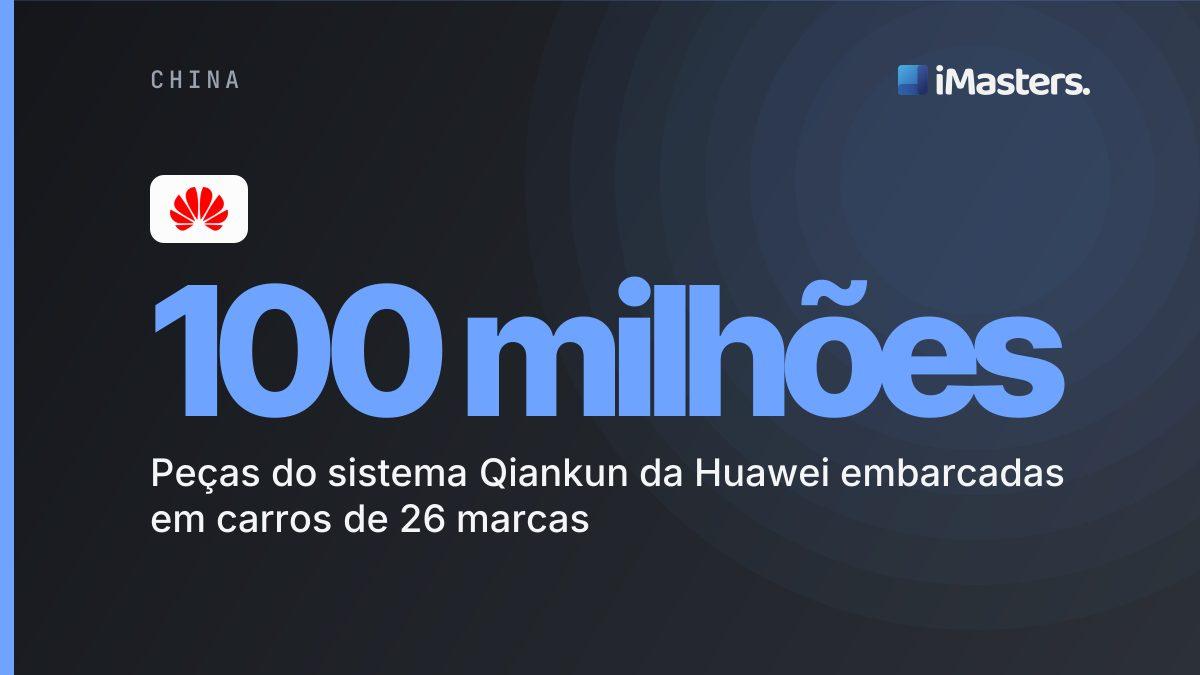
The company says it has shipped more than 100 million Qiankun parts to 26 brands and over 60 models. The number counts components, not cars sold, and reveals Huawei's strategy of becoming the supplier of the car's intelligence without entering manufacturing.
Search Central guide, updated since December 2025, reinforces that there is no special markup to appear in AI Overviews: what counts is solid basic SEO, measured through Search Console.
The AI infrastructure fintech raised $6 million led by NXTP after quadrupling its enterprise client portfolio in 2026, going from two to eight contracts. The bet behind the round says more about verticalized models than about the check itself.
What AI really takes away from the intern (and what it doesn't)
The report by Exame, a Brazilian business magazine, gets it right by separating two types of task that, until recently, were tangled together in the routine of people entering the job market. One is mechanical execution: organizing data, formatting slides, running numbers. The other is the real formative part, which was never in the execution itself, but in the reasoning around it.
| Task | Does AI replace it? | What is lost if no one does it anymore |
|---|---|---|
| Build a report or spreadsheet | Yes, almost entirely | Little, it's repetitive execution |
| Understanding where the data comes from and what it means | No | Analytical reasoning and business judgment |
| Attending meetings and observing how decisions are made | No | Tacit knowledge about how the company decides |
| Investigating an unexpected variation in a number | Partially | The ability to form and test hypotheses |
| Presenting results and defending an interpretation | No | Communication and exposure to feedback from senior managers |
The strategic mistake I see happening in board committees is treating the left column as if it were the intern's entire job. When a company automates execution and simply cuts the position, it isn't cutting redundant work: it's cutting access to the second and third columns, which are the ones that shape people capable of becoming managers in five years.
The counterargument I take seriously before taking a position
Here's the strongest objection, and it isn't flimsy: maybe the classic internship model was already broken before AI showed up. At many companies, interns have always been cheap labor for low-value tasks, without structured mentorship and without exposure to real decisions, exactly the opposite of what Exame describes as ideal. If that's the case, AI doesn't destroy training, it only accelerates the collapse of a program that was already a facade.
This argument has a right to exist, and I won't pretend every trainee program in Brazil deserves to be preserved as it is. But it proves the opposite of what it seems to prove: if the program was already a facade, the solution isn't to cut the position and leave a vacuum, it's to redesign the role around what the table above shows is left. Cutting without redesigning is solving the wrong symptom.
The question I would ask the CTO before signing off on the cut
No founder should approve restructuring an internship or trainee program with just the cost-avoidance spreadsheet on the table. Three questions separate a well-informed board decision from a reflexive cut:
- Of the tasks AI took over, how many were purely mechanical, and how many were coupled to a decision the junior needed to see happen?
- If we reduce the number of interns today, what's the plan for hiring mid-level and senior staff three years from now, when this same group should be ready to take on more responsibility?
- Are we measuring the intern by the speed of task delivery (where AI always wins) or by the quality of the reasoning behind the delivery (where they still compete)?
Each company's answer will be different, and no AI vendor solves this on its own: using Copilot, ChatGPT Enterprise, or any other corporate productivity tool only speeds up execution, it doesn't replace the organizational design decision that belongs to the board. The tool is neutral; the choice to keep the intern close to decisions or isolated with the spreadsheet is managerial, not technical.
What actually changes in the 2027 budget
My position is that cutting junior positions for immediate cost avoidance is a short-term decision disguised as efficiency. The real cost doesn't show up in the quarter the cut is made, it shows up three or four years later, when the company needs to hire seniors in the market (more expensive, scarcer) because it trained no one internally. That's the kind of risk that doesn't enter an AI tool's ROI spreadsheet, but it does enter, expensively, the retention and talent-replacement-cost spreadsheet.
The path I would recommend to any founder in this restructuring isn't to keep the number of internship positions untouched out of dogma, nor to cut everything out of margin reflex. It's to use AI exactly as Exame suggests, as execution support, redesigning the role to concentrate the junior's time on the part the table above shows the machine still doesn't do: interpreting, questioning, and presenting to decision-makers.
Translated from the Brazilian Portuguese original · Read the original
Huawei tallies 100 million Qiankun parts in cars, but still hasn't built a single one
The company says it has shipped more than 100 million Qiankun parts to 26 brands and over 60 models. The number counts components, not cars sold, and reveals Huawei's strategy of becoming the supplier of the car's intelligence without entering manufacturing.