5 min read
Jensen Huang's return to Nvidia reignites Taiwan's bet on the chip supply chain
 Lucas CardosoAuthor
- Reading
- 5 min
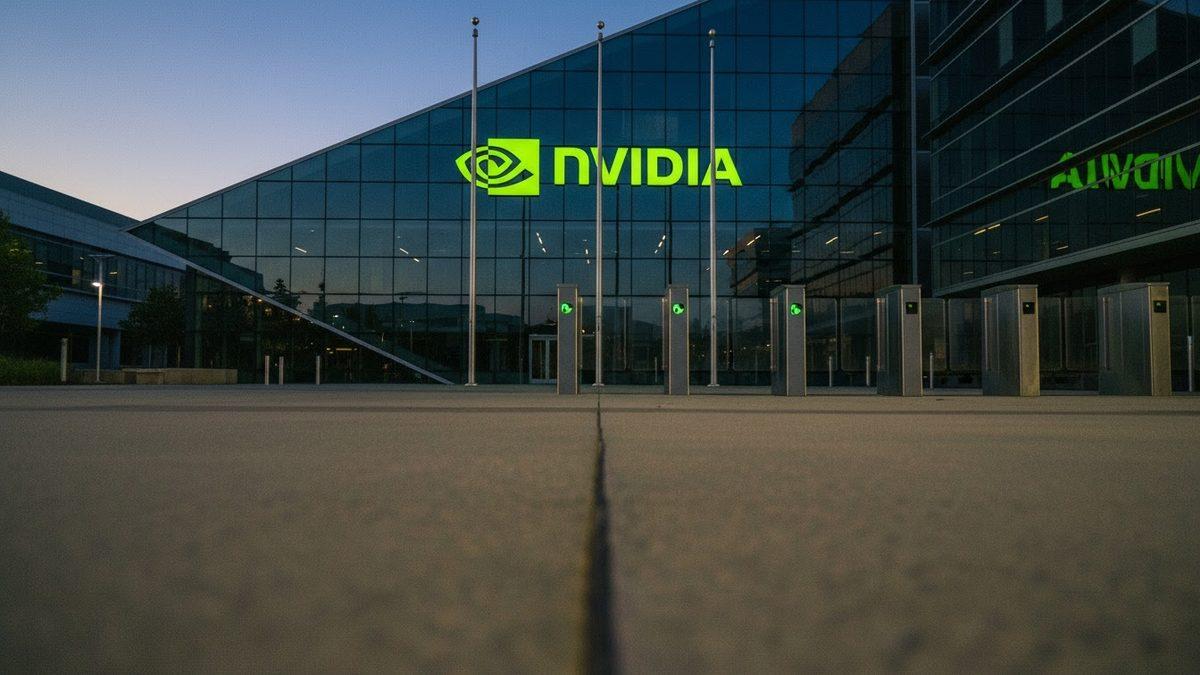
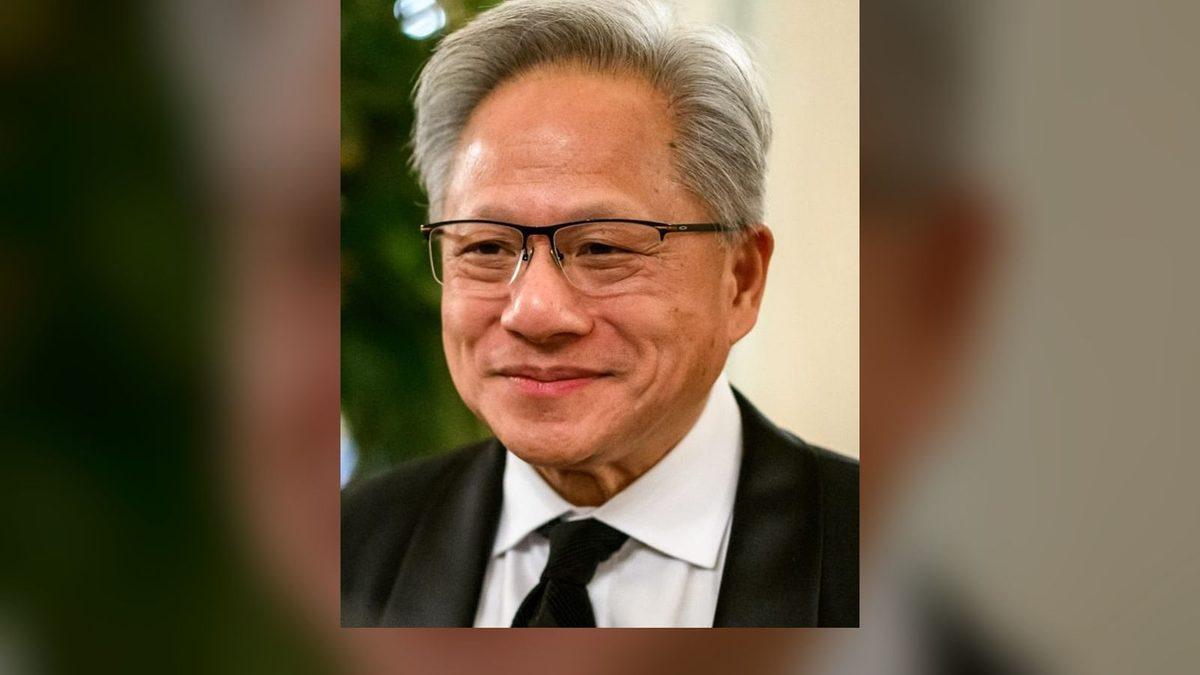
Jensen Huang returned to the helm of Nvidia on November 23, after 11 days away amid infidelity allegations and national security concerns. The reaction in Taiwan, where he was born, shows how much the global AI chip supply chain depends on a single person.
Eleven days of absence and a return under political pressure
Jensen Huang, Nvidia's co-founder and CEO, stepped down on November 12, 2026, amid reports of extramarital affairs and national security concerns raised by US authorities. Eleven days later, on Monday, November 23, Nvidia's board reinstated him as CEO, chairman and board member, according to a report by South China Morning Post (SCMP).
The board's statement said it had received "input from senior US government officials" before deciding on the return, and said it believed the move served the "best interests of shareholders, employees, partners and customers." On Tuesday, November 24, Taiwan's benchmark index, the Taiex, jumped nearly 9%, driven by shares of chip and hardware companies tied to Nvidia.
Huang was born in Taiwan and moved to the United States at age nine. That background matters for understanding the market's reaction: much of the world's AI production chain runs through Taiwanese manufacturers with whom Huang has built personal relationships over decades, not just corporate contracts.
Why Taiwan sees itself as irreplaceable
Taiwan Semiconductor Manufacturing Company (TSMC) manufactures and packages all of Nvidia's current-generation GPUs. Foxconn (formally Hon Hai Precision Industry), Quanta and Wistron assemble much of the rack-scale systems that underpin AI data centers around the world. It is this concentration that leads Brady Wang, a semiconductor analyst at Counterpoint Research, to call Taiwan "irreplaceable" for Nvidia's hardware ecosystem, according to SCMP.

Expert views
What people are saying about it.
Surveys by PwC, Microsoft, and the World Economic Forum published in 2026 show a Brazil that uses generative AI above the global average, but without the management criteria, roles, or performance evaluations to match that use.
[](https://medium.com/@Mackeenzy?source=postpage---byline--64c3a108fe3c------------------------------------------)
Ben Thompson, of Stratechery, uses Jensen Huang's ouster and return to the helm of Nvidia within two weeks to argue that AI companies will concentrate power in a few technical leaders, not in management hierarchies.
During Huang's absence, investors even questioned whether Nvidia would keep priority access to scarce manufacturing capacity in Taiwan and to memory supply in South Korea, or whether it would continue funding partners' infrastructure expansion. Liu Young-way, president of Foxconn, publicly defended Huang even before the return was announced, in a televised briefing on the island's semiconductor sector:
We trust Jensen Huang's vision and the industry that he forged over decades of painstaking efforts.
Liu Young-way, president of Foxconn (Hon Hai Precision Industry)
Personal relationship as competitive advantage, and as risk
Huang's negotiating style, described by Elon Musk on another occasion as the ability to manage the supply chain "brilliantly" through handshakes rather than formal contracts, became a central theme of industry analysis. Dan Ives, partner and senior managing director at American bank Yorkville Ives & Co., told SCMP that an interim leader would struggle to replicate Huang's direct relationships with TSMC and memory manufacturers, especially at a time when memory costs are rising and squeezing margins.
Arisa Liu, chief director and researcher at Taiwan Industry Economics Services, summed up the effect of Huang's return:
Jensen Huang's return directly removes that structural risk of losing that personal affinity and rapport with his hometown.
Arisa Liu, Taiwan Industry Economics Services
For founders and tech leaders, the episode is a case study in key-person risk applied to critical infrastructure: the planet's most coveted AI supply chain depended, for eleven days, on uncertainty over whether a single executive would remain in his role. Brazilian startups that negotiate GPU access through cloud providers feel the echo of this: the availability and price of computing capacity to train and run AI models remain tied to decisions made within a supply chain concentrated among a handful of Taiwanese and South Korean companies.
The signal about the exit from China
Liu also noted that Taiwanese manufacturers could attract more investment and orders as Washington intensifies scrutiny of Nvidia's business in mainland China, with Taiwan's supply chain gaining even more weight as the company redirects orders away from the Chinese market. Brady Wang, of Counterpoint, agreed that Huang's personal relationship with Taiwanese suppliers weighed in favor of his return, but added an important caveat: suppliers kept signing multi-year deals with Nvidia even during the executive's absence, proof that the partnership goes beyond the personal bond.
Still, Wang warned that geopolitical headwinds do not disappear with Huang's return:
Jensen's return does not resolve geopolitical challenges. With White House support for his return, he may face even greater pressure to move packaging, testing and rack assembly capacity to the United States.
Brady Wang, Counterpoint Research
This is the part that matters to anyone thinking about long-term strategy, not just this week's market reaction: if part of the assembly moves to the US, production costs rise and the geographic concentration shifts, with cascading effects on GPU pricing and delivery times for customers outside the United States, including in Latin America.
What remains unresolved
Huang's reinstatement does not end the political scrutiny. He is scheduled to take part, on December 1, in a closed-door meeting with the House Select Committee on China, the House Foreign Affairs Committee and the House Intelligence Committee, and is expected to appear at a public hearing of the Senate Banking Committee on December 3. Kuo Ming-chi, an analyst at TF International Securities, wrote in a research note on Tuesday that Huang's future public comments, internal decisions and outside interactions "will become part of the investigation and new evidence for questioning," even with the immediate supply-chain management issue resolved.
What this changes for tech leaders in Brazil
No chip is manufactured in Brazil at the scale that moves the AI market: all access to cutting-edge GPUs runs, directly or indirectly, through this supply chain concentrated in Taiwan and South Korea. Founders budgeting AI infrastructure for 2027 get a concrete data point here for decision-making: manufacturing capacity availability remains subject to political decisions in Washington, not just market demand.
The episode also serves as a governance warning for anyone who concentrates strategic relationships in a single person, founder or CEO. Nvidia held up because it had multi-year contracts beyond Huang's personal relationship, but the market reacted as if continuity depended on him. Brazilian startups negotiating critical partnerships, whether with cloud providers or banks for credit, would do well to document what today exists only in the relationship between a founder and the other side.
For those using GPUs through AWS, Azure, Oracle Cloud or local providers, the practical fallout is indirect but real: if Nvidia increases capacity pressure away from China and more production shifts to the US, AI infrastructure costs are likely to reflect that reorganization in the coming quarters, the same way any global rise in memory or wafer prices has historically reached Brazil with a lag of months.
Translated from the Brazilian Portuguese original · Read the original
Alibaba's Qwen Go opens free AI calling for everyday tasks
Alibaba has rolled out to the general public the feature that has Qwen Go place phone calls on the user's behalf to book a table, check on a lost item or follow up on a delivery, with a mandatory disclosure that an AI is speaking.