GoMartech
Content type: Concept
5 min read
Alibaba's Qwen Go opens free AI calling for everyday tasks
 Lucas CardosoAuthor
- Reading
- 5 min
Alibaba has rolled out to the general public the feature that has Qwen Go place phone calls on the user's behalf to book a table, check on a lost item or follow up on a delivery, with a mandatory disclosure that an AI is speaking.
On November 25, 2026, Alibaba opened up to the general public the AI calling feature of Qwen Go, its personal assistant built on the Qwen family of models. According to Chinese reports cited by Pandaily, the feature is no longer restricted and now applies to any user: the user simply gives instructions and authorization, and the assistant calls the indicated person or business to handle a specific task.
The examples described in the announcement are specific and bounded: asking a restaurant about booking a private room, checking with a hotel whether an item was left behind, or following up with a carrier on the status of a delivery. The user specifies who should be contacted and what the topic is; Qwen Go conducts the conversation and reports back the result. That is different from an agent that decides on its own who to call or that has unrestricted authority to make commitments on someone's behalf.
Scheduling as Part of the Product
The feature also supports scheduled calls: the user sets a future time and the topic to be discussed, instead of triggering every conversation on the spot. This indicates that Qwen Go is not just a reactive dialer, but includes a task queue with scheduled triggering, closer to a customer-service automation system than to a simple voice feature inside a chat.
It's worth separating what Pandaily reported from what would be a new model. The November 25 announcement is the rollout of a specific feature within Qwen Go, not the launch of a new foundation model or of open weights for download. The voice capability had already appeared earlier in broader previews of Qwen Go's ambitions as a personal agent, including an earlier feature for claiming refunds on delayed flights, also covered by Pandaily. What changes now is the scope of availability of the call feature itself.

Expert views
What people are saying about it.
Surveys by PwC, Microsoft, and the World Economic Forum published in 2026 show a Brazil that uses generative AI above the global average, but without the management criteria, roles, or performance evaluations to match that use.
[](https://medium.com/@Mackeenzy?source=postpage---byline--64c3a108fe3c------------------------------------------)
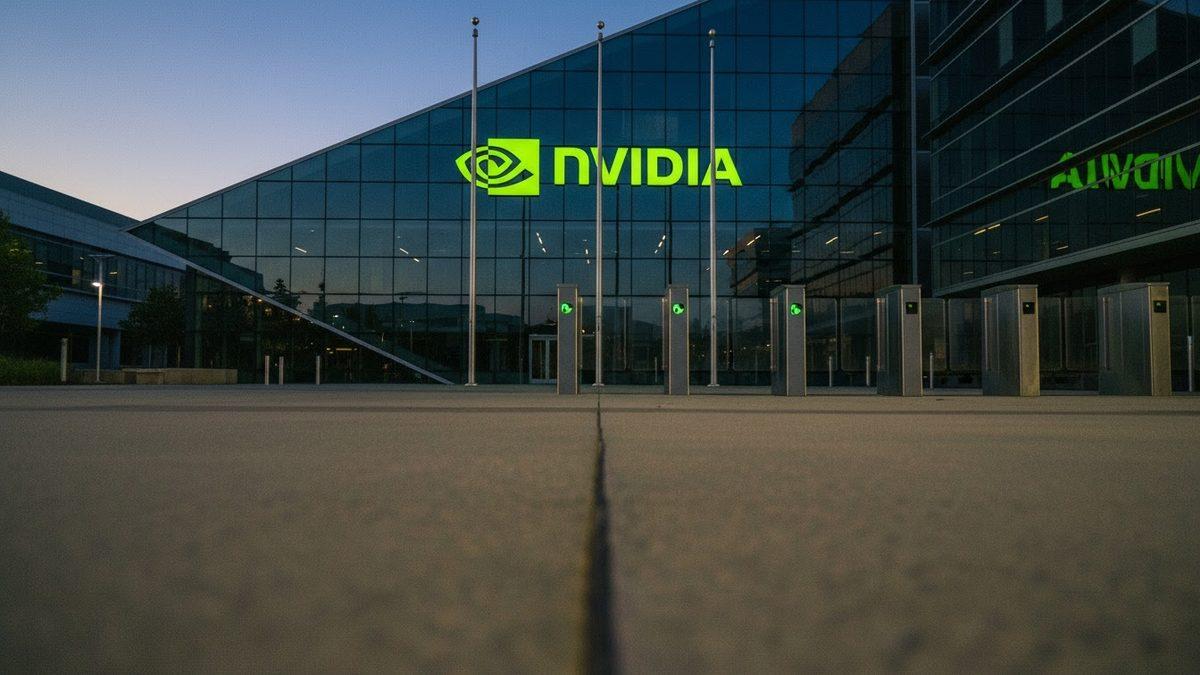
Ben Thompson, of Stratechery, uses Jensen Huang's ouster and return to the helm of Nvidia within two weeks to argue that AI companies will concentrate power in a few technical leaders, not in management hierarchies.
How the Call Works Under the Hood
For those building this kind of product, the architecture implied by "the agent calls someone" has familiar pieces, just combined in a specific way:
- Capturing explicit user consent before any dialing, including who will be contacted and why.
- A dialogue manager built on top of the Qwen family's language model, responsible for keeping the call's goal (booking, asking, confirming) without drifting into commitments the user did not authorize.
- A complete voice pipeline: speech recognition (STT), response generation and speech synthesis (TTS), integrated with a real telephony gateway capable of dialing numbers outside the platform, not just simulating the call inside the app.
- A scheduling queue, for calls booked in advance.
- A mandatory identifier: during the conversation, the assistant must identify itself as an AI.
This last point is the most relevant from a product design standpoint. It isn't an isolated compliance detail: it's a safeguard built into the dialogue logic itself, which must trigger the self-identification before any other relevant line in the call.
The Risk Filter Before Dialing
Besides self-identification, the Chinese coverage describes a protection mechanism for outbound calls, which evaluates requests and blocks those considered risky before the call leaves the system. Pandaily is clear in stressing that this is the safeguard announced by Alibaba, not an independent audit of how well this filter classifies each request or of how each recipient reacts to the call.
In practice, this means there's an intent-moderation layer running before the voice pipeline: the system has to decide whether it's worth dialing before incurring the cost of an actual call, and it has to do so based on the natural-language instruction the user gave, not on a fixed list of allowed tasks. It's a risk-classification problem similar to content moderation, except applied to a real-world action (a phone call), which raises the cost of a false negative.
What the Announcement Does Not Guarantee
Pandaily is explicit about the limits of what was disclosed, and it's worth reproducing that list because it keeps the news from being overread:
- "Free" and "available to the general public" do not mean permission to call any number or to carry out high-risk tasks.
- The reports reviewed contain no confirmation of a universal call limit, of support for all international destinations, or of authorization to handle emergencies, finances or equally sensitive actions.
- Placing the call is not the same as confirming that a reservation was made, a delivery was changed, or a lost item was recovered: the outcome depends on what happens in the conversation.
- Pandaily itself states it did not make any test calls for the report, so there is no independent verification of success rate.
The Parallel for Those Building This in Brazil
Voice agents that actually dial an external number run into, in Brazil, a regulatory layer that Qwen Go also has to navigate in China, albeit under different rules: a do-not-call registry known as "Não Me Perturbe" (Brazil's do-not-call list), the requirement for a legal basis for contact under the LGPD (Brazil's data protection law), and sector-specific rules for debt collection and telemarketing in the financial industry.
A digital bank along the lines of Nubank (a Brazilian digital bank), or a marketplace the size of Mercado Livre (Latin America's largest e-commerce marketplace), looking to automate AI customer-service calls would have to solve the same pair of problems Alibaba solved here: how to capture valid, auditable consent before dialing, and how to ensure the person on the other end knows they're talking to an AI, not a human.
The design pattern Pandaily describes, mandatory self-identification built into the dialogue flow plus a risk-screening layer before dialing, is replicable regardless of stack: an equivalent can be implemented on top of any language model with function-calling support and a telephony gateway (whether Twilio or a local carrier), as long as the pipeline forces every call through these two safeguards before it goes out.
What Remains Open
Since no test calls were made for the original coverage, there is no way to know, from the available sources, what the real success rate is for tasks like restaurant reservations, or how the risk filter behaves when faced with ambiguous requests. It's also unclear whether the feature works with numbers outside China or whether the scheduling feature has any limit on how far in advance it can be booked.
For those following the pace of Alibaba's agent releases, this rollout of the calling feature is concrete evidence that Qwen Go is moving from a text assistant to an agent capable of interacting with the world outside the app, but independent validation of this behavior does not yet exist in public English-language sources.
Translated from the Brazilian Portuguese original · Read the original
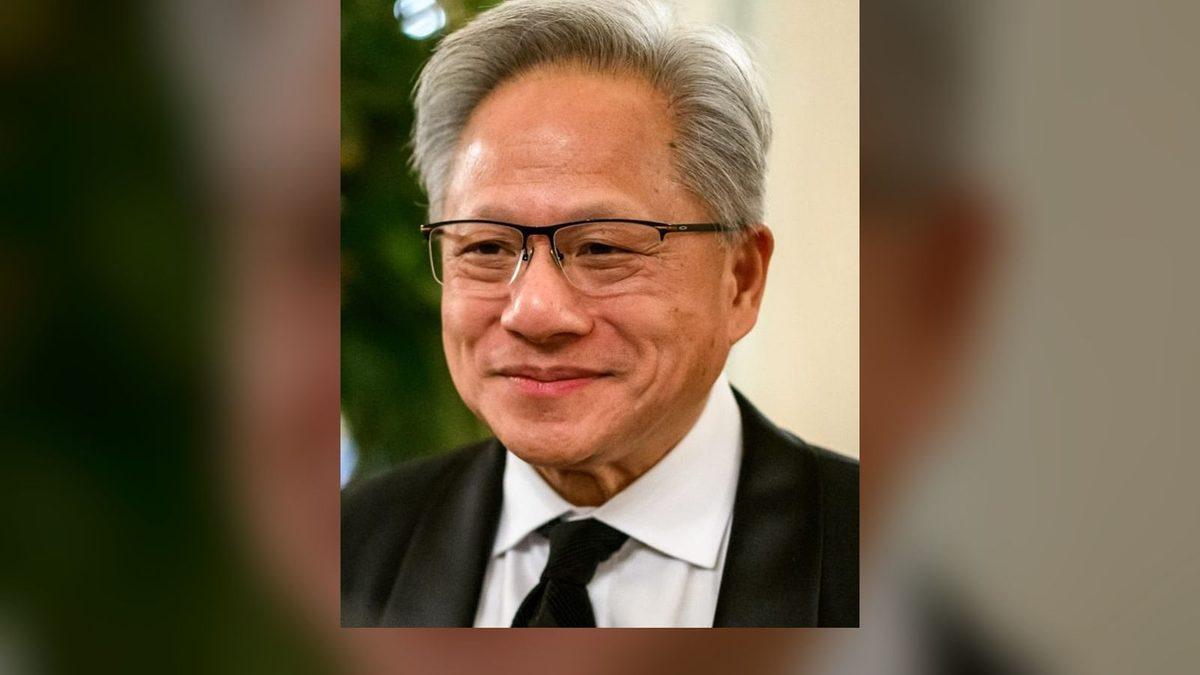
Jensen Huang's return to Nvidia reignites Taiwan's bet on the chip supply chain
Jensen Huang returned to the helm of Nvidia on November 23, after 11 days away amid infidelity allegations and national security concerns. The reaction in Taiwan, where he was born, shows how much the global AI chip supply chain depends on a single person.