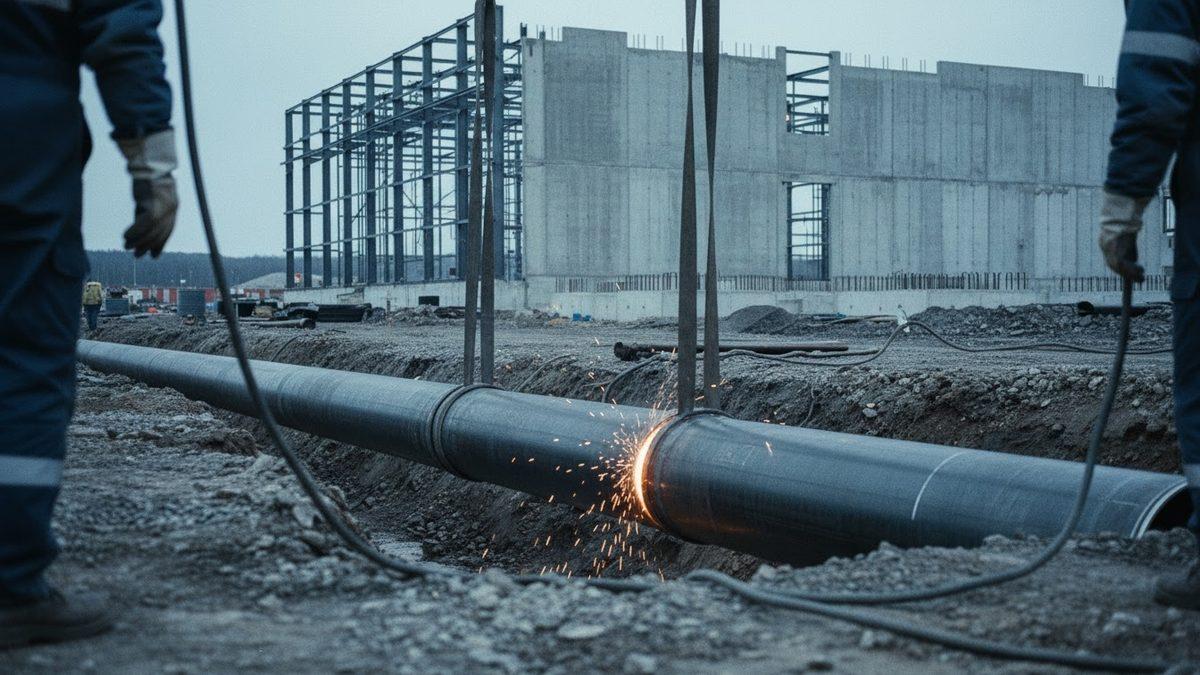
Redata, signed into law in September, could reduce the hourly cost of GPU operation in the country by nearly 20%, according to Forward Intelligence. For those considering selling AI training and inference abroad from Brazil, the math changes, but the regulation still has gaps that could delay that gain.
 Vanessa GuerraAuthor

- Reading
- 5 min
- Tables
- 1
Redata, signed into law in September, could reduce the hourly cost of GPU operation in the country by nearly 20%, according to Forward Intelligence. For those considering selling AI training and inference abroad from Brazil, the math changes, but the regulation still has gaps that could delay that gain.
The number behind the headline
An estimate from consultancy Forward Intelligence, shared exclusively with Exame, indicates that Brazil's Special Tax Regime for Data Center Services (Redata) could reduce the hourly cost of GPU operation in Brazil by nearly 20%. The regime was established by Law No. 15,504, signed in September 2026, and suspends federal taxes on the purchase of eligible equipment by qualified companies.
The key point for anyone deciding on a budget: the 20% is a potential, not a guarantee. Forward Intelligence itself acknowledges that the savings vary according to each operation's cost structure. Before putting that number into any financial projection, the founder needs to know it depends on regulation that is still being disputed, discussed further below in the section on the tax calendar.
Two markets the founder can't confuse
Daniel Bichuetti, co-CEO and CTO of Forlex, draws a distinction that separates those who only look at cloud pricing from those who understand the AI value chain in Brazil. On one side are those who build and operate data centers: power, cooling, connectivity, computing capacity. On the other are those who use that infrastructure to train and run models, known as AI producers.

Expert views
What people are saying about it.
Alibaba has rolled out to the general public the feature that has Qwen Go place phone calls on the user's behalf to book a table, check on a lost item or follow up on a delivery, with a mandatory disclosure that an AI is speaking.
[](https://medium.com/@Mackeenzy?source=postpage---byline--64c3a108fe3c------------------------------------------)
Ben Thompson, of Stratechery, uses Jensen Huang's ouster and return to the helm of Nvidia within two weeks to argue that AI companies will concentrate power in a few technical leaders, not in management hierarchies.
This transformation, however, requires distinguishing between two market segments. The first involves the construction and operation of data centers, responsible for providing power, cooling, connectivity and computing capacity. The second comprises companies that use this infrastructure to develop, train and operate AI models, known as AI producers.
Daniel Bichuetti, co-CEO and CTO of Forlex
It's in the second group that the cost reduction matters most, according to Forward Intelligence. For a Brazilian startup that trains or runs inference on its own models and sells capacity to clients outside the country, cheaper GPUs directly change the margin on the international contract. For those who only consume a third-party model's API, the effect is indirect and passes through the final price charged by the provider.
The energy math nobody else has
Bichuetti's comparative argument is what sets this story apart from any generic tax-incentive announcement. According to the International Energy Agency, data center operators in the United States are moving ahead with on-site natural gas generation. Brazil has the opposite problem: wind and solar plants already installed are being forced to cut production.
This phenomenon, called curtailment by Brazil's National Electric System Operator, means clean energy generated and discarded due to oversupply at certain times or grid constraints. Bichuetti argues for installing data centers near renewable generation hubs to capture part of this energy that is currently lost. The idea is technically appealing, but it depends on connection, transmission and continuous supply, because AI training consumes heavy processing over long periods and requires predictable, not intermittent, electricity.
What it costs to play this game
A study by Fundação Getulio Vargas, commissioned by Scala Data Centers and Norgás, estimates the investment needed for a 100-megawatt AI data center at around R$ 25 billion: R$ 5 billion in physical infrastructure and R$ 20 billion in computing equipment, such as servers, GPUs and storage. It's worth noting that the study was paid for by companies with an interest in the sector, which doesn't invalidate the figure but calls for caution from anyone using it as an investment benchmark.
With high interest rates in Brazil, financing this type of project becomes more expensive, giving more weight to long-term credit lines and mechanisms that reduce risk for investors. Ascenty told Exame it already had land and power connections ready to expand operations, regardless of whether the regime was approved: a sign that large operators aren't waiting for the regulation to be finalized before positioning themselves.
The regulatory clock is working against the founder
The date that matters most for anyone planning a 2027 budget isn't when the law was signed, it's the tax calendar that is already in effect.
| Redata benefit | Tax suspended | Expected validity |
|---|---|---|
| Purchase of eligible equipment | PIS/Pasep, Cofins, IPI | Until December 31, 2026 |
| Equipment imports | Import Tax | 5 years |
Starting in 2027, PIS and Cofins cease to exist, replaced by the Contribuição sobre Bens e Serviços (CBS), part of Brazil's tax reform. Because Redata was written on top of taxes that are being phased out, the regime needs regulation to reconcile it with the CBS before the end of the year, or risk the most relevant benefit for GPU buyers losing practical effect right at the turn of the calendar.
Adding to this is the dispute over classifying natural gas among low-emission sources, according to Folha de S.Paulo the main sticking point in the regulation, and the environmental requirement of a Water Use Efficiency (WUE) index equal to or below 0.05 liters per kilowatt-hour. Bichuetti argues for going further and requiring a minimum percentage of water reuse, which would open space for Brazilian water treatment and reuse startups to supply this market.
What this changes for those deciding now
For the founder evaluating whether to build an AI product with the intent of exporting computing capacity, training or inference, three questions matter more than the 20% figure:
- Will the GPU contract I'm signing today survive the change in tax regime in January 2027, or will I need to renegotiate?
- Is my infrastructure provider (my own data center or a third-party provider) positioned near a renewable generation hub with curtailment, or does it pay peak tariffs like any other operation in the world?
- Does my operation fit as an AI producer, which captures the GPU cost benefit, or as a consumer of generic cloud services, which only feels the effect if the provider passes on the savings?
The answer changes the decision between committing capital now, betting on a regime that's still incomplete, or waiting for the natural gas regulation and reconciliation with the CBS before signing a long-term contract with a Brazilian data center. Neither option is wrong: it's the board's risk appetite, not enthusiasm for the law, that should guide this choice.
Translated from the Brazilian Portuguese original · Read the original
Alibaba's Qwen Go opens free AI calling for everyday tasks
Alibaba has rolled out to the general public the feature that has Qwen Go place phone calls on the user's behalf to book a table, check on a lost item or follow up on a delivery, with a mandatory disclosure that an AI is speaking.