Vanessa GuerraAuthor
- Reading
- 4 min
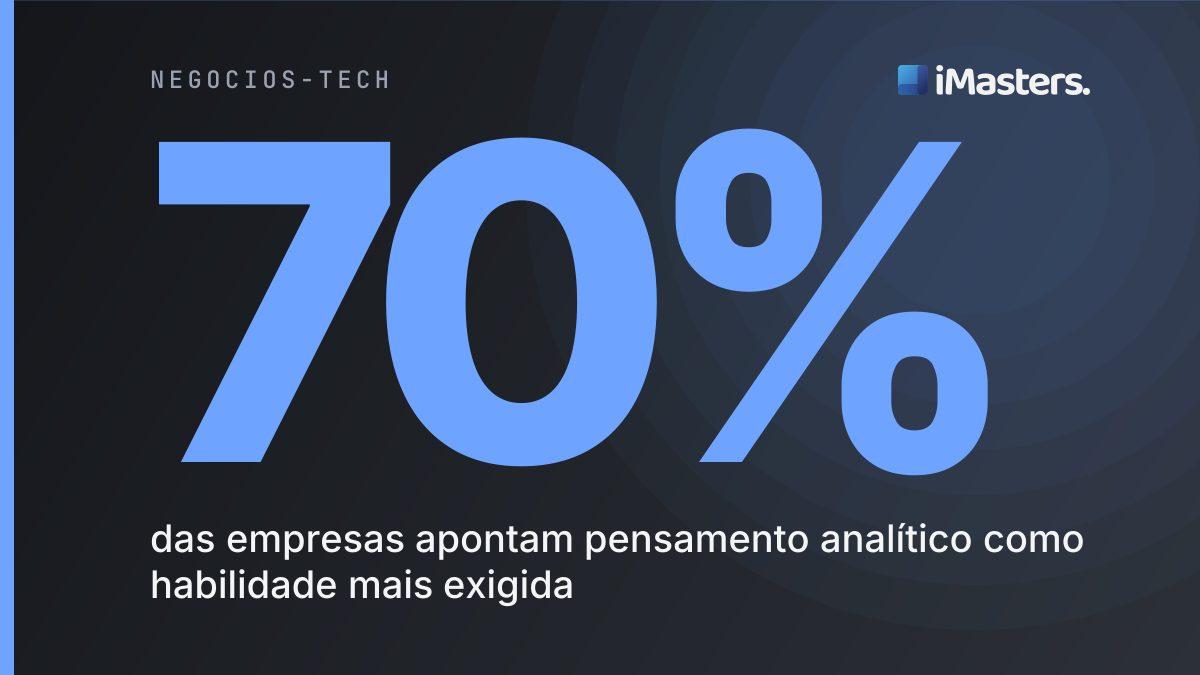
The World Economic Forum ranks analytical thinking as the most in-demand skill among companies worldwide. For founders and leaders in Brazil, this has stopped being an HR trend and become a criterion for staying in the job.
What climbed the ranking, and why it reaches the board
The World Economic Forum's Future of Jobs 2025 report surveyed more than a thousand employers and placed analytical thinking at the top of core skills: 70% of companies, or seven in ten, consider it essential for the coming years. Next come resilience, flexibility, leadership and social influence.
The same survey estimates that 39% of the workforce's core skills will change by 2030, down from 44% reported in 2023. For 63% of employers, the skills gap is now the main barrier to business transformation. This isn't an HR footnote: it's a sign that boards and investors will increasingly demand the reasoning behind a recommendation, not just its outcome.
My reading, after sitting in on innovation committees and M&A tables: the founder who walks into a board meeting with "I think the market is heading this way" and can't show the source, the date and the gap in what they don't know is losing decision credibility, even when they're right. Getting it right by luck isn't an asset that repeats; method is.
The symptom shows up in job postings, not just in strategy
In Brazil, PwC's 2026 AI Jobs Barometer shows the share of job postings requiring artificial intelligence skills jumping from 1.1% to 3.6% between 2024 and 2025. That's a more-than-threefold increase in a single year, and it isn't concentrated only in engineering.

Expert views
What people are saying about it.
Search Central guide, updated since December 2025, reinforces that there is no special markup to appear in AI Overviews: what counts is solid basic SEO, measured through Search Console.
The AI infrastructure fintech raised $6 million led by NXTP after quadrupling its enterprise client portfolio in 2026, going from two to eight contracts. The bet behind the round says more about verticalized models than about the check itself.
At an intellectual property event in Beijing, Huawei and supplier Phlexing Technology announced advances in EDA software tied to the Tau Scaling Law, a central piece of China's bet on closing the chip production cycle without relying on US tools.
The number matters to founders because it describes what the talent market is now pricing: people who can turn raw data into organized decisions are worth more, including in leadership and sales roles. If the sales director or VP of product opening at your company doesn't ask for this yet, it probably will by 2027. Ignoring this signal when recruiting or retaining leadership is choosing, by omission, to fall behind.
The difference between a report and a decision
There's a practical difference, and it's where most Brazilian leaders still stumble. A report describes what already happened: quarterly sales, market share, a competitor's move. Market intelligence takes that material and says what to do, with explicit priority, risk and assumptions.
The method behind this shift is simple to describe and hard to institutionalize:
- Define the decision question (what needs to be chosen, and by when).
- Gather public, verifiable sources, with date and origin identified.
- Classify each finding as fact, inference or gap, without disguising an opinion as data.
- Close with no more than three objective recommendations for the following period.
In short: what separates a strategy presentation from a rhetorical exercise is whether someone can point, line by line, to what is proven fact and what is a bet.
Where AI helps, and where it masks the problem
Generative AI tools speed up research, cross-referencing sources and synthesizing large volumes of text. That's real and worth the budget: an analyst who used to take a week to build a competitive map can now take a day. The risk, which I see repeated in committee after committee, is accepting the tool's answer without checking it, because it comes written with the confidence of someone who knows.
The practice that works is asking the tool to cite the source for each claim, explicitly flag where no data is available, and open the original link before bringing the number to the meeting. AI organizes the material. Responsibility for the decision, and for the risk it carries, still belongs to whoever signs the recommendation, not to the tool that drafted it.
The counterargument you can't ignore
It would be dishonest to close this piece without facing the strong side of the counterargument: not every founder decision has historical data available. In a nascent market, a new product or a zero-to-one bet, the data simply doesn't exist yet, and demanding evidence before deciding can mean losing the window to a competitor who decided faster with less certainty.
That caveat is real, and the fact/inference/gap framework itself already accounts for it: the gap is a legitimate category of answer, not a failure of the method. The problem isn't betting without complete data, it's betting without declaring that you're betting. Boards and investors tolerate acknowledged risk; they don't tolerate risk disguised as certainty.
The real criterion for closing out 2027
My position, after seeing both sides: data audits judgment, it doesn't replace judgment. The founder who institutionalizes the habit of separating fact from inference isn't outsourcing the decision to a spreadsheet, they're making their own reasoning auditable, replicable and defensible in front of whoever approves the budget.
If I had to give a single question to evaluate leadership in the 2027 planning meeting, it would be this: ask the person to show the data behind the recommendation, the inference they made on top of it, and what they honestly still don't know. Whoever only has confidence to offer, without those three layers, is selling opinion as if it were strategy. And that, according to the very market the WEF measured, is getting more and more expensive to carry on a résumé.
Translated from the Brazilian Portuguese original · Read the original
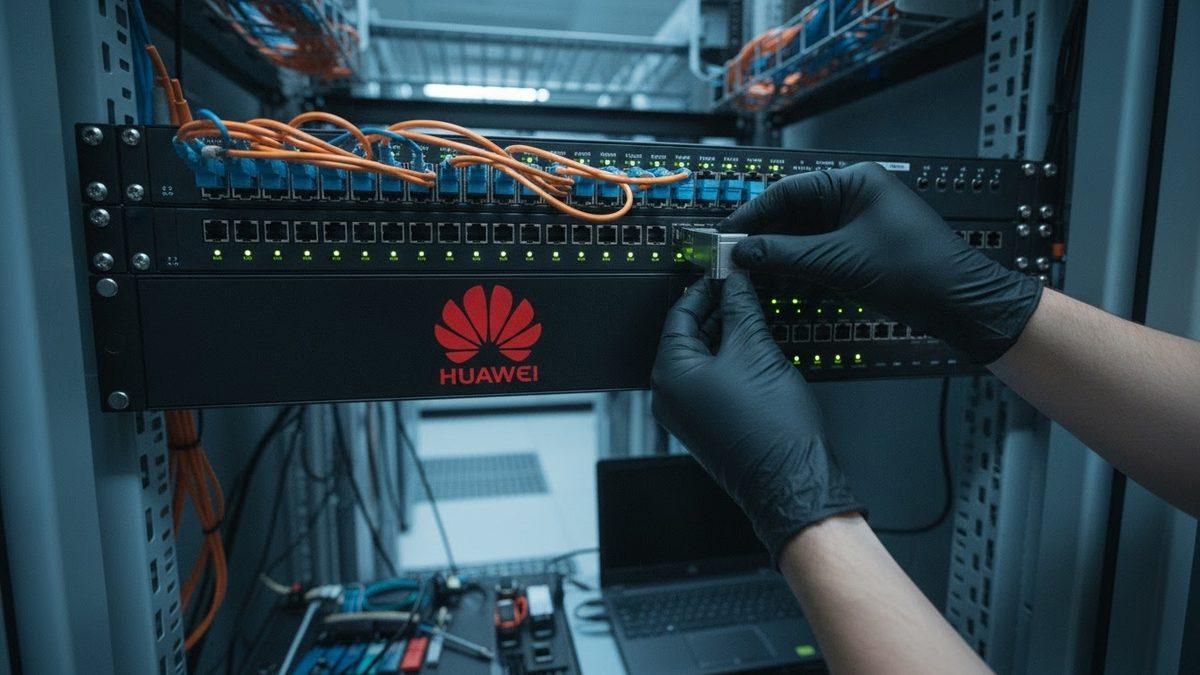
Huawei details 3D chips and integrated optics to scale AI computing beyond Moore's Law
At an intellectual property forum in Beijing, Huawei presented three pieces of a proprietary AI data center architecture: a scaling method based on time rather than space, a protocol to link up to 1 million processors, and an optical engine built into the chip.