Decision models reach 26% of requests on Vercel's AI Gateway

- Reading
- 7 min
- Tables
- 1
- Code
- 1
Vercel's November report on the AI Gateway shows teams using decision models, cheaper and faster, to classify and route instead of generating text, while Anthropic leads the choice among new teams.
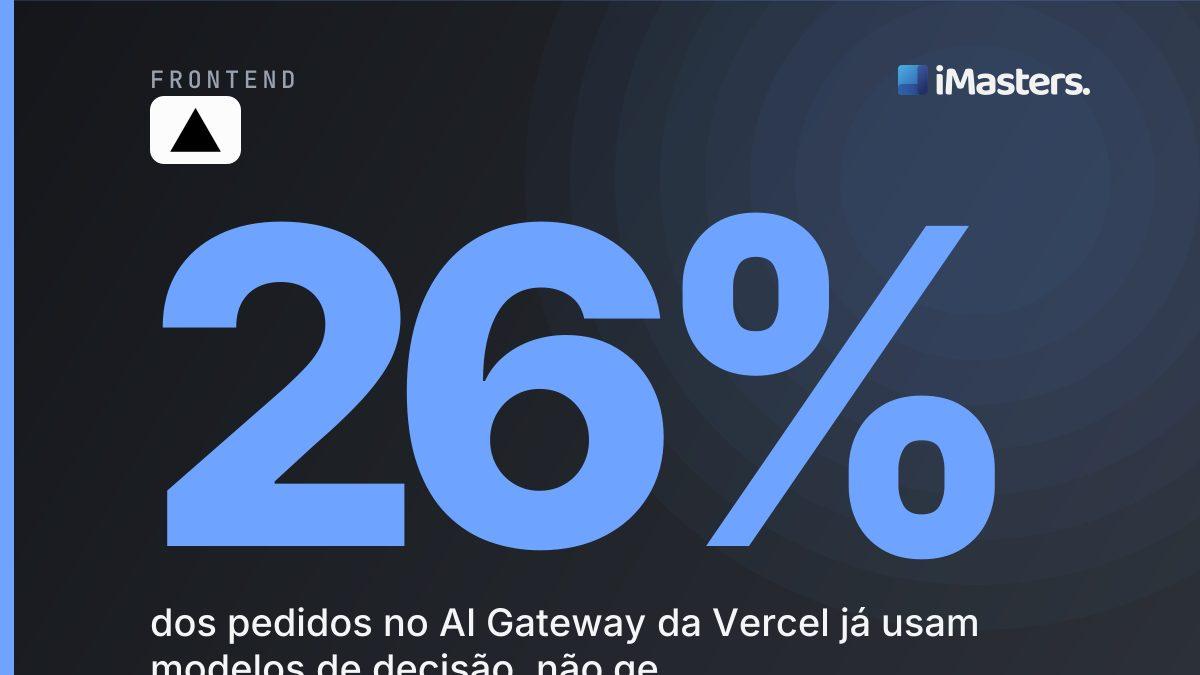
The AI Gateway Production Index for November 2026, published by Vercel, brought a data point that went largely unnoticed amid the noise over which language model is the strongest of the month: decision models now account for 26% of all requests passing through the gateway, but consume just 0.53% of total spend. In August that number was zero. The metric comes from a product that routes more than 100 trillion tokens per month across applications and providers like OpenAI, Anthropic, and Google, which gives Vercel a view of real production traffic, not benchmarks.
What a decision model is, and why it exists
A decision model doesn't write text. It classifies, scores, or chooses between options, and that changes everything about cost: according to Vercel, a decision model costs about 1/70th the price per request of a typical language model. The category debuted on the AI Gateway in mid-September 2026 and now totals 15 models from eight different providers.
The logic is simple and already familiar to anyone who built ML pipelines before the LLM era: not every decision in an app needs a model that understands deep context and generates prose. Content moderation, intent routing, priority scoring, choosing between an agent's paths: that's classification, not generation. Using a model that costs 70x more to solve that has always been wasteful, except until recently the alternative was building your own classifier from scratch.
Who's winning this market (and what it teaches about pricing)
The most striking data point in the report: almost all decision model volume went to Jev, from TypeSafe AI, which alone received nearly four times more requests than all Anthropic models combined. Even so, for every US$1 spent on Jev, teams spent US$64 on Anthropic models.
This exposes a division of labor that's already happening in practice, even without any architect having designed it on purpose:
- High-volume, low-complexity tasks (classifying, routing, deciding yes/no) migrate to very cheap decision models.
- Tasks that require reasoning, generation, or nuance remain on full language models, expensive per token but used much more sparingly.
For anyone designing a product's AI layer, this suggests a concrete pattern: separating the 'quick judgment' call from the 'generation' call, instead of sending everything to the same expensive model just because it's already configured. A hypothetical moderation pipeline, for example, would look like this:
// illustrative sketch of the pattern, not a tested snippet
const decisao = await gateway.run({
  model: "decision/jev", // cheap, short response
  input: textoDoUsuario,
});

if (decisao.classe === "precisa_revisao") {
  const resposta = await gateway.run({
    model: "anthropic/sonnet-5.5", // expensive, only when needed
    input: textoDoUsuario,
  });
}
The gain isn't just cost. Decision model responses are short by nature, so perceived latency drops, which matters a lot for any UI flow that depends on an AI response before rendering something for the user.
Adoption also follows team size, not trends: just a little over 1 in 5 teams with fewer than 10 million tokens/month used a decision model in October, versus nearly half in the 100 million to 1 billion range, and 7 in 10 among teams processing more than 10 billion tokens/month. Teams running low volume don't feel the cost pain that justifies the extra complexity of maintaining two models on the same route.
Anthropic wins two out of every three new teams
The other axis of the report is the OpenAI-Anthropic rivalry, and here the numbers tell a story that isn't the 'who's the leader' headline:
| Metric | December 2025 | October 2026 |
|---|---|---|
| Paid teams using OpenAI | 70% | 55% |
| Paid teams using Anthropic | 48% | 54% |
| OpenAI's spend share | ~9% | ~15% |
| Anthropic's spend share | ~64% | ~32% |
The two companies today reach nearly equal shares of the paid team base, but Anthropic was the first choice for almost twice as many new teams in October, and has been the most common choice in 9 of the last 11 months (the exceptions were December 2025 and August 2026, when OpenAI led). Among teams that were already paying in December, the share using Anthropic rose from about half to two-thirds.
At the same time, OpenAI's spend share on the gateway rose nearly two-thirds since December, while Anthropic's fell by almost half. Put another way: Anthropic is winning the race for who gets tried first, but OpenAI is regaining ground in how much each team actually spends once they decide. Among the top 1% of teams by spend, more than 90% already use both, which pushes the real fight to different terrain: it's no longer 'which lab to choose,' it's 'how much of the budget each one gets.'
In the ranking of individual models by reach among paid teams, four of the top six are Anthropic's: Sonnet 5.5 (26% of teams), Haiku 5.5 (22%), Haiku 4.5 (20%), and Opus 5.5 (18%), which was also the top model by total spend in its first full month, taking about 1 in every 7 dollars on the gateway. The other two in the top six are Jev (28%, decision model) and GPT-6 Luna (19%), from OpenAI.
Models have a six-week half-life: what that breaks in production
The most uncomfortable data point in the report for anyone maintaining production code isn't about which model wins, but about how long any model remains 'the' model. More than half of language requests in October went to models launched less than 60 days earlier, compared with fewer than 3 in 10 before September. Within each family, a new version ships every 61 days (median), and a typical model hits peak usage within a month of launch. Four weeks after that peak, 3 in 4 teams that were using it have already migrated to something else.
Vercel sums this up with a direct line:
AI models now have a half-life of about six weeks.
Eric Dodds, Vercel
For anyone writing the code that calls these models, that's a concrete argument against hardcoding model names across the codebase. Among teams running at least 10 million tokens/month, half changed their most-used model in October, 4 in 5 of those changes were to a newer version, and 6 in 10 switched providers. A project that ties model: "gpt-6-luna" directly into the API call across dozens of files pays that refactoring price every six weeks; a project with model choice centralized in a configuration layer or in the gateway's own routing swaps that out with a single deploy.
It's worth noting that old models don't disappear: 7 in 10 teams with meaningful volume still had at least one model more than ten months old running in October, just consuming less than 3% of the team's tokens, typically on some legacy route nobody prioritized migrating.
Voice grew faster than everything else, but for a different reason
The report also shows voice model adoption jumping from 4% of paid teams in July to 11% in October, a 161% increase. Most teams use voice as a new entry point for the same app or agent that already existed, plugging a speech model in at the start and end of the flow, with the team's preferred language model staying in the middle.
In July, about 1 in 4 voice teams used an 'all-in-one' model (integrated speech-to-text-to-speech) and 1 in 6 assembled the pipeline from separate pieces; by October that ratio had flipped, a sign that integrated models matured enough to become the default option.
When a decision model doesn't solve the problem
The same logic that makes a decision model brilliant for moderation or routing makes it useless for tasks that require generation, multi-step reasoning, or free-form text production: it doesn't write, it only chooses among options that already exist. Swapping an LLM for a decision model on a task that needs argumentative nuance, creative summarization, or code generation saves nothing, because the task simply isn't classification in disguise. The cost and latency gain only shows up when the decision itself is already binary or has few categories, and that's when it's worth measuring before migrating, not assuming that 'cheaper' is synonymous with 'works here.'
Translated from the Brazilian Portuguese original · Read the original
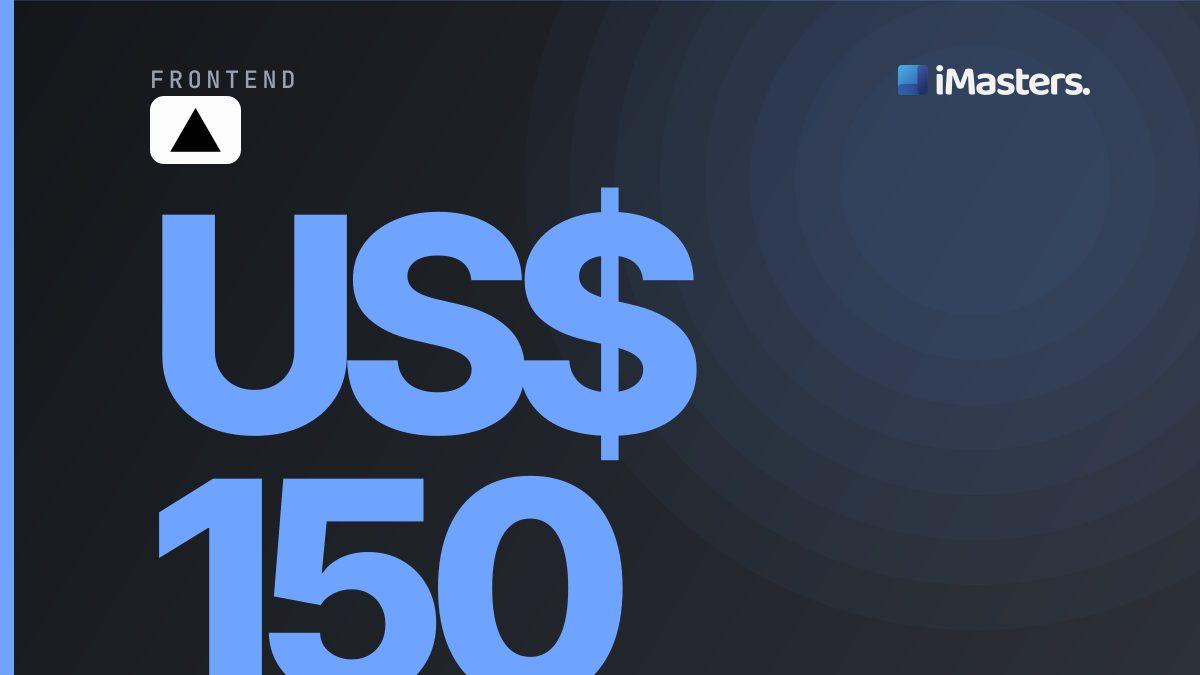
Vercel Raises Token Pass to $150 in Monthly AI Credits, Same $30 Price
The AI Gateway's Token Pass add-on now includes $150 in open-weight model credits per month, up from $80 before, without changing the $30 monthly fee per team. See how the credit works, what happens when it runs out, and who actually comes out ahead.