Google's August 2026 spam update knocked 16% of top 10 URLs off the map
SE Ranking data shows volatility 82% above normal, with pages dropping from top 10 straight past position 100. What this changes for those working with SEO in Brazil.

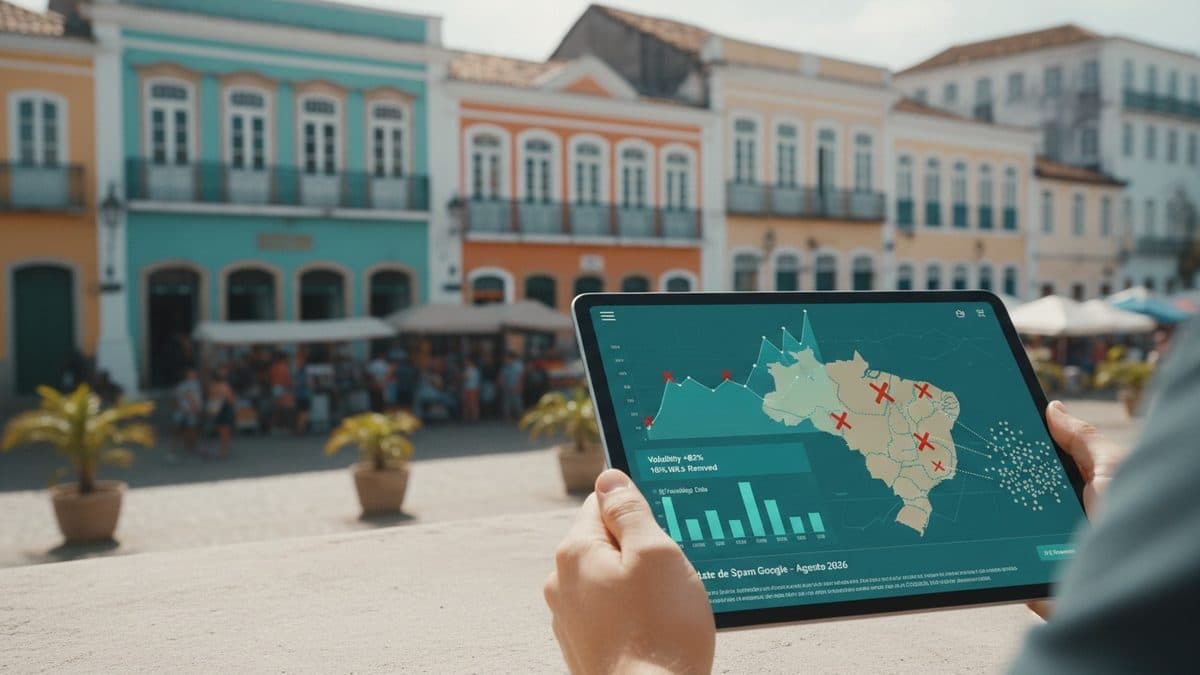
Google confirmed another spam update in August 2026, and the first market data shows it shook up rankings far more than the average of recent updates. The most detailed analysis so far came from SE Ranking, shared with Search Engine Land: during the rollout, the probability of a URL dropping out of the top 10 and disappearing from the top 100 was about 1.8 times higher than normal.
For those working with SEO or SEM, this isn't the kind of volatility you can dismiss as "weekend noise." It's worth understanding what the numbers really say, what they don't say, and how to react without jumping to conclusions.
What the numbers show
SE Ranking analyzed Google's organic results in the US for the same 100,000 keywords, spread across 20 industries. It compared rankings from August 17 and 22 (immediately before and after the update) with a baseline period of July 26 to 31, when no update had been confirmed. The main points:
- 16.71% of the URLs that were in the top 10 fell past position 100 for the same keyword. In the July period, without an update, that rate was 9.2%.
- This represents an 82% increase in the rate of URLs "eliminated" from the top 100 compared to the baseline. SE Ranking itself flagged this as the most relevant data point in the analysis.
- There was also a 12% increase in the share of URLs that jumped to the top 3 from outside the top 20, meaning winners as significant as the losers.
Dropping from the top 10 straight past the hundredth position is a brutal loss compared to the normal day-to-day swings in search. It's this contrast with Google's everyday "churn" that shows just how aggressive this update was.
Volatility hit all 20 industries
The impact wasn't concentrated in one niche. Top 10 volatility ranged from 74.64% in real estate to 85.55% in fashion and beauty. In other words, even the most stable sector saw nearly three quarters of monitored positions shift.
One counterintuitive point: YMYL (Your Money, Your Life) categories, such as real estate and health, were among the most stable. Historically these verticals tend to suffer more in quality updates, so the reading here is that this update's focus was really spam, not a broad reassessment of E-E-A-T or editorial trustworthiness.
What the data doesn't say (and why it matters)
This is where analytical caution comes in. SE Ranking was transparent about the survey's limitations, and ignoring them leads to wrong conclusions:
- There was no analysis by URL or domain. The data doesn't show what kind of site, content, or spam tactic was most affected. You can't say "AI-generated content dropped" or "PBNs got hit" based on this study, because it didn't look at what was on the pages.
- Tracking stopped at position 100. Since only positions 1 through 100 were monitored, it's not possible to know whether the URLs disappeared because they were deindexed or simply dropped past 100. These are very different situations: deindexing suggests a harsh manual or algorithmic action against the page; a simple drop can just mean another page passed it.
- The data is from the US. The study covers American organic results. The trend usually shows up in Brazil too, but magnitude and the most affected sectors may differ, so the 82% figure is a reference, not a prediction for the local SERP.
How to measure the impact on your project
Before changing anything, you need to confirm whether you were affected, and diagnose it with data, not gut feeling. A practical checklist:
- Segment Search Console by date. Compare clicks and impressions from the pre-update window (through Aug. 16) with the post-update window (from Aug. 23 onward). Break it down by page and by query to see where the drop happened, not just the aggregate total.
- Check whether it's a ranking drop or an indexing issue. Use the coverage report and the
site:operator for the affected URLs. If the page dropped out of the index, the problem is of a different (and more serious) nature than a simple loss of position. - Cross-check with the official timeline. A drop that coincides exactly with the spam update window points to the algorithm. A gradual decline that started earlier likely has another cause, and reacting to the update would mean treating the wrong symptom.
- Record the baseline. Log your current metrics. Spam updates usually take days to finish rolling out and can see later adjustments; without a documented "before," there's no way to prove recovery afterward.
What to do if you dropped
By definition, a spam update targets violations of Google's spam policies: scaled content abuse with no value, cloaking, hidden text, link schemes, site reputation abuse, doorway pages. The right response isn't "optimize more," it's removing whatever violates policy.
If the drop coincides with the update and you identify risky practices, the path is to clean house: cut mass-produced thin content, review paid link partnerships, shut down parasite sections hosted on third-party domains. Recovery from spam updates usually isn't immediate, it tends to come with a later update, once Google reprocesses the site after the fix.
If you have none of that and still dropped, the most likely explanation is competitive displacement: a URL that was outside the top 20 took your spot, exactly the movement the +12% top 3 figure shows. In that case, the analysis becomes about content and search intent, not spam policy compliance.
The backdrop: less SERP to compete for
This update arrives at a time when the results space itself is shrinking for organic clicks, with AI Mode and AI Overviews taking over the top of the page. High volatility in a SERP that already delivers less direct traffic puts double pressure on anyone who depends on search. Repositioning today means thinking on two fronts: recovering classic organic ranking and making sure content is citable by generative search engines, because a URL dropping out of the top 10 now carries a higher cost than it did two years ago.
Translated from the Brazilian Portuguese original · Read the original
Search Console Doesn't Separate AI Overviews Clicks From Traditional Organic Search
Google Search Central's documentation confirms it: clicks from AI-generated Overviews are lumped together with traditional search in the performance report, with no dedicated filter. Here's how to measure GEO's effect anyway.