

Kubernetes 1.38Dev & Eng
Content type: Concept
6 min read
Kubernetes 1.38 comes with changes that can break CI/CD and legacy nodes
 Rafael OliveiraAuthor
- Reading
- 6 min
- Tables
- 1
Kubernetes 1.38, expected on December 16, 2026, drops environment variables used in scripts, retires a legacy cgroup mechanism, and changes swap behavior. Here's what to review before upgrading your cluster.
The Kubernetes release team published the traditional "sneak peek" for version 1.38 on November 23, 2026, with release expected on December 16, 2026. Unlike a full changelog, the Kubernetes Blog post specifically lists what the project wants cluster maintainers to review before upgrading: deprecations that affect scripts, a structural change in how the kubelet discovers the cgroup driver, and a swap behavior adjustment for those using pod-level resources.
None of this is a showcase feature. It's the kind of change that doesn't show up in a keynote, but decides whether the CI pipeline breaks on a Monday in December or the upgrade goes through unnoticed. Below is what matters for those who actually operate a cluster.
kubectl stops accepting the WebSockets opt-out
Since v1.30, kubectl exec, kubectl attach, and kubectl cp have used WebSockets instead of SPDY by default; kubectl port-forward followed the same path in v1.31. Those who needed the old behavior could disable it with the KUBECTL_REMOTE_COMMAND_WEBSOCKETS and KUBECTL_PORT_FORWARD_WEBSOCKETS variables.
In v1.38, both variables go away. kubectl will always try WebSockets first and fall back to SPDY when needed, exactly the current default. In practice, if a CI pipeline or automation script still exports these variables expecting to disable WebSockets, they will simply stop having any effect: no error, just a silent failure to produce the expected result. It's worth grepping the scripts now, not after the upgrade.
cgroup v1 loses its safety cushion
Support for cgroup v1 has already been on its way out: since v1.35, the kubelet refuses to start on nodes with cgroup v1 unless failCgroupV1: false is explicitly configured. That option remains available in v1.38, but the release team is blunt about it: treat this as a temporary patch, because cgroup v1 support will be removed in a future release (KEP-5573). Those who haven't migrated to cgroup v2 yet are racing against a deadline that has no fixed date, but has a clear direction.
The real breaking change: the runtime must report the cgroup driver
This is the change that most deserves the attention of those who manage nodes. Through v1.37, the kubelet accepted configuring the cgroup driver in a legacy way, via the cgroupDriver field in the configuration file. In v1.38, that legacy mechanism is disabled by default: the kubelet now requires the container runtime (containerd, CRI-O) to report the recommended driver via the CRI RuntimeConfig RPC.
In practice, this means the runtime needs to be up before the kubelet starts, because the kubelet queries the runtime to find out which cgroup driver to use. If the query fails even after retries, the kubelet exits with an error before registering the node. Specifying cgroupDriver in the kubelet's config file is now rejected, unless the temporary LegacyCgroupDriverFallback feature gate is manually re-enabled.
kubeadm changes too: it stops configuring systemd as the default driver, and its prerequisite checks (preflight checks) now report an error if the runtime doesn't support the RPC. Those running older or custom runtimes need to confirm compatibility before upgrading, or the node simply won't come up.
Swap behavior changes with pod-level resources
For those using pod-level resources on Linux nodes with cgroup v2 and LimitedSwap configured, the kubelet in v1.38 now applies swap limits based on the Pod's memory configuration as a whole, no longer just per container. In practice: if the memory request at the Pod level equals the limit, the entire Pod (and every container inside it) goes without swap, even if a specific container has a request lower than the limit. Workloads that rely on swap to absorb spikes need to be reviewed before the upgrade.
Admission webhooks stop seeing certain auth reviews
Since v1.37, the ExcludeAdmissionWebhookVirtualResources feature gate has been enabled by default. With it active, validating and mutating webhooks stop receiving requests for virtual resources such as TokenReview, SelfSubjectReview, SubjectAccessReview, and variants. Anyone configuring a webhook that targets these resources gets a deprecation warning, and the API server logs the affected configurations at boot.
If a webhook depends on seeing this traffic, the gate can be temporarily turned off, but the project's own warning is explicit: it's planned to be locked on once the feature graduates to stable. It's a matter of time, not of whether it will happen.
What stabilizes in this release
| Feature | Status in 1.38 | What changes in practice |
|---|---|---|
| kuberc (kubectl preferences) | Graduating to stable | The kubectl.config.k8s.io/v1 API no longer accepts name in the credential plugin allowlist; use command |
| Pod-level resources | Graduating to stable | CPU, memory, and hugepages configurable at the Pod level; watch the swap note above |
| DRA partitionable devices | Graduating to stable | The DRAPartitionableDevices feature gate locks on; GPUs can be advertised whole or partitioned |
| EvictionRequest API | Alpha | Requires enabling the EvictionRequestAPI feature gate and the alpha API group |
Of the four, kuberc deserves immediate attention because it has an associated removal: anyone already using the beta version kubectl.config.k8s.io/v1beta1 with name instead of command needs to switch before migrating to the stable v1 API. The name field had already been deprecated since v1.36; now it simply no longer exists in the new API.
EvictionRequest: eviction that waits for the application to finish
The proposal behind the EvictionRequestAPI tackles a well-known problem: eviction today is binary, it terminates the Pod and that's it, which is bad for applications in the middle of a data migration or a lengthy cleanup. With the new API, a controller creates an EvictionRequest signaling that the Pod needs to leave, and responders configured for that Pod get time to complete specific tasks before the actual termination.
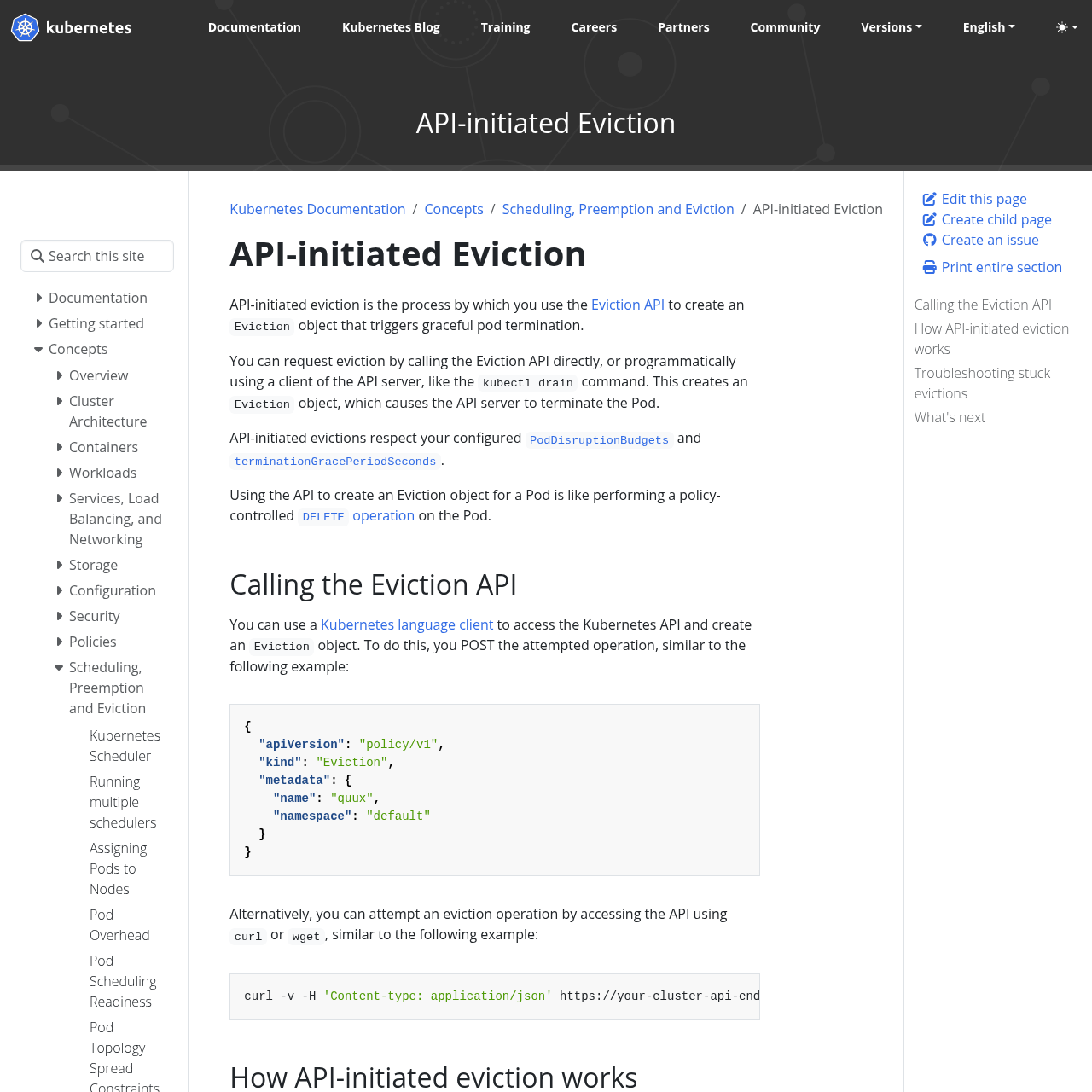
If no responder is available or they don't complete in time, Kubernetes falls back to the existing API-based eviction mechanism, which continues to respect PodDisruptionBudgets. In other words, the API doesn't replace the PDB, it adds an extra coordination layer before the PDB kicks in. Because it's alpha, it's not something to put into production now, but it's a good time for teams with stateful workloads to follow KEP-4563 and start thinking about who the application's own responders would be.
The checklist before December 16
Before scheduling the upgrade to v1.38, it's worth running through this list:
- Search for
KUBECTL_REMOTE_COMMAND_WEBSOCKETSandKUBECTL_PORT_FORWARD_WEBSOCKETSin CI scripts and remove them, since they stop having any effect. - Replace
namewithcommandin any credential plugin allowlist in the kuberc file. - Confirm whether each node's container runtime supports the CRI
RuntimeConfigRPC; if not, plan to upgrade the runtime before the kubelet. - Review workloads with pod-level resources and
LimitedSwapconfigured, checking whether any depend on swap even when the request equals the limit. - Check whether any admission webhook depends on seeing requests for
TokenRevieworSubjectAccessReview, and decide whether it's worth keepingExcludeAdmissionWebhookVirtualResourcesdisabled for now.
The release team stresses that the content may still change before v1.38's official changelog. But the direction of the cgroup driver changes and the WebSocket variable cutoff has been consolidated for several releases now, leaving little room for surprise, except for those who haven't been paying attention.
Translated from the Brazilian Portuguese original · Read the original
AWS Lambda Now Supports GPU to Run AI Inference Without Managing Infrastructure
AWS announced GPU instance support for Lambda Managed Instances functions, allowing model inference, media processing, and rendering to run without provisioning drivers, CUDA, or a cluster.