Anthropic IPO values Claude's parent company at $1.4 trillion and exposes the weight of the cloud bill
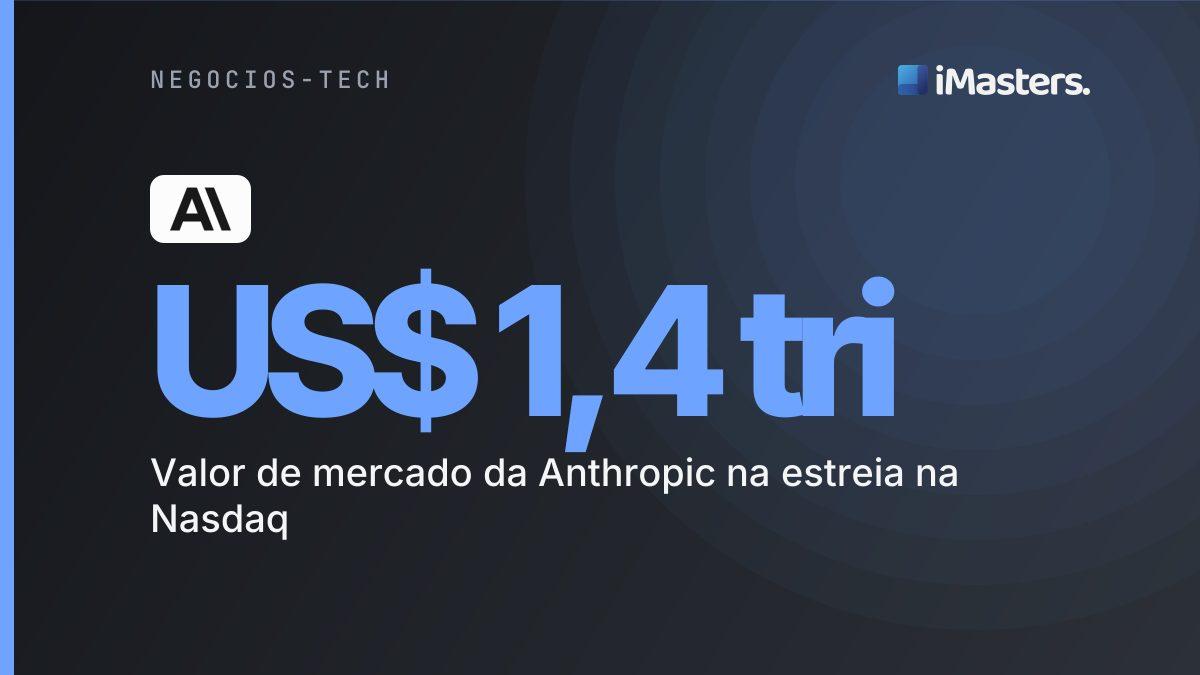
Anthropic debuted this Thursday, November 19, on the Nasdaq with shares at $83, above the expected range. Behind the round number is a company that owes nearly $900 billion in cloud contracts to the same giants that are now its shareholders.
- Reading
- 7 min
- Tables
- 1
Anthropic debuted this Thursday, November 19, on the Nasdaq with shares at $83, above the expected range. Behind the round number is a company that owes nearly $900 billion in cloud contracts to the same giants that are now its shareholders.
Anthropic, the maker of the Claude artificial intelligence assistant, debuted this Thursday, November 19, on the Nasdaq under the ticker ANT. It is the first initial public offering of a frontier AI lab, the group of companies that develop the industry's most advanced models. Trading began around midday in New York, according to the Wall Street Journal, after the company priced shares at $83 the day before, above the indicative range of $70 to $78, as reported by Bloomberg, Reuters, CNBC, and the WSJ itself.
For those who think about AI strategy inside a company, the number that matters is not the share price: it's what that price reveals about the real cost of operating a frontier model and about who controls that cost.
The size of the deal
The initial plan called for the sale of 825 million shares, of which 801.4 million would be issued by the company itself. The lot was expanded, but the final number of shares had not been disclosed as of this report by Exame, a Brazilian business magazine. By CNBC's math, considering the 825 million shares at $83, the public offering totals about $68.5 billion, a figure that rises with the larger lot.
In addition to the public offering, Anthropic closed a private placement of another $26 billion, at the same price, with seven technology companies, including Google, Microsoft, Nvidia, and AMD. Combining both deals, total fundraising exceeds $94 billion, according to Bloomberg, and the company's market value stands above $1.4 trillion, per CNBC. Goldman Sachs and Morgan Stanley are coordinating the offering, with another 20 banks involved in the deal.
Comparing it with the other major IPO of the year helps put the feat in perspective: in the public offering alone, Anthropic falls short of SpaceX, which raised $75 billion in June in the largest IPO in history. Adding the private placement, however, the deal by Claude's parent company surpasses that of Elon Musk's company, which reached $85.7 billion with the overallotment.
From $2 trillion to $1.4 trillion
The initial expectation was far more ambitious. In September, Reuters reported that Anthropic could be valued at more than $2 trillion. That same month, the news agency reported that the prospectus filing had been delayed and that investor presentations would be pushed to mid-October. The debut ended up being pushed back until after the US midterm elections.
On the eve of the roadshow, the number had already shrunk: according to the WSJ, large investors were pushing for a valuation below $1.5 trillion, after a wave of AI stock selling wiped out nearly $2.5 trillion from the Nasdaq Composite index. The final range of $70 to $78 set the ceiling at $1.4 trillion on a fully diluted basis.
There was even confusion within the document itself. On the night of November 9, the eve of the roadshow, the company sent banks a version of the prospectus with about 867 million shares priced at $70 to $80, which would have allowed it to raise up to $69.3 billion. Shortly after, it said the pricing data was wrong; the next day, the official prospectus listed 825 million shares and a ceiling of $78, according to Reuters, which had access to the messages.
In short: a $600 billion drop in expected valuation over two months is not just investment-bank backroom noise. It's the market saying, in dollars, that appetite for AI lab valuations shifted to a different level between September and November this year.
Revenue up 1,200%, losses that don't disappear
The reason for so much interest is on the top line of the balance sheet. In the nine months through September, Anthropic brought in $33.24 billion in revenue, up about 1,200% over the same period in 2025. Annualized revenue reached $81 billion by the end of October, driven by Claude Code, the company's coding agent.
But the bottom line tells a different story. Computing and infrastructure spending was close to $9 billion in the first half, nearly four times the amount from a year earlier, according to Reuters. In the third quarter, the company posted an operating loss again, of $567 million. Growing at triple-digit rates and still burning cash is the picture of a business where the marginal cost of serving each additional customer remains high: every token processed has a chip behind it, and that chip hasn't gotten any cheaper.
Who finances whom
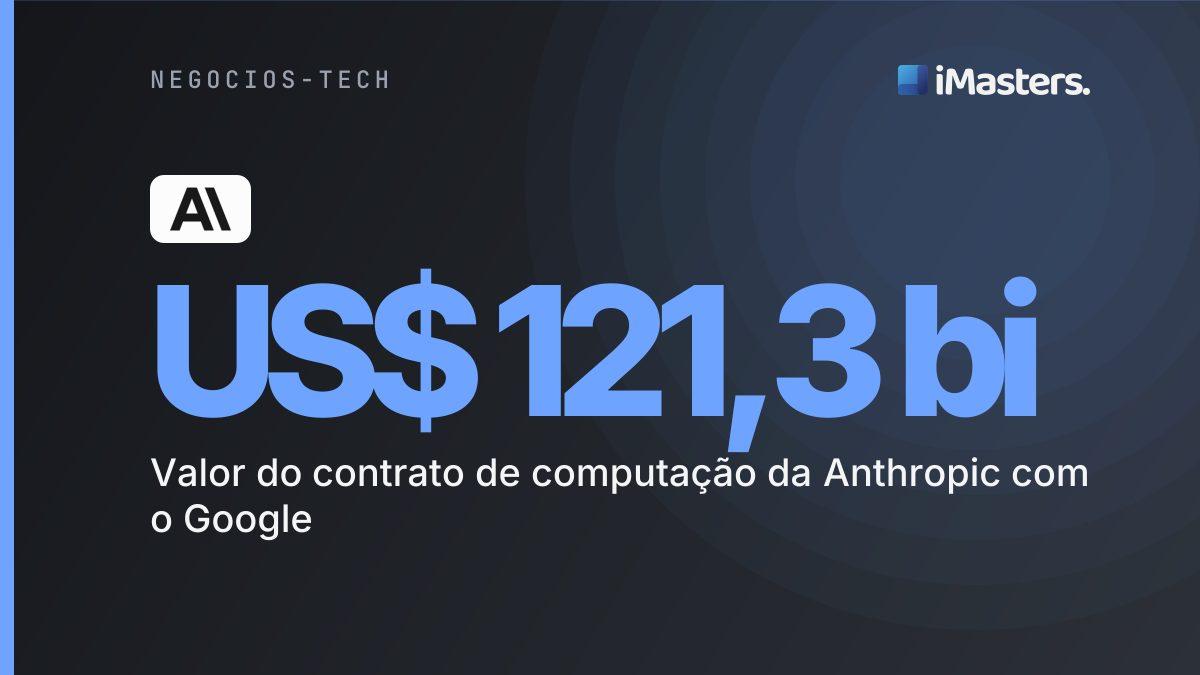
The point that matters most to anyone deciding an AI budget is the web of dependency behind the balance sheet. Anthropic disclosed computing purchase and lease commitments of $895.4 billion, of which $69.8 billion come due in the 12 months following the end of September, a figure close to the size of the IPO itself. With Google alone, the company has committed to spend at least $121.3 billion on computing services between April 2026 and July 2033.
These same suppliers are, at the same time, investors in the company:
| Company | Role in the deal | Commitment or stake |
|---|---|---|
| Investor in the private placement and cloud provider | Stake valued at more than $100B; commitment of at least $121.3B (2026 to 2033) | |
| Amazon | Shareholder and infrastructure provider | Stake valued at more than $100B |
| Microsoft | Investor in the private placement | Part of the $26B placement |
| Nvidia | Investor and chip supplier | Part of the $26B; lost more than $1T in market value over 8 trading sessions before the CEO's resignation |
| AMD | Investor in the private placement | Part of the $26B |
It's a closed loop: the same names that sell cloud capacity buy stakes in the company that pays them for that capacity, and now public market investors are entering that same loop by buying ANT shares.
The backdrop weighing on the board
Two days after investor presentations began, on November 12, Jensen Huang resigned as head of Nvidia, one of Anthropic's chip suppliers and a participant in the private placement. Even with the chipmaker losing more than $1 trillion in market value over the previous eight trading sessions, demand for Anthropic's shares came in at several times the number of shares on offer, and banks even discussed charging more than $78 per share.
The macro picture remains uncertain. According to Reuters, chipmakers and cloud companies have been under pressure from valuation concerns and the rising cost of AI infrastructure. CNBC also cites the backlash against AI that weighed on the midterm elections and fears that higher interest rates will make debt more expensive for data center builders. Anthropic is going public in a year when 2026's biggest IPOs have already lost market value after their debuts.
The company also carries political disputes in its history. In February, it refused to allow unrestricted use of its technology for military purposes, citing the risk of autonomous weapons and mass surveillance; the US Department of Defense responded by classifying Anthropic as a supply-chain risk, a label normally reserved for companies from adversary nations. A federal judge suspended the classification in March, and the government appealed. Afterward, the government began requiring a special export license for model sales to certain entities. The prospectus lists more than 90 pages of risk factors.
What changes for those building on top of AI
No founder needs to decide whether to buy ANT stock. But anyone running a product on top of Claude, GPT, or Gemini should read this IPO as a map of incentives. The $69.8 billion in computing contracts coming due in the next 12 months are a concrete signal of a price renegotiation window: it's the moment when API cost can shift, up or down, depending on who has more bargaining power at the table.
Three questions worth bringing to the next technology committee meeting:
- What fraction of our product cost is tied to the price of a single model vendor, and what happens if that price rises 20% in the next contract?
- Claude Code driving Anthropic's annualized revenue to $81 billion is a sign that coding agents have become the industry's most monetizable product; does that change our investment priorities for internal AI tools?
- Does it make sense to keep relying on a single frontier AI lab, or does the cost of a multi-vendor approach (running Claude, GPT, and an open model in parallel) already pay off as insurance against this kind of price and valuation volatility?
The final number of shares issued, ANT's performance in its first trading session, and how Google and Amazon react as both shareholders and suppliers at the same time will still play out in the coming weeks. What's already clear, from the prospectus itself, is that the frontier AI business remains, above all, an infrastructure business: whoever decides an AI budget should treat the model's price as part of a larger bill, not as a standalone line item.
Translated from the Brazilian Portuguese original · Read the original

Nvidia doubles data center revenue with Vera Rubin debut, but signals GPU will stay expensive
In its first earnings report since Jensen Huang's departure, Nvidia's data center revenue jumped 110%, to $107.6 billion, driven by the first Vera Rubin shipments. The tighter margin guidance for next quarter is the figure the founder should look at before signing the next compute contract.