FutureBrand creates modular brand system led by its São Paulo office
- Reading
- 7 min
The global consultancy replaced the static brand guide with a parametric system featuring a generative design tool, built to work in the hands of any office and also as instruction for AI.
Context
FutureBrand is one of the world's largest brand consultancies, with 13 offices spread across the globe. This time, the redesign of the consultancy's own identity wasn't signed by a hub in London or New York: it was the São Paulo office, invited by the network's international leadership to lead the project with collaboration from professionals at the other units, according to a report by B9, a Brazilian digital culture and advertising outlet.
The goal stated by Arnaldo Bastos, partner and Chief Design Officer at FutureBrand São Paulo, isn't aesthetic: it's operational. For him, today's brand appears in so many formats and is produced at such speed that static visual identity and tone-of-voice guides, the 80-page PDF every designer has ignored at least once, simply can't keep up with the pace of production anymore. The internal audience for this change is FutureBrand's own teams and, by extension, the clients who receive the brand as a deliverable.
What they did
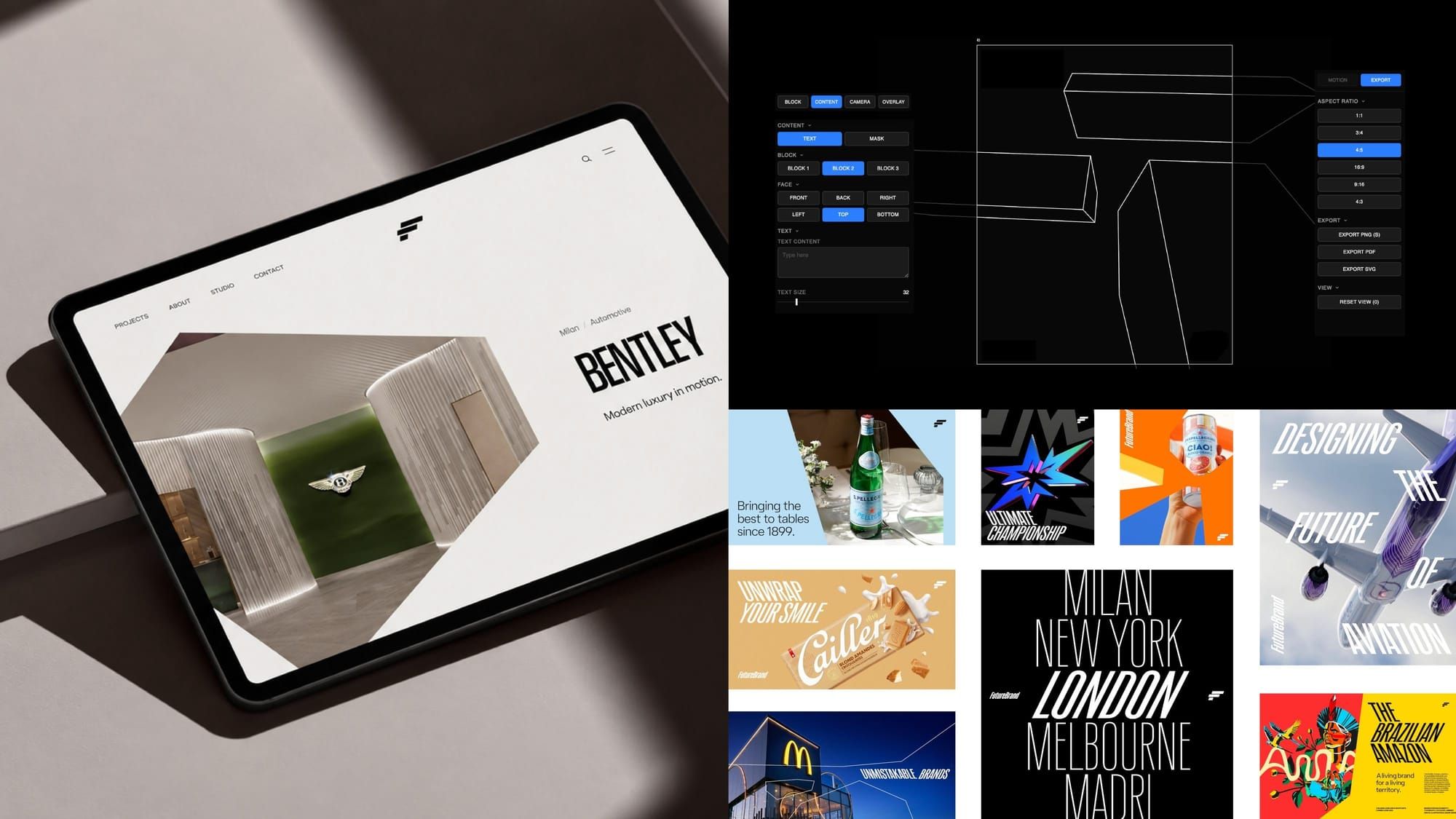
The visual core of the project is a modular 'F': a shape that rotates, reorganizes itself and takes on hand-worked plaster and clay textures, always paired with the proprietary Future Display typeface, which tilts and adapts along with the angles of the composition. Up to this point, it's a rebranding like any other, attractive and distinctive. The difference lies in what comes after the logo.
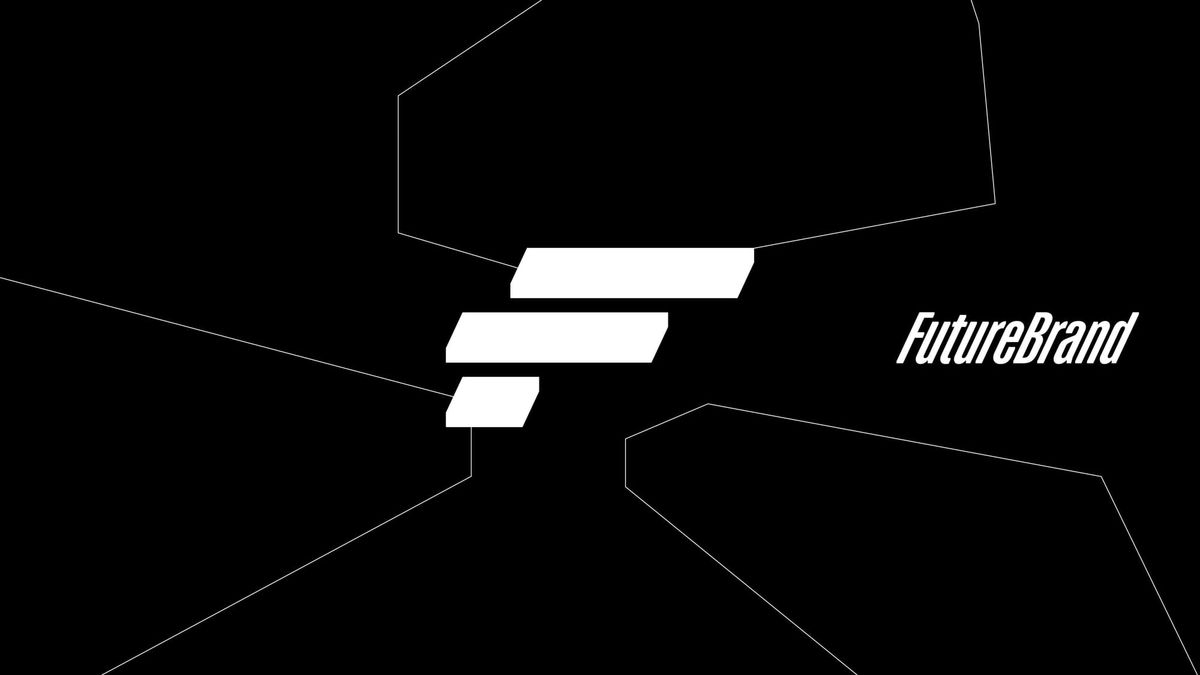
In short: FutureBrand didn't just deliver a brand, it delivered a system of rules for generating variations of that brand, and put that system into a web tool that any professional in the network can access.
This is parametric design applied to brand design. Instead of manually drawing each application (a post, a billboard, a report cover), the studio defined parameters, angle, material, position, perspective, that a generative design tool combines automatically, always within limits that preserve brand recognition. It's the same logic behind code-generated identities that revolve around a fixed set of rules (grid, color, proportion) instead of a single, unchangeable file, except here it's applied by designers at any office, without requiring them to write any code.
The project adds two layers that are usually left out of the traditional brand guide:
- A sonic identity built from the phonetics of the name "FutureBrand" itself, with variations in pitch and tone;
- A system called "brand behaviour," which brings together visual identity, sound, motion, ready-to-use AI prompts, and strategic foundations for campaigns and public relations.
This last point is the most relevant for anyone designing a design system today: FutureBrand's guidelines now serve both the person who applies the brand manually and the generative AI tools used in producing assets. In practice, this means turning the brand guide into something like a configuration file, meant to be read by human and model at the same time. The positioning that ties all of this together is called "Always Unmistakable": the bet is that the brand can vary material and angle at will without ceasing to be recognizable.
B9 doesn't detail, and FutureBrand hasn't publicly disclosed, which graphics engine runs behind the generative design tool, nor whether it uses some known creative-coding stack (something like WebGL, p5.js, or Processing, common in this type of project) or a closed system developed in-house. This is a real gap in the coverage available so far.
Public numbers
Here transparency drops. The source doesn't provide reach, investment, production time, or any adoption metric for FutureBrand's own global brand redesign: no number of pieces generated by the tool, no data on how many offices already use it, no budget figure for the project.
The only concrete, verifiable data point in the material gathered comes from a sister project, also signed by the São Paulo team: the brand for the Brazilian Amazon, created for Embratur (Brazil's official tourism promotion agency) and RAI (Rotas Amazônicas Integradas, an integrated Amazon river-routes initiative), which used the curves of the region's rivers as the basis for its own alphabet. This project won three Lions at Cannes Lions 2026, according to B9.
It's worth the honest note: the award validates the creative bar of the office that signed FutureBrand's rebranding, but it isn't a metric of the rebranding itself. Anyone who needs adoption numbers for the generative design tool, or ROI on the repositioning, won't find it in this coverage.
Strong points
The project's strongest point is solving a problem that anyone who has ever worked with a design system recognizes instantly: the static brand guide that nobody consults. By turning application rules into a tool that generates the piece, FutureBrand shrinks the gap between "having the guideline" and "applying the guideline correctly," the same gap that design tokens try to close in digital product.
Another smart move is treating AI production as part of the system, not as an external threat to it. Including ready-made AI prompts within "brand behaviour" itself amounts to accepting, in practice, that a significant share of brand assets in 2026 are born from a generative model, and that a brand guide that doesn't speak that model's language becomes obsolete faster than the paper it was printed on.
The sonic layer also deserves mention: building identity from the brand name's phonetics, with variations in pitch and tone, is a rare move in corporate rebranding, which usually treats sound as an afterthought to the visual. This matters in a world of voice assistants, short-form video, and content that plays without anyone looking at a screen.
Weak points
The biggest risk in the concept itself is embedded in the name of the positioning: "Always Unmistakable" promises that the brand stays recognizable no matter how much it varies. Generative identity systems have a well-known track record of, in the hands of someone who doesn't master the parametric logic, producing generic or unrecognizable results, the exact opposite of the promise. The source doesn't show a single example of a piece generated by an office outside São Paulo, so there's no way to assess whether the system holds up to that test.
Technical opacity also weighs against it. For a product and design reader who wants to understand what's behind the tool, not knowing whether it runs in a browser, what technology it uses to render variations in real time, or how access is distributed across the network's 13 units, leaves the case looking good on the surface and opaque underneath.
Finally, there's a lack of proof of real-world use. The coverage cites the tool as a capability ("professionals from any area and office can create pieces from the system"), but doesn't bring up any already-published application other than the brand's own institutional launch piece. Without that example, the system is still a promise, not a proven case.
What would improve it
If I were guiding this project as a design system, not just as a piece of branding, I would document the tool with the same discipline a product design system demands: listing the available parameters (angle, texture, proportion) as if they were tokens, with explicit limits on what is and isn't "Always Unmistakable" in practice.
I would also publish an open changelog of real applications: which office used it, what piece came out, what had to be manually adjusted afterward. That would give the network, and the market, proof that decentralization works outside the office that created the system.
Finally, it's worth testing the readability of the AI prompts at the edges: a brand guide designed to be read by a generative model should come with output examples, good and bad, so other teams can calibrate expectations before producing at scale. Without that, the risk is that the tool opens the right door and nobody knows exactly how to walk through it.
Translated from the Brazilian Portuguese original · Read the original

Zero Moment of Truth gains two new sources: creators and AI enter the purchase decision funnel
The framework Jim Lecinski created at Google more than a decade ago has gained two new sources, content creators and AI assistants, and this changes what Brazilian brands need to monitor before the sale.