NewHack opens AI residency in São Paulo for ten startups starting January 2027
AI House Brasil, a NewHack project announced in June at Web Summit Rio, has reached its final format: a three-to-six-month residency, sponsorship from Oracle and Agora.io, and the promise of condensing a year of development into a single quarter.
- Reading
- 6 min
AI House Brasil, a NewHack project announced in June at Web Summit Rio, has reached its final format: a three-to-six-month residency, sponsorship from Oracle and Agora.io, and the promise of condensing a year of development into a single quarter.
NewHack, an organization founded by Rodrigo Terron in 2024, announced on Monday (the 16th) the final format of AI House Brasil: a residency for ten artificial intelligence startups, with programs lasting three to six months, starting in January 2027. The news, published by Forbes, closes a cycle that began five months earlier, when NewHack revealed the project during Web Summit Rio, in June, with a far more ambitious design: up to 15 startups per quarter, around 60 per year.
The difference between the two numbers matters more than it seems. The original plan, described by the site Startups.com.br in June, called for the first cohort to start in September 2026, deliberately timed with São Paulo Tech Week. Five months later, the actual first cohort only arrives in January 2027, with a sixth of the planned annual volume. That does not make the project less real, but it suggests the model was resized: from a high-volume accelerator to a more selective, concentrated residency.
How the residency works in practice
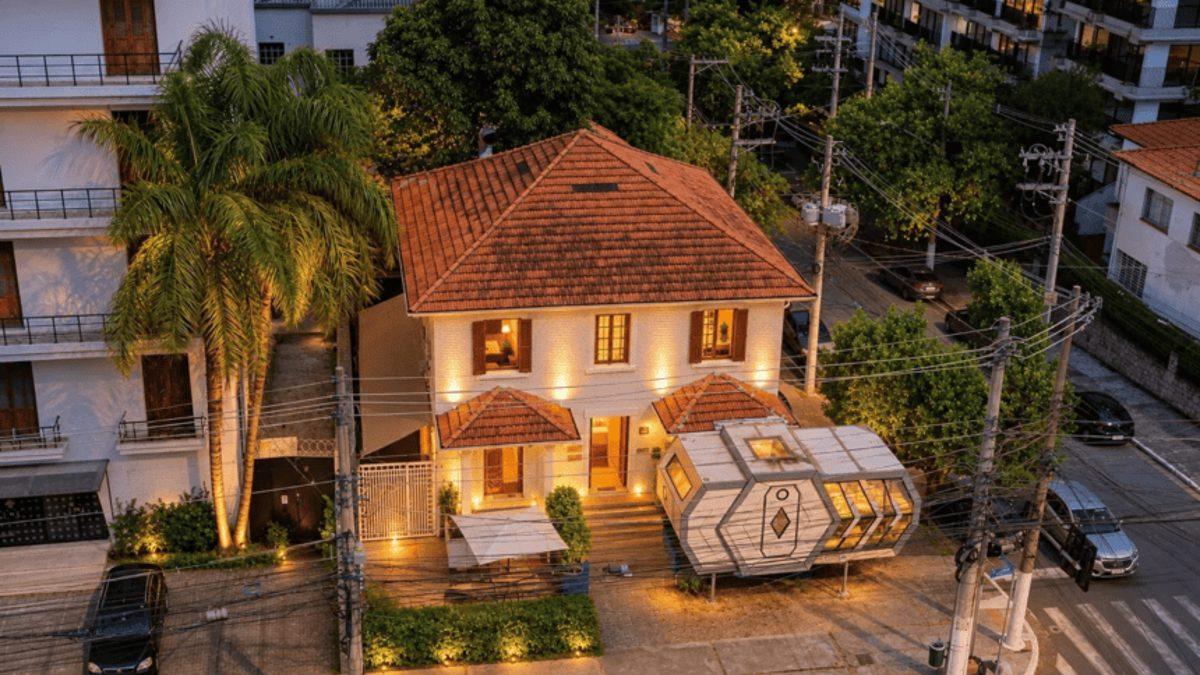
AI House Brasil occupies the same mansion as Serena Cafeteria, on Avenida Brigadeiro Luís Antônio, in São Paulo, a space that has hosted weekly entrepreneurship events since April 2025. According to Terron, the goal for resident teams is to "produce a year in three months," supported by mentorships, technology infrastructure credits from partners, and direct connections with investors from the Entrypoint fund, the venture capital arm linked to NewHack.

The launch programming, described by Forbes, is already set: UNMUTE, sponsored by Agora.io, takes place on November 21 and 22, with teams developing prototypes of voice agents and avatars. On the 26th, it's Oracle Builders Club's turn. In December, NVIDIA hosts a Demo Day focused on angel investment opportunities. iMasters and The Developer's Conference, one of Brazil's largest developer conferences, join as content partners for the initiative.
At the end of the program, according to the June report from Startups.com.br, the expectation is that the best-performing startups will be referred to hubs like Cubo or receive direct investment from Entrypoint. The fund already has five investments in its portfolio, including BeConfident, an AI-based English-teaching startup that received investment from Prosus, the owner of iFood, Brazil's dominant food delivery platform, according to a report by Época Negócios.
The bet behind the mansion
AI House's business model is not just ecosystem philanthropy. For companies like Oracle, Agora.io, and NVIDIA, sponsoring a residency of AI-native startups is a cheap way to test products with early adopters and build a client pipeline that, if these companies grow, turns into bigger accounts down the road. It's the same calculation that has led major cloud providers to sponsor accelerators worldwide: computing credit today is a bet on customer retention tomorrow.
For NewHack, the residency solves a revenue-model problem every community faces: free events build networks, but they don't pay the bills. Rodrigo Terron already tested this mechanism with Quarta no Serena, a weekly happy hour that, according to Startups.com.br, reached its 41st consecutive edition, drawing between 80 and 90 people per gathering. Over one year, the space hosted more than 80 events and around 9,000 people, with companies such as NVIDIA, Google, Cubo Itaú, C6 Bank, iFood, and Notion passing through the house, according to the report by Época Negócios.
The residency formalizes this base of 15,000 founders and community members (a figure self-reported by NewHack) into a commercial funnel: sponsors pay to access selected startups, the investment fund gets first right of refusal on investments, and the house becomes a permanent showcase of success stories.
What changes for those looking to apply
For the Brazilian AI founder weighing whether to apply, here are some concrete points:
- Selection is formal, not spontaneous. The application and evaluation process will open according to an official call, and the first cohort of ten startups starts in January 2027.
- The stated gain is speed, not guaranteed capital. The residency offers mentorship, infrastructure credits, and connections, but investment from Entrypoint is a possible outcome, not an automatic one, reserved for the best-performing teams.
- Internationalization is part of the package. Terron has already told Época Negócios of his intention to take entrepreneurs to California twice a year; according to Startups.com.br, exchanges with AI houses in other countries, such as China and the United States, are also in the plans.
- The house competes for corporate attention, not just for founders. With Oracle, Agora.io, and NVIDIA already on the launch programming, competition for space on a resident's agenda also comes from the sponsors themselves.
The counterpoint: whose problem does an AI hub solve?
The model cited as inspiration by NewHack itself, according to Época Negócios, is The Residency, a house in Silicon Valley backed by Sam Altman. The comparison is useful, but it also exposes a limit: the American ecosystem has deep venture capital, corporate buyers willing to sign fast pilot contracts, and a talent market that was already flowing into this type of space a decade before the generative AI boom.
In Brazil, the open question is whether three to six months of mentorship and cloud credits are enough to offset the absence of that market infrastructure. The very retreat from the original plan, from 60 startups a year to ten in the first cohort, is a sign that calibrating this model for Brazilian reality has been harder than the June announcement suggested.
On the other hand, there is a real asset behind the narrative: the founder community already exists, already has measurable traction at events, and has already produced at least one relevant exit case (BeConfident). The residency may not be the main engine of Brazil's AI ecosystem, but it isn't starting from zero either: it packages something NewHack had already been validating for more than a year at Serena Cafeteria.
What is still unclear
With the residency's start set for January 2027, neither the complete call for applications (selection criteria, equity involved, if any, and the value of infrastructure credits) nor the exact terms of Entrypoint's participation had been disclosed as of this publication. Terron told Forbes that he intends to track "where the teams were when they arrived and how far they managed to take what they built" as a success metric, but he did not specify timelines or formal evaluation indicators. For the founder deciding whether it's worth applying, that is the gap the next call, still without a confirmed date, needs to close.
Translated from the Brazilian Portuguese original · Read the original

Anthropic debuts on the Nasdaq valued at $1.5 trillion, but the balance sheet tells another story
The November 19 IPO broke SpaceX's record and put Claude's parent company among the world's 15 largest listed companies. Behind the share price, the trillion-dollar valuation hides a balance sheet that every founder negotiating equity should understand before using the number as a benchmark.