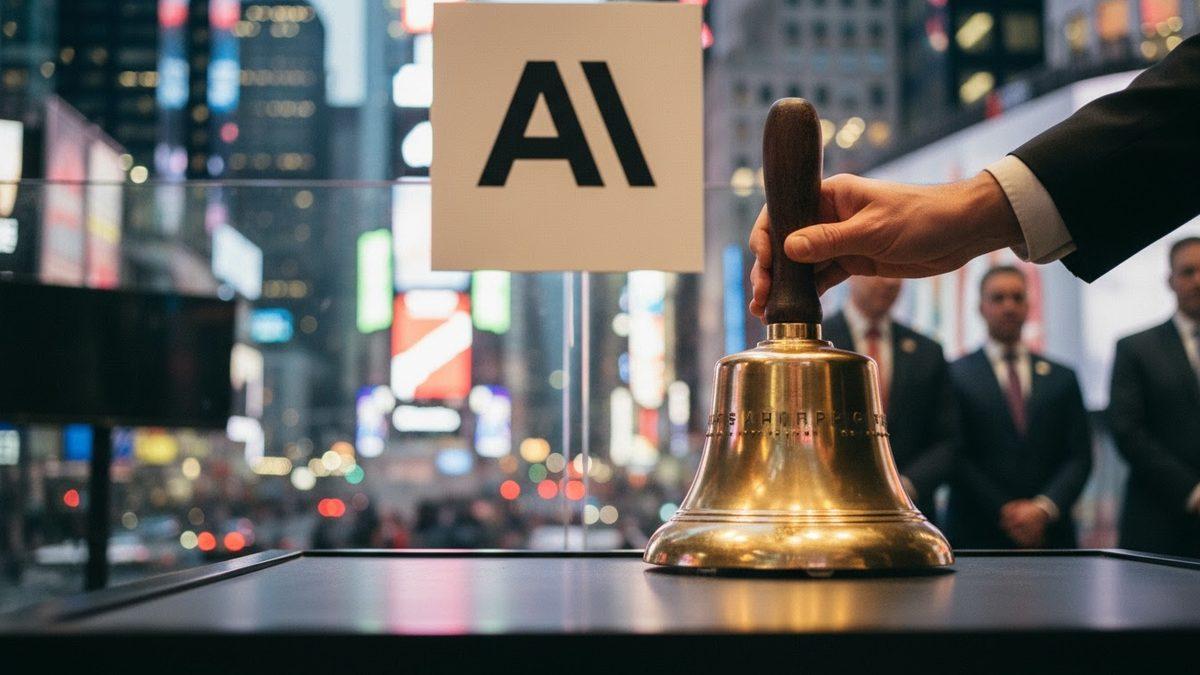
Anthropic debuts on the Nasdaq valued at $1.5 trillion, but the balance sheet tells another story
- Reading
- 7 min
- Tables
- 1
The November 19 IPO broke SpaceX's record and put Claude's parent company among the world's 15 largest listed companies. Behind the share price, the trillion-dollar valuation hides a balance sheet that every founder negotiating equity should understand before using the number as a benchmark.
Anthropic debuted on the Nasdaq this Thursday, November 19, raising $107.3 billion between the public offering ($81.3 billion) and the private placement ($26 billion), according to Exame, a Brazilian business magazine. It's the largest IPO in history, surpassing SpaceX's $75 billion in June. The stock priced at $83, above the initial range of $70 to $78, with demand nearly seven times greater than the offering, and closed the start of trading up more than 30%.
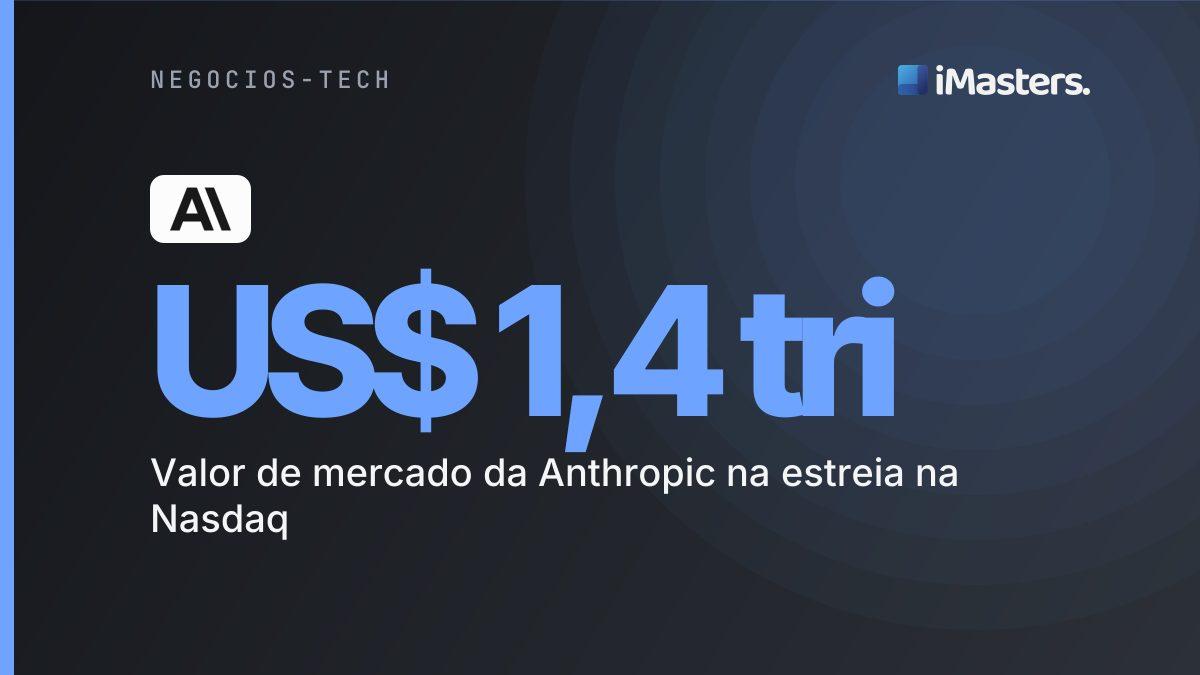
With the price set, the company enters the market valued at roughly $1.5 trillion, fully diluted. That puts it among the world's 15 largest publicly traded companies, close to Tesla and ahead of Eli Lilly. It's less than the $2 trillion floated months earlier, but well above the $1.1 trillion that circulated among Wall Street investors during the year's most pessimistic stretch for tech stocks.
For whoever decides where to allocate strategic capital, the interesting number isn't the share price on the first day of trading. It's what that price buys, and what it hides.
Nearly 19 times revenue, and what that buys
Anthropic's annualized revenue closed October at $81 billion, $10 billion above the previous month. Doing the simple math, $1.5 trillion over $81 billion gives a multiple of roughly 18.5 times projected revenue. That's a steep multiple even by the standards of high-growth tech companies, especially for a company that, as the numbers below show, has yet to prove it can sustain stable operating margins.
The growth behind that multiple is real and documented. In the nine months ended September 30, revenue totaled $33.24 billion, about 12 times the same period in 2025. In the third quarter alone, revenue was $16.96 billion, up 47% from the previous quarter. A key driver of that expansion is Claude Code, the coding-focused agent that helped grow the base of corporate customers generating at least $100,000 in annual revenue from just over 1,500 at the end of 2025 to 11,900 in September.
In short: the market is paying nearly 19 times the revenue of a company that has yet to prove it can turn that growth into consistent operating profit. It's the right bet, but it's a bet, not a done deal.
The $104 billion loss that isn't what it seems
The scariest number in the prospectus is the $104 billion net loss over nine months, with $23.3 billion in the third quarter alone. Before any board uses that figure to question the business's viability, it's worth understanding where it comes from: the company itself states that a significant portion is tied to changes in the fair value of convertible notes and derivative liabilities, not to operating performance.
That's a direct lesson for any founder who has raised money via convertible note or SAFE: when the company's valuation rises, the accounting liability for those notes is remarked to fair value, and that adjustment shows up as a loss on the income statement, even though not a dollar actually left the cash balance. Anthropic's valuation rose too fast for its own convertible debt instruments, and the accounting recorded that as a multibillion-dollar loss.
Operating results, which do measure the actual business, swung in a way that deserves attention:
| Metric | Q2 2026 | Q3 2026 |
|---|---|---|
| Operating result | profit of $974 million | loss of $567 million |
| Additional compute cost | smaller base | $5 billion in the quarter alone |
The company went from operating profit to operating loss in a single quarter, driven by the cost of compute capacity. That's what the share price doesn't show at first glance: Anthropic's business model has yet to prove it can grow without burning margin at the same pace.
Nearly $900 billion in commitments: the bill the valuation doesn't show
Beyond the quarterly results, the prospectus reveals a long-term liability that any risk analyst should look at before looking at the share price: Anthropic has roughly $895.4 billion in purchase and lease obligations, concentrated in compute and infrastructure, of which $69.8 billion comes due in the 12 months following September.
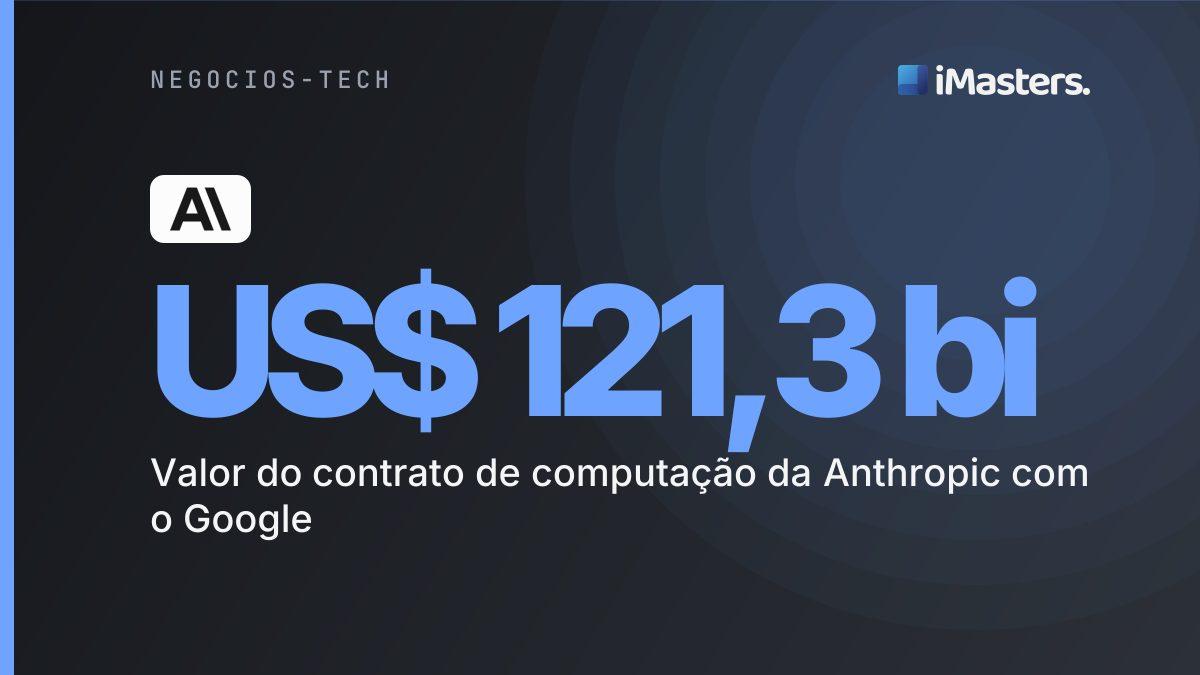
The commitment to Google alone, for compute services between April 2026 and July 2033, totals at least $121.3 billion. To put that in perspective: the $69.8 billion coming due next year is nearly equivalent to the entire company's current annualized revenue. If revenue growth slows, even slightly, the cushion to honor those commitments shrinks fast.
The prospectus filed with the SEC says the IPO proceeds will go toward general corporate purposes: working capital, operating expenses, compute investment, hiring and retention, plus roughly $3.8 billion to cover taxes on employees' restricted stock. No major acquisition has been announced, but the prospectus leaves the door open for one.
Investor, supplier, and customer all at once
The $26 billion private placement brings together Google, Microsoft, Nvidia, and AMD, the same companies that sell compute capacity to Anthropic. Nvidia plans to buy $10 billion in shares. Amazon and Google, according to CNBC, already hold stakes valued at more than $100 billion each.
That means a good part of the money validating the $1.5 trillion valuation comes from companies that also bill billions selling chips and cloud to Anthropic itself, including the $121.3 billion commitment to Google through 2033. That's neither illegal nor unusual, but it's a pattern any founder evaluating a strategic partnership with an AI infrastructure supplier should recognize: when the supplier is also an investor and equity buyer, part of the demand propping up the price is, in practice, the ecosystem financing itself.
Nvidia, for that matter, offers a counterpoint of financial health: record revenue of $115.8 billion in its fiscal third quarter, up 103% year over year, with net income of $65.3 billion. The gap between a supplier with proven margins and a capacity consumer still running at a loss is exactly the kind of contrast that separates risk from fundamentals in an AI investment thesis.
The December test, and the precedent nobody wants to repeat
The IPO's impact doesn't end on the first day of trading. Under accelerated inclusion rules created this year by Nasdaq and FTSE Russell, Anthropic could enter the Russell 1000 after the close on December 11 and the Nasdaq-100 before the open on December 21, with MSCI evaluating inclusion starting December 1. Intropic estimates, according to Reuters, that purchases tied to those inclusions could add up to roughly $19 billion in passive demand.
The SpaceX precedent, however, is a direct warning against excessive optimism about that flow. Elon Musk's company's shares closed below the opening price on the very day they entered the Nasdaq-100, and fell about 15% over the following six trading sessions, as investors already positioned sold to lock in profit. Passive fund flow sustains liquidity, not valuation.
Today's result puts the company in a stronger financial position, and in doing so, it only strengthens our determination to do what's right. If we can show that it's possible to make the right decisions on safety and still build an incredibly successful company, others in our industry will be inspired to do the same.
Dario Amodei, CEO of Anthropicfoto: TechCrunch · CC BY 2.0
What this means for whoever decides the budget
For the founder who uses AI valuations as a market benchmark, Anthropic's IPO delivers three decision criteria, not a number to copy.
- Separate operations from financial instruments. If your company raises money via convertible note or SAFE, understand that an accounting loss tied to the remarking of those instruments is not the same as operating cash burn. The difference between the two is the difference between a panicked board and a well-informed one.
- Measure future commitments against current revenue, not against valuation. The $69.8 billion Anthropic must pay next year for infrastructure is nearly equal to the company's entire annualized revenue. Before signing a long-term contract with a cloud or GPU supplier, ask what fraction of projected revenue that commitment represents.
- Discount the frontier-lab multiple before applying it to your startup. A lab that trains frontier models carries a compute-intensive capital structure that most applied-AI startups don't have. Using 18.5 times revenue as a benchmark for a company built on top of third-party APIs is comparing different categories of risk.
Anthropic's BDR (ANTH34), a Brazilian depositary receipt that lets local investors buy foreign stocks on Brazil's domestic exchange, is already available on B3 (Brazil's stock exchange) for around R$ 60, with a one-to-eight ratio to the stock traded in New York, according to Exame. That gives Brazilian investors direct access to this thesis, but the decision to buy in shouldn't hinge on debut hype, but on the same question that applies to any strategic AI partnership: will revenue growth keep outpacing infrastructure cost growth, or is the company paying for capacity it doesn't yet have a way to fill?
Translated from the Brazilian Portuguese original · Read the original

Revio Uses Tax Reform to Sell AI Accounting Inside WhatsApp
Revio launched Coretax, an AI assistant that issues invoices and cross-references accounting data inside WhatsApp, betting on the chaos of Brazil's Tax Reform to sell compliance as a product to clinics, industry, and retail.