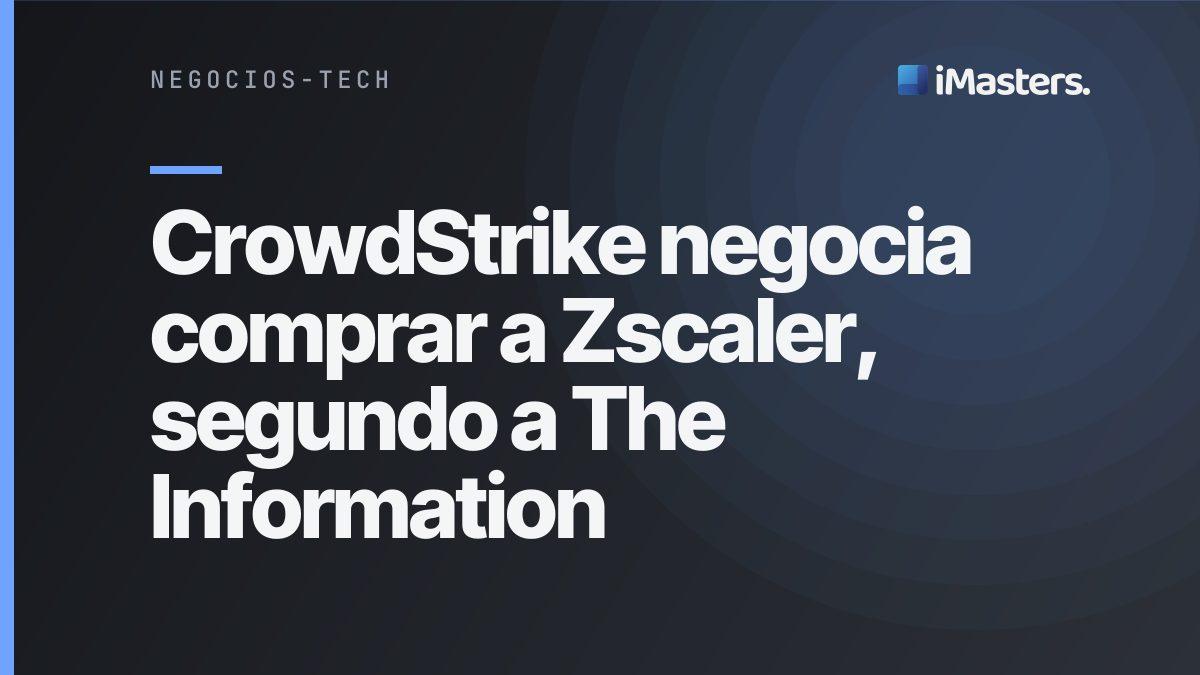
CrowdStrike in talks to acquire Zscaler, according to The Information
- Reading
- 4 min
- Tables
- 1
The consolidation would unite two giants of corporate security, one specialized in endpoint protection and the other in network zero trust, in the latest chapter of the sector's platformization wave.
What we know so far
CrowdStrike is in talks to acquire Zscaler, according to a report by Aaron Holmes published by The Information on November 20, 2026. The piece, which is subscriber-only, does not disclose the deal's value, timeline, or structure: it only confirms that the two companies are in talks.
This matters before any analysis: there is no deal signed, no announced share premium, no closing date. What exists is a round of talks between two of the largest publicly traded companies in corporate security, which is already enough to affect those deciding security contracts today, even without knowing whether the deal will actually happen.
Why these two companies, and why now
The combination, if it goes through, would unite two complementary (and historically separate) pieces of corporate security architecture. CrowdStrike built Falcon, an endpoint protection and incident response platform (EDR/XDR) that in recent years has expanded into identity and cloud security posture through smaller acquisitions. Zscaler is the reference name in network zero trust: user traffic passes through the company's cloud before reaching the application, replacing the old model of VPN and datacenter perimeter.
These are two layers that currently coexist, often purchased from different vendors, within the same corporate client. Bringing the two together under a single contract solves a real operational problem: fewer consoles, fewer integrations to maintain, a single point of support. It also solves a revenue problem for both sides, at a time when security SaaS growth has slowed and the stock market is pushing for margin expansion and higher average revenue per customer.
The platformization precedent (and the lock-in risk)
This logic isn't new. Palo Alto Networks has, for a few years now, been pushing single-platform contracts that bundle firewall, SASE, cloud security, and automated SOC, offering aggressive discounts to those who consolidate everything with one vendor. The promise is native integration and unified visibility. The cost, for the buyer, is weaker future negotiating power: switching vendors after consolidating everything is expensive and time-consuming, and that shows up in the price adjustment at the next renewal cycle.
The Broadcom-VMware case is the most cited warning in the corporate market in recent years: after the acquisition, customers reported significant licensing price increases and forced moves to bundles larger than what they needed. This isn't an argument against every merger, but it's the kind of question any CTO should bring to the CFO before signing a three- or five-year renewal with a vendor going through consolidation: does the contract have a capped price-adjustment clause? Is there a documented exit plan?
What this changes for those deciding security stacks in Brazil
For Brazilian companies already running CrowdStrike, Zscaler, or both, the news doesn't demand immediate action, but it does change the risk calculation for the next contract renewal. It's worth breaking down what's at stake:
| Scenario | Main risk | Question for the CISO/CTO |
|---|---|---|
| CrowdStrike-only customer | Little direct impact in the short term | Does the identity and cloud security roadmap change with the acquisition? |
| Zscaler-only customer | Uncertainty over the product's future independence | Is there a support continuity clause in case of M&A? |
| Customer of both | Pressure to consolidate into a single bundle | Does the bundle discount offset the loss of future negotiating power? |
| Customer of competitors (Palo Alto, SentinelOne, Cloudflare) | Opportunity for commercial differentiation | Will the competitor use the merger uncertainty to offer better terms now? |
In short: the move, even unconfirmed, is already negotiating ammunition. Competing vendors tend to use the uncertainty period to try to poach accounts, and that gives the buying company a real window to renegotiate terms before any merger materializes.
For those closing a new contract now, the practical recommendation is simple: request a clause protecting against post-M&A price adjustments and avoid signing a five-year term without an intermediate review, precisely because of the uncertainty of the moment.
What remains open
A merger of this size, between two critical infrastructure companies used by a large share of the world's listed companies, would likely draw heavy antitrust scrutiny in the United States and possibly in the European Union. The closest and most cited precedent within the tech ecosystem itself is Adobe's attempt to acquire Figma: the deal was announced, valued in the billions, and unwound after regulatory pressure over market concentration. There's no guarantee the same will happen here, but it's the kind of risk any M&A analyst would put on the table when assessing the odds of the talks turning into reality.
As of this writing, neither CrowdStrike nor Zscaler has publicly confirmed the talks, and there's no information on the deal's value, payment structure (cash, stock, or a combination), or timeline. Those deciding on a security stack should treat the news as a signal to pay attention, not as a done deal: the real next step is to wait for official confirmation from both companies before making any contract changes based solely on this report.
Translated from the Brazilian Portuguese original · Read the original


NewHack opens AI residency in São Paulo for ten startups starting January 2027
AI House Brasil, a NewHack project announced in June at Web Summit Rio, has reached its final format: a three-to-six-month residency, sponsorship from Oracle and Agora.io, and the promise of condensing a year of development into a single quarter.