Trump Threatens to Ban US Companies' Data Centers Abroad and Tightens Grip on Brazil

- Reading
- 5 min
- Tables
- 1
Trump's statement against the expansion of data centers abroad, combined with a new mandatory license to export AI chips to Brazil, raises a geopolitical risk that every founder with infrastructure on American cloud needs to put on the table.
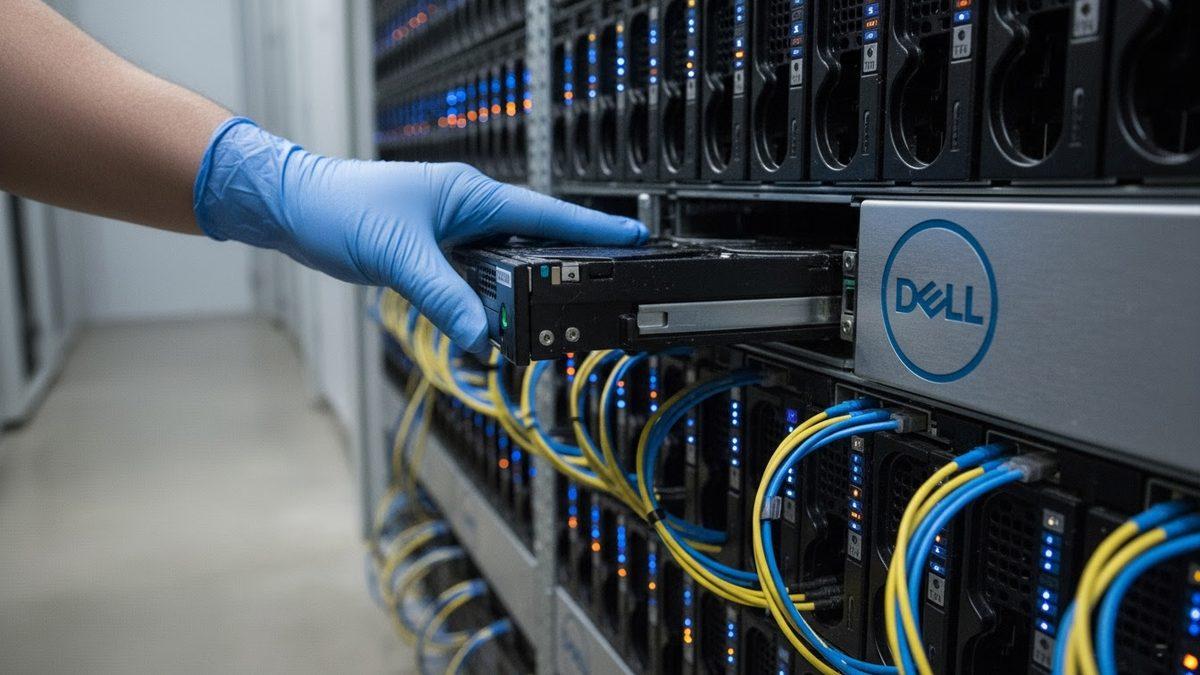
On Friday (November 20), Donald Trump said at a White House press conference that he will not allow American companies to build data centers outside the United States and promised "tremendous penalties" for anyone who tries. The target named specifically was Google's project in Finland, about $15 billion in artificial intelligence infrastructure planned between 2027 and 2028, according to Exame. But the statement applies to any American hyperscaler with international expansion plans, which includes Microsoft, Amazon, Meta, and Oracle.
We're not going to allow data centers to go to other countries because China is going to take them all, and we're not going to let that happen, and we're going to impose tremendous penalties on companies that try to do that.
Donald Trump, President of the United States
For those deciding where to run AI workloads in Brazil, this isn't distant rhetoric. Four days earlier, on November 16, the US Department of Commerce had already included Brazil (along with Singapore, Malaysia, Thailand, and Indonesia) on a list requiring prior approval from the American government to export advanced AI chips destined for data centers in those countries. The two measures together form a pincer: a threat over where big tech can build, and control over what they can send abroad.
Why China Is the Official Justification
The Trump administration argues that the risk is Chinese remote access to American processing capacity installed abroad. The stated concern centers on the presence of Chinese clouds in Brazil, such as ByteDance, Alibaba Cloud, Tencent Cloud, and Huawei Cloud, which operate or are building data infrastructure in the country. Washington treats the data center dispute as a direct extension of the race for semiconductors: whoever controls where the chip runs controls who processes what.
This geopolitical reading has an immediate side effect for Brazilian companies: even without any intention of using Chinese cloud, any founder who depends on cutting-edge GPUs hosted in a Brazilian region of AWS, Azure, or Google Cloud now also depends on an export license that the American government can grant, delay, or deny.
What This Changes for Those Already Running AI in the Cloud in Brazil
The Brazilian regions of the three major hyperscalers (AWS's sa-east-1, Azure's Brazil South, Google Cloud's southamerica-east1) already exist and won't be shut down overnight. The risk isn't the current infrastructure, it's the next round of capacity. If Trump's threat becomes formal policy, any expansion of advanced GPU capacity in these Brazilian regions will have to contend with two barriers: the chip export license and, now, the risk of penalty against the American company itself that decides to invest abroad.
In practice, this pushes the board of any company that depends on heavy AI into three scenarios, none of them neutral:
| Strategy | Advantage | Risk |
|---|---|---|
| Keep workload in a Brazilian region of an American hyperscaler | Already complies with LGPD (Brazil's data protection law) and latency | GPU capacity may become more expensive or scarce due to export licensing |
| Migrate intensive processing to a US region | No chip license barrier | Higher latency, data egress costs, exposure to American law over the data |
| Consider Chinese cloud (Alibaba, Tencent, Huawei) | Aggressive pricing, available capacity | Growing geopolitical risk, possible future sanctions on those who use these providers |
None of the three is a purely technical decision. It's a risk-appetite decision, and it's the board, not the infrastructure team, that needs to own it.
The Bottleneck That Already Existed Before Trump's Threat
Trump's statement is also a reaction to a domestic problem: according to Exame, about $260 billion in data center projects have already been canceled in the United States in 2026 due to resistance from local communities to new developments. This means that the computing capacity big tech can't build inside the US, and now also can't (or shouldn't) build abroad, has to fit somewhere.
The most likely short-term outcome isn't total scarcity, it's a margin squeeze: more expensive GPU capacity, longer allocation queues, cloud contracts with stricter availability clauses. For a Brazilian startup that budgeted generative AI with 2025 or early-2026 GPU pricing, this is a cost variable that needs to go back onto the spreadsheet now, before the next cloud contract renewal.
The Questions for the CTO, Not the Infrastructure Analyst
There is no executive order yet, only a threat made at a press conference. But recent history shows that the distance between the statement and the formal rule has been short. Before the rule comes out, there are concrete questions every founder should bring to their own cloud provider:
- What is the GPU capacity expansion plan for the Brazilian region over the next 12 months, and does it depend on a chip export license not yet granted?
- Is there a contractual clause that protects against forced relocation of workload to another region in the event of regulatory restriction?
- What is the comparative cost today of running the same model in a US region versus a Brazilian region, including data egress and latency?
- Has the company already assessed, with legal as well as technical criteria, the risk of depending on Chinese cloud as a plan B?
None of these answers are ready today, not in the United States and not in Brazil. But the difference between those who will suffer the shock and those who will just feel the adjustment is having asked this question before the rule leaves the paper, not after the provider announces that the contracted capacity is delayed.
Translated from the Brazilian Portuguese original · Read the original


NewHack opens AI residency in São Paulo for ten startups starting January 2027
AI House Brasil, a NewHack project announced in June at Web Summit Rio, has reached its final format: a three-to-six-month residency, sponsorship from Oracle and Agora.io, and the promise of condensing a year of development into a single quarter.