Qingmao Intelligence plans to federate 10,000 Ascend 950DT accelerators by 2027
- Reading
- 4 min
- Tables
- 1
China's Qingmao Intelligence detailed a joint operation model that combines Huawei's Ascend 950DT chips, third-party data centers and service-level agreements to sell inference as a single service. The goal is to reach 10,000 cards by 2027 and 100,000 in five years, but the plan is not yet operational.
A token factory, not a new data center
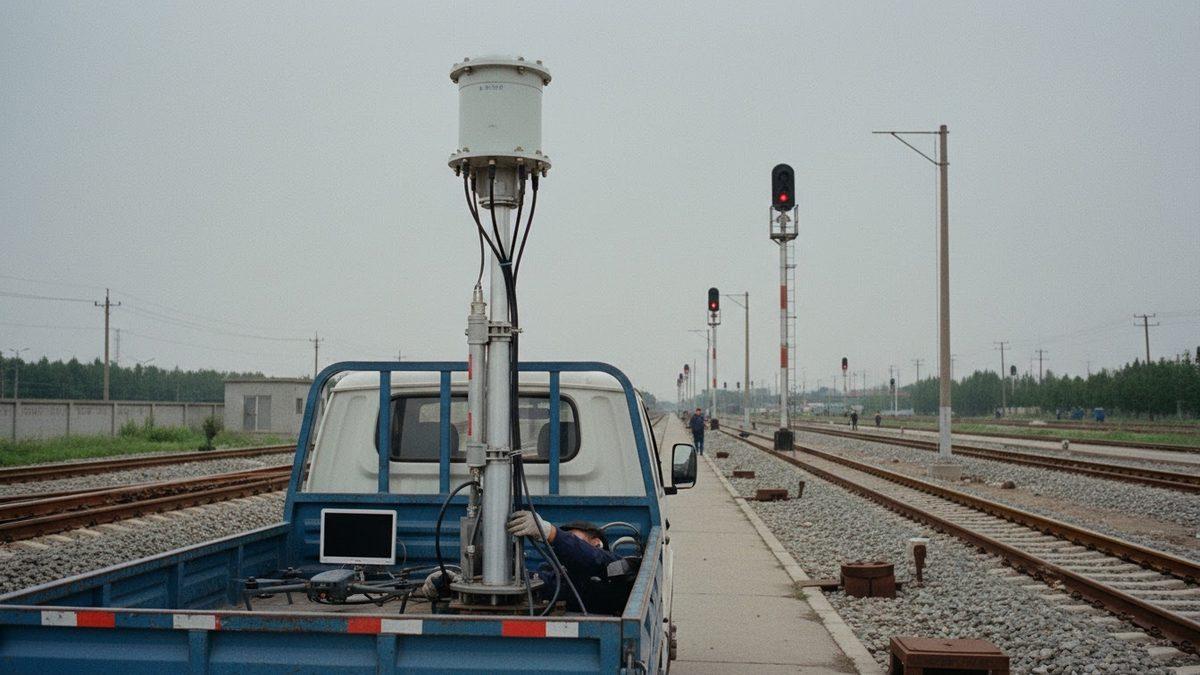
On November 17, Qingmao Intelligence announced, alongside partners in the Ascend ecosystem and other companies in the sector, a joint operation plan called "token factory." According to a report by QbitAI on November 20, picked up by Pandaily on November 22, the initial goal is to bring together 10,000 Ascend 950DT accelerators (from Huawei) into a single network by 2027, with the ambition of reaching 100,000 cards, spread across multiple regions and different chip platforms, in five years.
The name "token factory" is descriptive, not promotional: it refers to an operational arrangement for delivering tokens generated by models, not the announcement of a 10,000-card installation already up and running. It's a model for federating computing capacity among companies that are not the same entity, something closer to a cloud consortium than to building a proprietary data center.
Four groups, one service contract
The plan divides responsibilities among four types of participants, each contributing a different piece of the chain:
| Group | What it provides |
|---|---|
| Ascend ecosystem partners | Chips, supernodes and technical support |
| Data center operators | Physical facilities, power and computing capacity |
| Model developers and traffic partners | Real demand and service quality evaluation |
| Qingmao Intelligence | Software optimization, scaling, unified metrics and day-to-day operation |
Service-level agreements (SLAs) and a common metric would define each party's contribution, operational responsibility, and how returns are split. The stated goal is to sell a consistent inference service built on resources with different ownership and operation, rather than simply adding up an installed-accelerator count for headline purposes.
The chip behind it and Qingmao's track record
The Ascend 950DT is Huawei's generation of AI accelerators aimed at inference workloads. In another report, Pandaily noted that a SuperPoD cluster of 1,024 NPUs using this chip is already operating in Wuhan, assembled in one month, evidence that Huawei can put Ascend 950DT hardware into production at a smaller scale, though still far from the 10,000 cards promised by Qingmao for 2027.
Qingmao is not starting this plan from scratch. The company says it has prior experience in joint operation with more than 20 computing centers, scaling close to 20,000 domestic accelerators and adapting more than 15 different chip products, as well as having deployed around 10 Ascend 910C supernodes. These numbers cover previous work on other chip platforms and should not be read as capacity already completed for the newly announced 950DT program.
It's worth separating this announcement from another one made at the same November 17 event: the FlagOS-based inference optimization solution, launched in partnership between BAAI (Beijing Academy of Artificial Intelligence) and Qingmao itself. That solution targets specific workloads on Ascend 910C and 910B; the "token factory" roadmap deals with how to organize capacity and customer demand at a larger scale, covering multiple chips and operators.
Software as the connective layer
Qingmao describes software as the element that ties the whole network together. An inference engine would improve execution on each hardware platform individually; on top of it, management software would coordinate resources, monitoring and token accounting across the different participating centers.
The proposed acceptance criteria for measuring the service include:
- Effective throughput
- First-token latency
- Output speed
- Accuracy consistency
- Availability
- Cost per million effective tokens
This last metric, cost per million effective tokens, is the one that matters most to anyone already running inference pipelines in production: it tries to abstract away the complexity of having different chips, data centers and operators behind the service, giving the customer a single number to decide whether that capacity is worth using.
Why this matters to AI developers outside China
In short: the technical value of the announcement is not in the round number of 10,000 cards, but in the model for federating capacity among independent operators, something that hyperscalers like AWS, Azure and GCP solve internally, without needing a contract between separate companies.
For those in Brazil already dealing with the inference cost of open Chinese models like DeepSeek or Qwen, the backdrop matters more than the plan itself: export restrictions on advanced chips pushed Chinese companies to build hardware alternatives (Huawei's Ascend family) and, now, to federate that scarce capacity across multiple infrastructure owners to achieve a scale comparable to that of a single cloud.
This changes nothing in the code of anyone running inference via API today. But it explains why the ecosystem of open Chinese models keeps evolving fast even under hardware restrictions: the chip bottleneck is being tackled both on the silicon side and on the side of orchestrating multiple data centers as if they were one.
What is still just a promise
The 2027 milestone and the expansion to 100,000 cards in five years remain the company's plans. The QbitAI report, republished by Pandaily, does not establish that the 10,000-unit Ascend 950DT pool is already operational, nor does it independently validate its future utilization, service quality or delivery economics.
In other words: the announcement describes an architecture and a contract between parties, not capacity already in production. For those following China's AI infrastructure sector, the point to watch in the coming months is whether this SLA model among separate operators actually gets off the ground, or whether it remains just another roadmap announced at an event without a public execution checkpoint.
Translated from the Brazilian Portuguese original · Read the original


The planning fallacy is the hidden risk in the 2027 technology budget
IT projects and tech M&A deals keep blowing through deadlines and budgets because planning ignores a cognitive bias described almost 50 years ago: the planning fallacy.