Brazilian venture capital flips the switch: from valuation to realized return
- Reading
- 6 min
Data from TTR Data, KPMG, and Sling Hub show a more selective venture capital market in Brazil. For founders, this changes what's worth showing in a pitch and how to think about the exit from the very first check.
The trophy moved
On November 21, investor João Kepler, CEO of Equity Fund Group, published a piece in Exame (a Brazilian business magazine) recounting the Web Summit in Lisbon: executives from traditional companies wandering the startup booths looking for a supplier, technology, or business partner, not just an equity stake. It's a small detail that carries a big diagnosis, and I agree with it: Brazilian venture capital is moving away from rewarding whoever raises the most and starting to demand more from whoever returns the most.
The numbers tell this shift in different ways, which is already the first warning for founders. According to TTR Data, through September 2026 Brazil recorded 167 venture capital rounds, totaling R$9.7 billion, with a drop in the number of deals compared to 2025. KPMG, in its Venture Pulse report, pointed to the third quarter as the best of the year, with US$609 million invested versus US$390 million in the previous quarter. Sling Hub, meanwhile, which adds debt and FIDCs (Brazilian receivables-backed credit funds) to its calculation, classified the same quarter as the weakest of the year for the country.
Three readings, three results. None of them is wrong: they measure different things, and it's exactly that difference founders need to learn to decode before citing any of them in a deck. When an investor asks, "Is the market hot or not?" the right answer starts with "hot according to which metric?"
DPI replaces the valuation slide
The most relevant change for anyone raising capital isn't a quarterly number, it's an indicator that has started showing up more forcefully in fund conversations: DPI (distributions to paid-in capital), which relates money already returned to the investor to the capital they put in. For years, the Brazilian market celebrated a company's higher valuation in the next round as if it were the final result. DPI separates that from the return that has already turned into cash in the investor's account.
For founders, this means the argument "our last round valued the company at X" has lost weight on its own. What now matters is whether there's a plausible, documented path to turning that value into cash back for whoever invested, whether through a sale, a secondary transaction, or a profit distribution. A young fund can have a low DPI without that being a problem, but a company that never builds that path becomes locked-up equity, not a return.
Artificial intelligence isn't an advantage, it's a cost of entry
Venture capital follows another trend: the bet on artificial intelligence hasn't slowed down, it has just changed shape. Sling Hub recorded US$632 million raised by AI startups in Latin America in the third quarter of 2026, across 52 rounds, up 49% from the same period in 2025, after a second quarter that had already totaled US$1.58 billion. In Brazil, Enter raised a US$100 million Series B led by Founders Fund, a sign that international investors are still looking at Brazilian AI companies.
The point where I fully agree with Kepler is this: when building a feature gets cheaper for everyone, the feature stops being a competitive advantage. If the cost of building a capability with generative AI has dropped for the competitor too, a startup's defensibility no longer lies in the software, it lies in proprietary data, customer trust, and distribution, things that can't be copied in a sprint. Whoever is putting together their 2027 pitch deck needs to answer: what here survives a competitor with the same language model as me?
Corporate venture: real partnership or dependency trap
The rapprochement between traditional companies and startups that Kepler saw on the floor of Web Summit also shows up in the numbers. Sling Hub found that, in 2025, rounds with corporate participation accounted for about 10% of deals in Brazil, but concentrated 46% of the financial volume moved, around US$2.06 billion. Corporations have become a relevant source of capital, not just of customers.
Here I diverge a bit from the optimism of the original piece. Corporate venture capital is, at the same time, the most valuable customer a startup can have and the partner most capable of killing its speed. A large company's procurement cycle is measured in quarters, not sprints; exclusivity clauses and access to strategic data can later block a sale to the investing corporation's own competitor. A founder who accepts a corporate check without negotiating the scope of exclusivity and without shielding their own data base is trading short-term speed for a mid-term valuation ceiling.
The counterargument you can't ignore
Kepler's entire thesis, and mine too up to this point, has a blind spot worth naming: pushing founders and funds to think about liquidity, DPI, and buybacks from the very structuring of the investment can, in practice, push capital away from the business that needs it most, the kind that still burns cash aggressively to conquer a huge market.
If a fund's board starts rewarding managers who show high DPI and fast exits, the temptation is to concentrate checks in companies that are already profitable and predictable, and to avoid the ten-year bet that could create an entirely new category. The original piece itself acknowledges this by separating the two models, large funds for capital-intensive bets versus leaner businesses with a shorter path to liquidity, but the risk that only one of the two sides gets the board's attention is real, and no DPI metric solves that on its own.
What changes at the table where the check gets signed
For founders, the practical lesson isn't to promise less growth, it's to show up at the pitch with answers ready for questions that almost nobody asked three years ago: what's the quality of the revenue, how much measurable result the solution delivers to the customer, how much capital the company burns to grow, what survives competition from AI, and what path to liquidity exists even without a round or an IPO on the horizon.
The best money for a startup is the customer's money.
João Kepler, CEO of Equity Fund Group, in the book Smart Money (2018)
That line, from 2018, has never made as much financial sense as it does now that the venture capital market itself is copying its logic: what counts is the result that turns into cash, not the one that turns into a funding-round headline.
What also changed on the tax and regulatory ruler
Two regulatory details have entered the calculations of anyone thinking about distributing profits. Since January 2026, Law 15.270 (Brazil's new dividend taxation law) has required a 10% withholding tax on dividends above R$50,000 a month paid by the same company to the same individual resident in Brazil, with possible offsetting in the annual tax filing; for beneficiaries abroad, the 10% withholding doesn't depend on that monthly floor. The FÁCIL Regime, in effect since March 2026, expands access to the capital markets on B3 (Brazil's stock exchange) for companies with annual gross revenue below R$500 million, and has already reached four issuances and R$149 million raised through July.
These are still small numbers, but they change the calculation for anyone designing, from the very first cap table, the path a company will follow to return value to shareholders and founders without depending on another round. Bossa Invest, Kepler's fund, says it is testing equity buybacks, liquidity criteria built into new contracts, and a dedicated M&A unit for its 1,800 portfolio companies. It's worth watching whether this becomes standard market practice or remains an isolated case, because it's this kind of structure, built before the next round rather than after it, that will separate the fund that only knows how to raise money from the fund that knows how to return it.
Translated from the Brazilian Portuguese original · Read the original

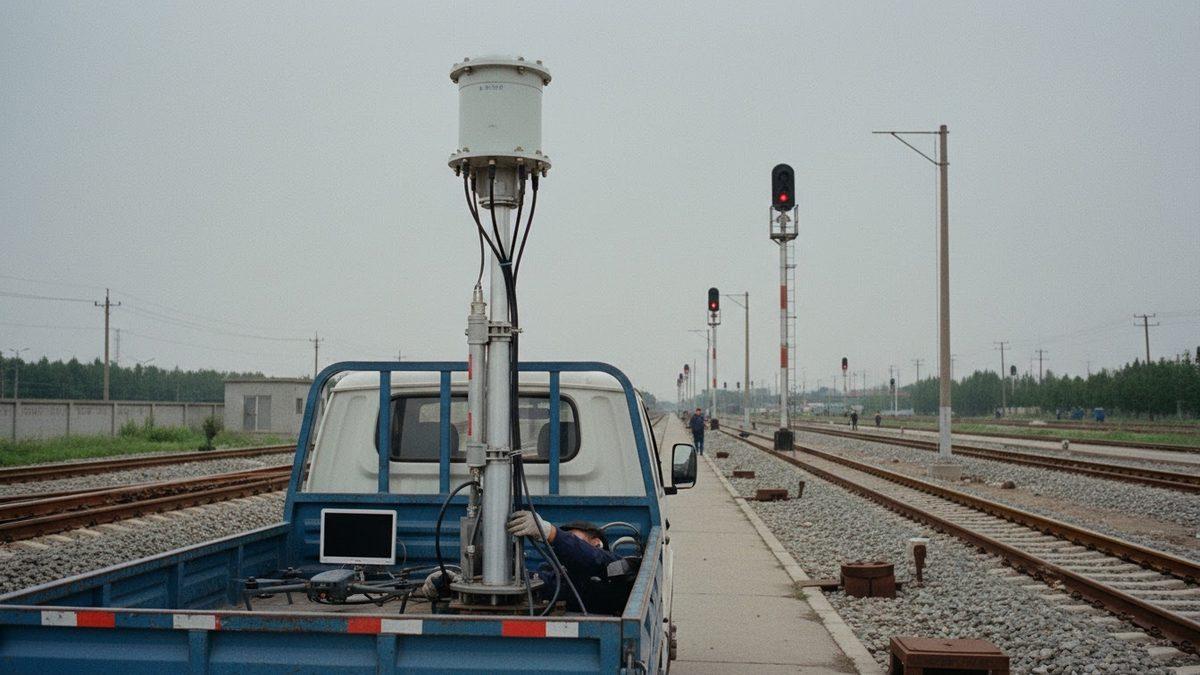
CRSC obtains license for cell-free 4.9GHz base station in China
State-owned rail signaling maker CRSC says a cell-free base station, aimed at drones and emergency networks, received a license from MIIT. The approval is for equipment, not the launch of a national 6G network.