The planning fallacy is the hidden risk in the 2027 technology budget
IT projects and tech M&A deals keep blowing through deadlines and budgets because planning ignores a cognitive bias described almost 50 years ago: the planning fallacy.

- Reading
- 5 min
IT projects and tech M&A deals keep blowing through deadlines and budgets because planning ignores a cognitive bias described almost 50 years ago: the planning fallacy.
Every founder has seen this movie: the 2026 roadmap looked great in December 2025, with dates, squads, and budget all defined, and by October of this year half the deliverables are still in progress. It wasn't a lack of competence from the team. It was a cognitive bias with a name, a date, and a Nobel Prize behind it: the planning fallacy, described by Daniel Kahneman and Amos Tversky.
Daniel Kahneman and Amos Tversky described the phenomenon in 1979: when estimating a project's time, cost, and effort, people tend to project the most favorable scenario, even knowing that similar projects tend to run late. Kahneman himself fell into this trap while coordinating the creation of a school curriculum. The team estimated two years; an experienced colleague warned that 40% of similar teams never finished the work, and that none had taken less than seven years. The group stuck with the original estimate. It took eight years, and the material was never used, according to Kahneman's own account in the book "Thinking, Fast and Slow".
Why this is a CTO issue, not just an HR one
The column that started this debate, written by Ricardo Ramos for Exame, a leading Brazilian business magazine, addresses corporate strategic planning in general. But it's in the technology budget that the planning fallacy charges the highest price, because there the estimation error multiplies across three factors that the IT function concentrates like no other: dependency on external vendors, technical debt invisible until integration begins, and a talent market whose price shifts between budget approval and team hiring.
A cloud migration roadmap, a generative AI rollout in production, or a tech M&A deal rarely run late for a single reason. They run late because the initial estimate never incorporated the real distribution of outcomes from similar projects, only the narrative of how this specific project would succeed.
Four questions I'd bring to the board before closing the 2027 budget
Ricardo Ramos proposes four practices in the original article, designed for corporate strategic planning. Translated for those who make technology and product decisions, they become concrete questions for the budget approval meeting:
- What was the actual gap between the roadmap promised and the roadmap delivered in 2026? Auditing sprint by sprint, not just OKR by OKR, reveals the correction factor the organization itself has already produced.
- Who else has done this migration, this post-M&A integration, or this AI rollout, and how long did it actually take? The answer from outside almost always differs from the internal estimate.
- If this technology project fails by December 2027, what will have happened? The pre-mortem forces the technical team to list the risks that the excitement of approval usually sweeps under the rug.
- What is the schedule and cash slack reserved for this project, and when will it be reviewed? Without margin declared in writing, slack becomes the first thing cut under pressure from quarterly results.
The counterargument that deserves a response: too much caution kills speed
The strongest objection to all this comes from founders who've lived the opposite experience: planning full of buffer that became an excuse not to decide, a risk committee that stalls all innovation, a startup that lost its market window while doing a pre-mortem. It's a real risk, and worth taking seriously.
But the distinction that Amundsen and Scott left behind in the race to the South Pole in 1911 still holds: the difference between the two wasn't ambition, it was execution margin. Amundsen also wanted to arrive first, but he brought a lean team, well-distributed supply depots, and a daily travel limit even on good days. Scott bet on a plan that only worked if everything went as expected. Amundsen arrived first and returned with his entire team alive; Scott arrived later and died on the way back, in an episode in which physicist Susan Solomon showed decades later that there had been exceptional cold that March, compounding the original error of planning without slack.
Schedule and cash slack is not the opposite of ambition, it's the difference between treating the unexpected as a setback or as a tragedy. A board can (and should) keep aggressive targets; what it cannot do is treat the most optimistic estimate as if it were the most likely one.
The strategic plan doesn't need to be less ambitious, it needs to be written for the company that will execute it in March, not for the one writing it in December.
Ricardo Ramos, former director at BNDES, Brazil's national development bank, and human resources management specialist
What changes in practice for whoever approves budgets now
The cost of ignoring this bias is already showing up outside tech: by June 2026, Brazil had 6,341 companies in court-supervised reorganization and more than 9 million CNPJs, Brazil's company registration numbers, in default, a figure driven, among other causes, by plans made assuming the cheap credit of the pandemic era would remain available. In tech, the equivalent is assuming that the venture capital window, the price of senior talent, or a deal's regulatory calendar will stay the same as when the plan was closed.
There's no formula that eliminates the planning fallacy, because it stems from how the human brain estimates, not from a lack of available data. What exists is process: auditing one's own track record, a named external benchmark (not a generic one), a documented pre-mortem, and slack declared in both contract and cash. None of these four practices appears alone in the winning proposal the CTO brings to the board in December; all four need to be in the spreadsheet before the signature, not in the March retrospective minutes.
Translated from the Brazilian Portuguese original · Read the original

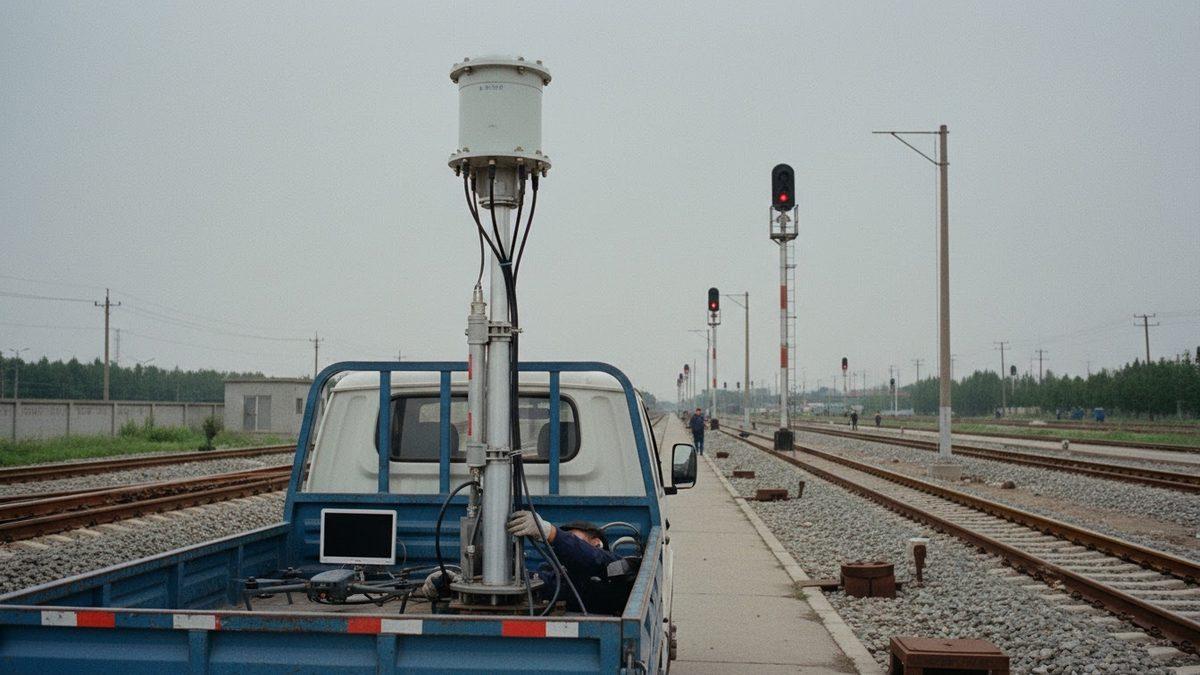
CRSC obtains license for cell-free 4.9GHz base station in China
State-owned rail signaling maker CRSC says a cell-free base station, aimed at drones and emergency networks, received a license from MIIT. The approval is for equipment, not the launch of a national 6G network.