5 min read
CrowdStrike buys Zscaler for $43.9 billion in cybersecurity's largest-ever acquisition
 Vanessa GuerraAuthor
- Reading
- 5 min
- Tables
- 1
The deal announced this Monday surpasses Google's purchase of Wiz and consolidates endpoint and access control under a single vendor, reshaping the risk calculus for enterprise security buyers.
The deal by the numbers
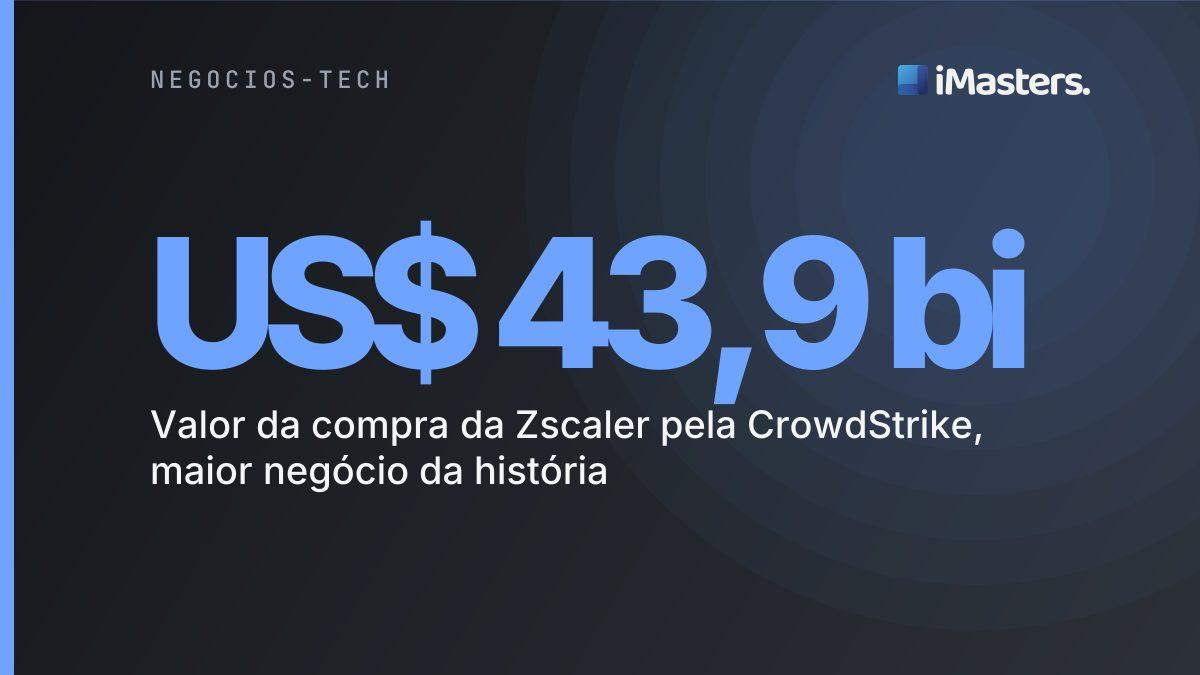
CrowdStrike announced on Monday, November 23, 2026, a deal to buy Zscaler for about $43.9 billion, paid entirely in stock, according to Reuters. Each Zscaler share will be exchanged for 1.135 CrowdStrike shares, equivalent to about $260.41 per share under the terms of the announcement: a 34% premium over the last closing price. Because the payment is in stock, the final dollar value will fluctuate with CrowdStrike's share price until the deal closes.
The figure surpasses the $32 billion Google paid for Wiz, until now the largest acquisition ever announced in the cybersecurity sector. For anyone sitting on a board evaluating security M&A proposals, this is the new benchmark.
What each company brings to the table
Falcon, CrowdStrike's platform, protects endpoints: laptops, servers, any device at the edge of the network. Zscaler does something different: it controls who, or what, is allowed to access corporate applications, under the zero trust model, in which being inside the internal network guarantees access to nothing. These are two different layers of the same problem, and they already talk to each other: an integration announced by Zscaler calls for Falcon to share threat telemetry with the access platform, so that a compromised laptop automatically loses access to internal systems.
Together, the companies project more than $10 billion in combined annual recurring revenue, according to Reuters. Worth noting: this is a projection for the combined operation, not revenue already recorded on the books.
The platformization race
This deal isn't an isolated case: it's part of a recent wave of consolidation in cybersecurity, and the pattern behind it is clear: the sector is moving away from selling point tools toward selling platforms that cover multiple layers of risk under a single contract.
| Deal | Buyer | Target | Announced value | What it adds |
|---|---|---|---|---|
| CrowdStrike + Zscaler | CrowdStrike | Zscaler | $43.9B | Endpoint and zero trust access control |
| Google + Wiz | Wiz | $32B | Cloud security | |
| CrowdStrike + Fiddler AI / Dreadnode | CrowdStrike | Fiddler AI, Dreadnode | About $400 million (Fiddler AI) and $95 million (Dreadnode) | AI security monitoring and testing |
| Palo Alto Networks + CyberArk | Palo Alto Networks | CyberArk | Not disclosed (closed in February 2026) | Identity and credential management |
CrowdStrike, for that matter, didn't stop at Zscaler: this same November, it also closed deals to buy Fiddler AI and Dreadnode, both focused on monitoring and testing the security of artificial intelligence models. The reading is straightforward: the company is buying coverage across every front where a CISO today needs to justify budget, from the endpoint all the way to the behavior of an AI model in production.
Why this matters to whoever approves the budget, not just whoever executes
For a founder or CTO who today keeps separate contracts for endpoint protection, remote access, and AI observability, the promise of a single platform is a direct lure: fewer vendors, less manual integration, a single invoice, and potentially a bundle discount. It's the same argument that led companies to consolidate ERP, CRM, and productivity tools around a handful of ecosystems in previous years.
The trade-off is risk concentration. Today, if Zscaler suffers a configuration failure, the impact is confined to access control. If CrowdStrike has an incident, the damage is confined to the endpoint. Combined under the same vendor, an engineering failure or a security incident at the acquirer now threatens two layers of defense at once, not one.
In short: platformization reduces integration cost and increases the vendor's bargaining power over the price of the next contract, while also reducing the defense diversity that protects the company from a single point of failure.
The question missing from the press release
None of the materials on the merger discuss what happens if the combined CrowdStrike has another large-scale incident, now with corporate access control also under the same roof. That's the question a board should put to the CTO before approving the migration to the combined platform: what is the real exposure if the single vendor fails, and is there a contingency plan that doesn't depend on it?
This isn't a reason to refuse the consolidation, only to price the risk correctly. The answer depends on the board's risk appetite: those who prioritize operational cost and integration speed will tend to migrate to the combined CrowdStrike plus Zscaler package; those who prioritize resilience against a single point of failure may prefer to keep separate vendors across different layers, even at the cost of paying for two integrations.
It's worth remembering that deals of this size don't get automatic approval: mergers this large typically go through review by antitrust regulators before closing. In a $43.9 billion transaction between two leaders of adjacent cybersecurity segments, it's reasonable to expect similar regulatory scrutiny before the deal is completed.
What changes for whoever is buying security right now
Competing vendors will also react. Palo Alto Networks already moved with CyberArk, focused on identities and credentials; it's reasonable to expect other major names to announce equivalent moves in the coming months so as not to be left out of the race for the single platform.
For anyone in the middle of negotiating a security contract today, the moment calls for caution before signing long renewals. The bundle terms expected to emerge once the integration between CrowdStrike and Zscaler is ready are likely to change the total cost of ownership calculation, for better or worse, depending on how the package is priced after the deal closes, which is still subject to regulatory and shareholder approval.
Translated from the Brazilian Portuguese original · Read the original
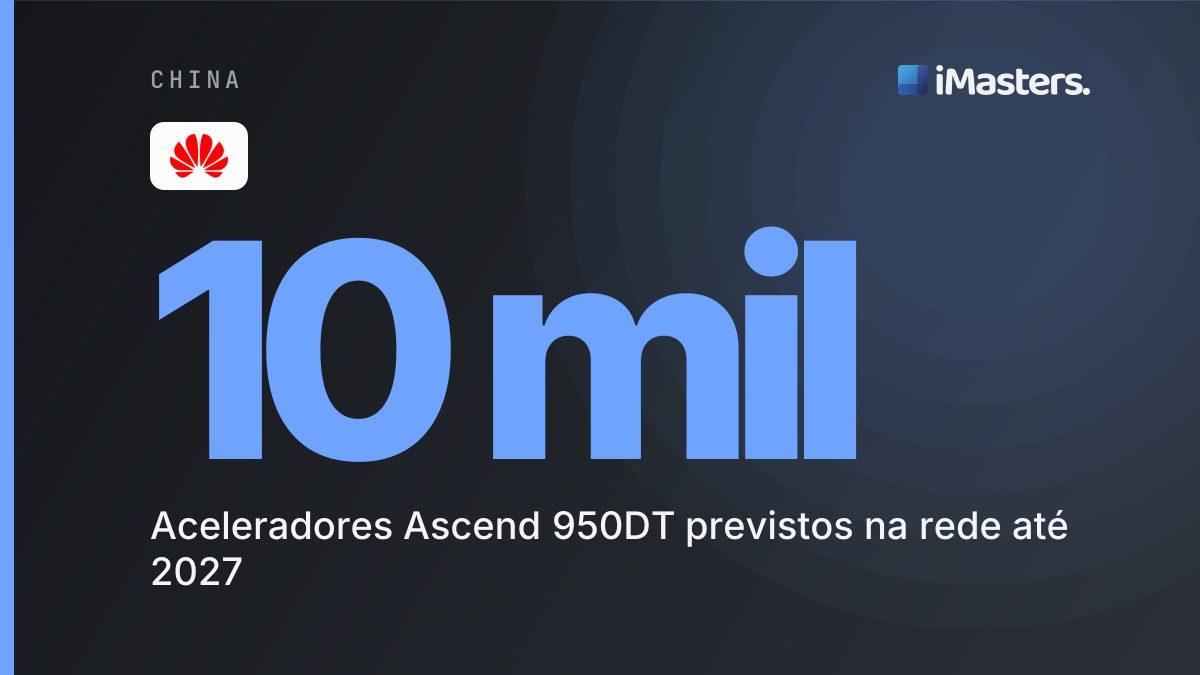
Qingmao Intelligence plans to federate 10,000 Ascend 950DT accelerators by 2027
China's Qingmao Intelligence detailed a joint operation model that combines Huawei's Ascend 950DT chips, third-party data centers and service-level agreements to sell inference as a single service. The goal is to reach 10,000 cards by 2027 and 100,000 in five years, but the plan is not yet operational.